When sunlight strikes solar panels, it produces solar energy, which is then converted into useful electricity. Solar energy is generated by photovoltaic conversion. In this section, we'll look at how a rooftop solar system converts solar energy into electricity.
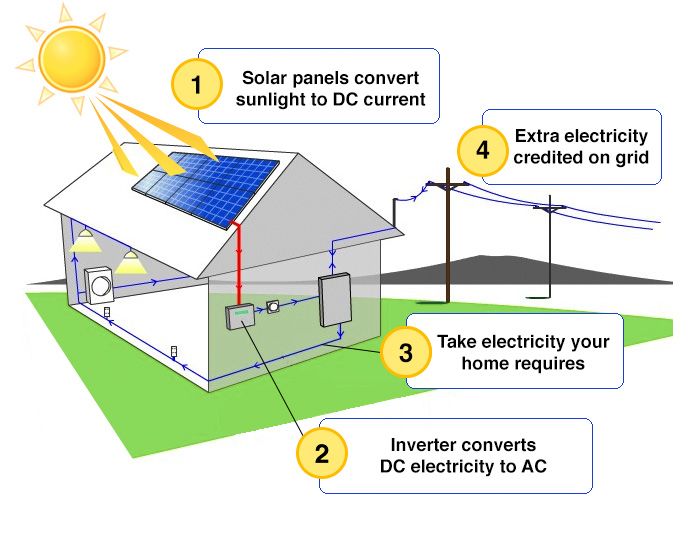
Process of generating solar energy:
The process of generating electricity from sunlight begins with the solar panels, which are the most important component of a solar system. Solar panels are typically built of monocrystalline or polycrystalline silicon and are enclosed in a metal panel frame with a glass casing.
Reach out to any Solar Energy Company to learn more about the ongoing renewable energy trends.
When sunlight strikes the thin layer of silicon on top of a solar panel, electrons are knocked from the silicon atoms. Because electrons are negatively charged, they gravitate toward one side of the silicon cell. This generates an electric current, which is caught by the solar panel's wiring.
Flowing electrons that have been knocked free by sunlight constitute the basis of the energy created by solar panels, which is known as the "photovoltaic effect." When building a solar energy system, consider issues like shading and local cloud cover. The more sunlight that hits your solar panels, the more electrons are released.
Depending on their efficiency and quality, different solar panels produce power at varying rates. High-quality solar panels cost a little more upfront, but they save you money in the long run since they produce electricity more effectively.
Inverters convert solar energy into useful power.
Direct current, or DC, is the current produced when unbound electrons are gathered at individual panels. Alternating current, or AC, is the type of electricity we use to power devices, charge electric vehicles, and turn on our lights. The power generated by free silicon electrons is DC electricity, which must be converted to AC before it can be used.
Important equipment known as inverters performs this conversion. String inverters, microinverters, and power optimizers are all examples of inverters, but they all perform the same basic function of converting DC current to AC electricity. The electricity travels to your electric panel and metre after passing via inverters and being converted to AC electricity. Finally, it can be distributed throughout your house or into the power grid.
Other types of solar panels
The majority of solar panels on the market are composed of crystalline silicon, but there are a few additional types of solar panels that use the sun to generate power.
Solar panels made of cadmium telluride (CdTe)
CdTe panels generate electricity using a different substance than silicon. CdTe panels can capture energy at shorter wavelengths than silicon panels, despite their low-efficiency ratings (yet). Furthermore, production expenses are modest.
Solar panels made of copper gallium indium diselenide (CIGS)
CIGS panels are a viable panel choice since they have greater efficiency than CdTe panels. Unfortunately, exorbitant manufacturing costs have kept CIGS panels out of the mainstream. To generate power, CIGS panels use a copper-based substance.
Organic photovoltaic cells (OPV)
Instead of employing an inorganic material like silicon or copper to create an electrical current from sunlight, OPV cells use tiny layers of organic vapour or solution. When compared to other panel technologies, OPV cells have yet to gain widespread adoption due to their low efficiencies and short life lifetimes.
These solar technologies are all classified as thin-film panels, and they account for a relatively small portion of the entire solar market. This is primarily due to the fact that they are not cost-effective at this moment. These unique possibilities may become the leading solar technology in the future, however, for the time being, silicon panels dominate the industry.
Make sure you get the finest solar installation possible.
Before committing to a Solar Solution Provider, homeowners considering solar energy should weigh all of their options. Qualified installers around you can submit solar quotations for your house after you register it on the EnergySage Solar Marketplace, which you can compare side by side to find the best offer for your individual home. You can receive a fantastic bargain on a solar system by partnering with a pre-screened solar firm on EnergySage, and you can start generating electricity from the sun right now.