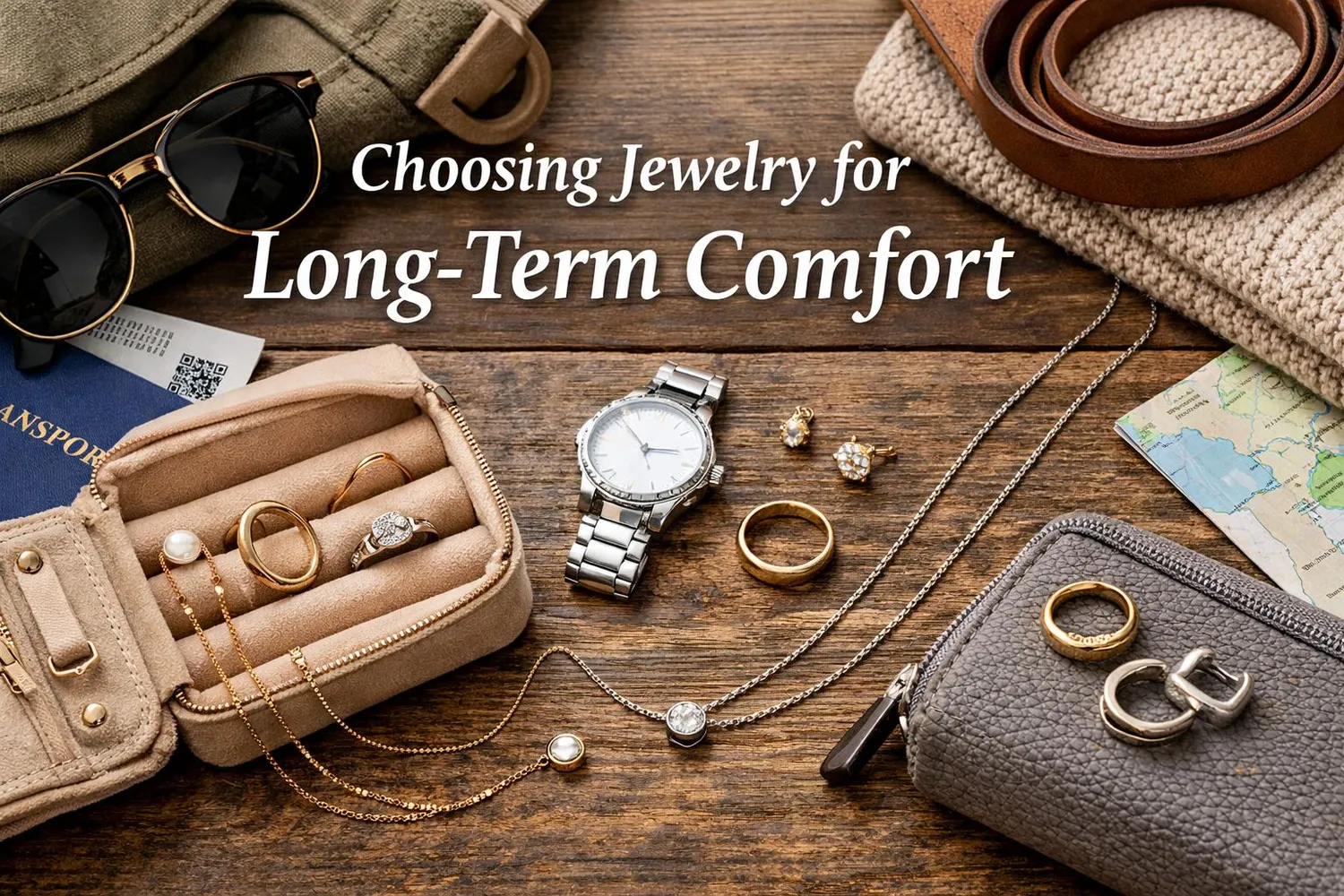
When people talk about comfortable jewelry, the conversation usually starts with weight, size, or metal type. Surface finish rarely gets the same attention—but it should. Whether a piece is smooth and polished or intentionally textured can change how it feels against your skin, how it interacts with clothing, and how practical it is for everyday wear.
There’s no universal “better” choice here. Smooth finishes tend to feel easy and predictable, while textured finishes offer grip, visual interest, and sometimes surprising functional benefits. The trade-off comes down to where and how you wear your jewelry, what fabrics you live in, and how much maintenance you’re willing to handle.
Let’s break down what actually changes when you choose smooth versus textured jewelry—and where each one makes more sense.
Surface Interaction with Skin
At the most basic level, surface finish determines how jewelry meets your skin throughout the day.
Smooth jewelry—like high-polish bands, mirror-finish pendants, or sleek bangles—creates minimal friction. That means:
· Less rubbing during repetitive movement (typing, walking, lifting)
· Fewer pressure points when worn tightly (like rings)
· A more predictable feel during temperature shifts
In humid conditions or long wear sessions, smooth surfaces usually glide instead of dragging. This matters more than people expect. For example, a smooth ring is less likely to create subtle hot spots during a full workday compared to one with ridges or etched patterns.
That said, smooth isn’t always synonymous with comfort.
Textured jewelry—think hammered finishes, brushed surfaces, engraved patterns, or beadwork—creates micro-contact points. These can:
· Distribute pressure differently across the skin
· Prevent slipping when skin is slightly oily or damp
· Add stability during movement
For some wearers, this actually feels more comfortable, especially with items like rings or cuffs that tend to rotate. A lightly textured interior can reduce the need for constant adjustment.
However, deeper textures may cause mild irritation during extended wear if they repeatedly press into the same spot—particularly for people with sensitive skin.
A simple rule of thumb:
· If you prefer jewelry you forget you're wearing → smooth often wins
· If you prefer jewelry that stays put → subtle texture helps
Snag Risk
Snagging is where texture starts to show real trade-offs.
Smooth finishes are less likely to catch. This makes them practical for:
· Long hair
· Knit fabrics
· Scarves and sweaters
· Active environments (gym, childcare, manual tasks)
A smooth chain slides over clothing fibers. A polished earring back is less likely to tangle in hair. A sleek bangle won’t grab a loose sleeve.
By contrast, textured surfaces introduce edges, even when they’re visually subtle.
Common snag scenarios:
· Engraved rings catching on towels
· Hammered bangles brushing against sweater loops
· Filigree pendants tangling in fine chains
· Beaded or ridged earrings interacting with hair
Not all texture is equally risky. Shallow, rounded textures tend to behave well. Deep cuts, openwork, or sharp relief patterns are more likely to catch.
If your day includes:
· Frequent outfit changes
· Knitwear
· Long hair
· Physical tasks
Smooth surfaces reduce frustration.
But snag resistance isn’t the only story.
Fabric Friction
How jewelry moves against clothing matters just as much as snagging.
Smooth jewelry glides. This is ideal for:
· Silk, satin, or fine cotton
· Tailored outfits
· Layered looks with scarves
A polished pendant won’t tug at delicate fabric the way a textured one might. Smooth earrings slide easily against collars.
But that same glide can become a downside in certain situations.
Textured jewelry resists movement. This can help when:
· You want a necklace to stay centered
· A cuff keeps rotating on your wrist
· Rings spin due to seasonal finger size changes
A brushed or lightly hammered surface can “anchor” against fabric just enough to reduce shifting.
This matters more in structured outfits—like blazers or heavier cotton—where stable placement improves both comfort and appearance.
In cold-weather wardrobes common across much of the USA, textured finishes can actually perform better with heavier fabrics like wool or denim by preventing constant sliding.
Still, deep textures can create wear over time on delicate fabrics. If you regularly wear fine materials, smooth finishes are safer.
Grip Benefits
Grip is one of the most overlooked benefits of textured jewelry.
While smooth finishes feel effortless, they’re also more likely to:
· Slide down the wrist
· Rotate on the finger
· Shift during movement
In humid environments—or during long days—this becomes noticeable.
Textured interiors or surfaces can:
· Reduce rotation in rings
· Keep bangles from drifting
· Stabilize necklaces during walking
This isn’t about roughness. Even subtle finishes—like brushed metal—create enough friction to improve stability.
For people who:
· Work with their hands
· Walk frequently
· Wear jewelry daily rather than occasionally
This added grip can improve comfort by reducing the need for readjustment.
However, too much grip can backfire.
A deeply textured interior may:
· Trap moisture
· Increase friction during swelling
· Feel tight during heat changes
So while texture can stabilize, it shouldn’t feel abrasive.
Cleaning Considerations
Maintenance is where the difference becomes practical.
Smooth jewelry is easier to clean. Dirt, oils, and sweat have fewer places to settle.
This means:
· Quick wiping often restores appearance
· Less buildup in daily wear
· Fewer hygiene concerns during long use
In warm climates or active routines, this matters. A smooth ring or pendant can be cleaned in seconds.
Textured jewelry holds onto debris.
Common issues:
· Sweat residue settling in grooves
· Lotion collecting in engraving
· Dust gathering in hammered dips
This doesn’t make textured jewelry unsuitable—it just means:
· Cleaning takes longer
· Soft brushes may be needed
· Neglect shows faster
For daily wear pieces—especially those worn close to skin—this can affect comfort over time. Buildup can subtly change how a piece feels.
If low maintenance is a priority, smooth finishes are easier to live with.
Best Use Cases
Instead of labeling one finish as better, it helps to match surface type to lifestyle.
Smooth Jewelry Works Best For:
· Daily wear rings
· Sleep-friendly pieces
· Office environments
· Long hair
· Delicate fabrics
· Minimal maintenance routines
Smooth finishes also suit people who prefer jewelry that disappears into the background.
Textured Jewelry Works Best For:
· Statement pieces
· Structured outfits
· Active days
· Pieces that tend to rotate (rings, bangles)
· Situations where stability matters
Subtle textures can improve comfort when slipping is the main issue.
Common Mistakes People Make
Mistake 1: Choosing texture for looks without considering lifestyle
A deeply engraved ring might look beautiful—but if you wear gloves often, it may catch constantly.
Mistake 2: Assuming smooth always means comfortable
Smooth bangles can slide and knock into things all day.
Mistake 3: Ignoring interior finish
Even textured exteriors can feel smooth if the interior is polished.
Mistake 4: Overlooking cleaning needs
Textured pieces worn daily need more upkeep than many expect.
Edge Cases Worth Considering
· Cold weather: Skin shrinks slightly. Smooth rings may spin more.
· Heat: Swelling makes textured interiors feel tighter.
· Layering: Textured necklaces may tangle less with clothing but more with chains.
· Fitness routines: Smooth finishes are easier to rinse clean after sweat exposure.
Practical FAQ
Does texture always make jewelry less comfortable?
No. Light textures can improve stability without adding irritation.
Are smooth pieces better for sensitive skin?
Often yes, because they reduce repeated friction—but individual sensitivity varies.
Do textured pieces damage clothing?
Usually only if the texture is sharp or deeply raised.
Is one finish more durable?
Surface finish doesn’t necessarily affect structural durability—but textured finishes may hide scratches better.
Which is better for everyday rings?
Smooth interiors tend to feel better for long wear.
Which is better for bracelets?
Light texture can help prevent sliding.
Do smooth pieces show wear more?
Yes. Scratches are often more visible on high-polish finishes.
Do textured pieces feel heavier?
Sometimes—because they resist movement rather than glide.
Choosing between smooth and textured jewelry isn’t about style alone. It’s about how a piece lives with you—through movement, fabric, weather, and daily habits.
The most comfortable option is the one that matches your routine, not just your aesthetic.