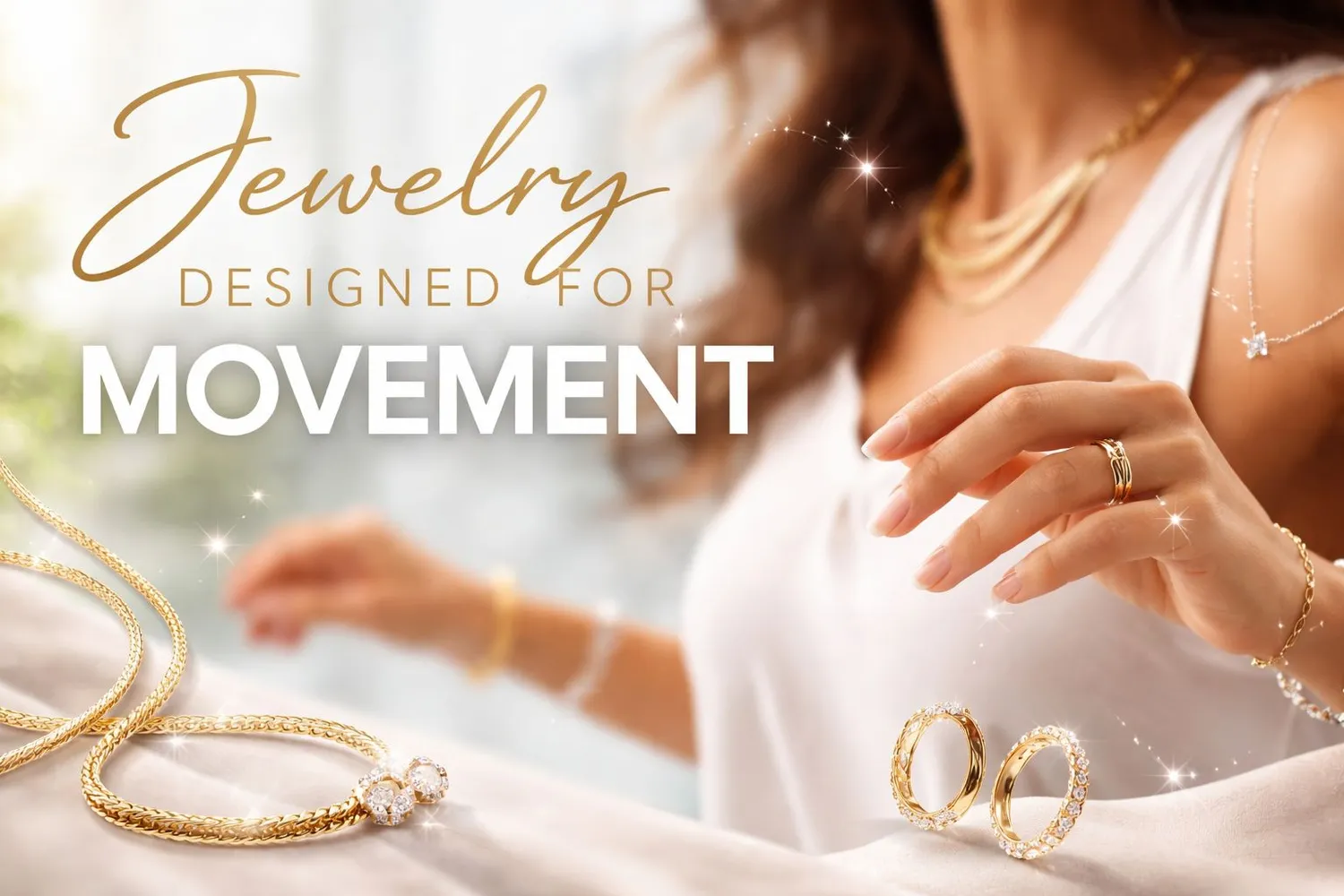
Earrings are often the easiest piece of jewelry to add to an outfit. They frame the face, require little styling, and can be worn with almost anything—from casual clothing to formal wear. But unlike necklaces or bracelets, earrings interact directly with one of the most delicate parts of the body: the earlobe.
Because the ear moves constantly with the head and neck, earring comfort matters more than people often realize. Turning your head, walking, brushing hair back, putting on a jacket, or answering a phone all create movement around the ears. If earrings are too heavy, poorly balanced, or insecurely fastened, that movement can quickly turn into irritation.
The most comfortable earrings are designed with motion in mind. They account for weight distribution, secure backing systems, and structures that allow controlled movement rather than uncontrolled swinging. These details make the difference between earrings you forget you're wearing and ones you remove halfway through the day.
For people in the United States who wear earrings daily—whether at work, commuting, exercising lightly, or running errands—movement-friendly design can significantly improve long-term comfort.
Challenges of Earrings During Movement
Earrings experience more motion than most other types of jewelry because they hang from the ear rather than resting on a stable surface.
Continuous head movement
Everyday actions involve frequent head movement. People turn their heads when speaking, checking traffic, working on computers, or interacting with others. Even walking causes subtle motion in the neck and shoulders.
Each movement transfers small forces to earrings. Lightweight designs move gently, while heavier earrings create more noticeable pulling on the earlobe.
If the design doesn't distribute weight properly, that repeated motion can lead to discomfort.
Gravity and downward force
Unlike rings or bracelets, earrings rely entirely on the piercing to hold their weight. Gravity constantly pulls them downward.
When earrings are heavy, the earlobe must support that weight all day. Over time this can cause soreness or stretching of the piercing hole.
While the exact threshold varies by person, most people find that lighter earrings remain comfortable for longer periods.
Contact with hair and clothing
Hair frequently brushes against earrings. Long earrings or wide hoops may catch on hair strands when the head moves.
Clothing also interacts with earrings. High collars, scarves, and hooded jackets sometimes push earrings upward or sideways.
Designs that sit close to the ear generally avoid these issues.
Phone use and daily activities
Holding a phone against the ear is another situation where earrings can become uncomfortable. Large earrings may press between the phone and the ear, creating pressure.
Studs and small hoops tend to work better during these situations because they stay close to the ear.
Lightweight Earring Design Principles
Weight is one of the most important factors affecting earring comfort.
Why lighter earrings reduce strain
The earlobe consists mostly of soft tissue without structural support from bone or muscle. Because of this, it reacts quickly to sustained downward pressure.
Lightweight earrings reduce the load placed on the piercing. This allows the ear to tolerate the earrings for longer periods without fatigue.
Designers often aim to keep everyday earrings as light as possible while maintaining structural strength.
Structural design instead of solid mass
Rather than using thick, solid metal shapes, many comfortable earrings rely on structural design to create visual presence without excessive weight.
Examples include:
- Hollow forms instead of solid metal
- Thin wire structures forming geometric shapes
- Open designs that remove unnecessary material
These approaches reduce weight while maintaining durability.
Balanced weight distribution
Weight distribution matters just as much as total weight. Earrings that concentrate mass at the bottom tend to pull downward more strongly.
Balanced designs keep the center of mass closer to the piercing point. This reduces leverage and makes the earring feel lighter than it actually is.
For example, small hoops distribute weight evenly around the ear rather than hanging from a single point.
Thin yet durable materials
Some earring designs rely on thin metal wire structures. When made with strong alloys, thin wires can maintain shape while staying lightweight.
However, extremely thin components may bend more easily. Designers must balance lightness with durability to prevent deformation during regular use.
Hinged Hoops and Flexible Structures
Many comfortable earrings incorporate flexible or hinged components that allow controlled movement.
Why hinged hoops work well
Hinged hoop earrings include a small hinge and clasp that allow the hoop to open and close.
This design has several practical benefits:
- Easy to put on and remove
- Secure closure that reduces accidental loss
- Smooth circular shape that distributes weight evenly
Because the hinge allows the hoop to open, the earring can fit comfortably without requiring large posts or complicated backings.
Continuous hoop designs
Some hoops use a continuous wire that threads through the ear and reconnects at the other end. These designs create a smooth circular appearance with minimal visible hardware.
However, continuous hoops may require careful handling during insertion to avoid bending the wire.
Flexible drop structures
Certain drop earrings include articulated sections connected by small joints. These allow the earring to move naturally with head motion rather than swinging rigidly.
Controlled movement can improve comfort because the earring follows the body's motion instead of resisting it.
Movement that stays predictable
The key difference between comfortable movement and distracting movement is control.
Earrings that swing excessively can hit the neck or face during walking. Designs that allow gentle movement while staying close to the ear tend to remain more comfortable.
Secure Backings and Clasps
Even lightweight earrings become frustrating if the backing system feels unreliable.
Standard friction backs
Friction backs—often called push backs—are among the most common earring closures. They slide onto the earring post and hold in place through tension.
When properly fitted, friction backs hold securely and remain easy to remove.
However, over time the tension may loosen. Replacing worn backs helps maintain security.
Screw backs
Screw-back earrings use threaded posts with matching backs that twist into place.
This design provides strong security because the back cannot slide off accidentally. However, screw backs require more time to attach and remove.
They are often used for earrings intended for long-term wear.
Locking backs
Some earrings include specialized locking backs that snap into place. These mechanisms provide additional protection against accidental loss.
Locking systems vary by design, but they generally combine ease of use with improved security.
Lever backs
Lever-back earrings include a hinged lever that closes behind the ear. This design forms a continuous loop through the piercing.
Lever backs often appear on drop earrings and help prevent the earring from slipping out during movement.
Best Earring Styles for Daily Wear
Certain earring styles consistently work well for everyday activities because they balance comfort, weight, and stability.
Stud earrings
Stud earrings remain one of the most practical designs for daily wear.
They sit directly against the earlobe and contain no dangling parts. Because of this, they rarely catch on clothing or hair.
Studs also keep weight close to the ear, reducing leverage on the piercing.
Small hoop earrings
Small hoops offer a bit more visual presence than studs while maintaining comfort.
Their circular shape distributes weight evenly around the ear. When the diameter stays relatively small, hoops rarely interfere with daily activities.
Hoops that hug the earlobe closely—sometimes called “huggie” hoops—are especially practical for everyday wear.
Short drop earrings
For people who prefer some movement in their earrings, short drop designs can provide visual interest without excessive motion.
The key is keeping the drop length moderate. Long earrings that extend several inches below the ear tend to swing more dramatically.
Minimalist bar or threader designs
Some modern earrings use thin bars or delicate threader chains that move gently with the head.
When designed properly, these earrings remain lightweight and flexible while adding subtle motion.
However, threader styles should be checked periodically to ensure they remain securely positioned.
Avoiding Ear Fatigue
Ear fatigue refers to soreness or irritation caused by wearing earrings for long periods.
Recognizing early signs
Common signs of ear fatigue include:
- Mild soreness around the piercing
- Redness in the earlobe
- A feeling of heaviness in the ear
If these symptoms appear, removing the earrings temporarily usually resolves the discomfort.
Alternating heavier and lighter earrings
People who enjoy wearing statement earrings may reduce fatigue by alternating them with lighter designs.
For example, wearing lightweight studs during the day and larger earrings for shorter evening events can help minimize strain.
Cleaning and hygiene
Regular cleaning prevents buildup of oils, sweat, and residue around the piercing.
Gentle cleaning with mild soap and water can help maintain comfort. For newly pierced ears or sensitive skin, following professional care guidelines is recommended.
Checking backing tightness
Backings that are too tight can press the earlobe between the post and backing, creating pressure.
Backings that are too loose allow excessive movement.
The ideal fit holds the earring securely while leaving slight space for airflow.
Frequently Asked Questions
Why do some earrings make my ears sore after a few hours?
Soreness often results from weight, poor weight distribution, or tight backings. Lightweight earrings with balanced designs usually reduce this problem.
Are hoop earrings comfortable for everyday wear?
Small and lightweight hoops often work well for daily use. Larger hoops may catch on clothing or hair during active movement.
How tight should earring backs be?
Backs should hold the earring securely without pressing the lobe tightly. A small gap between the back and ear allows airflow and reduces pressure.
Do heavier earrings stretch ear piercings?
Consistently wearing heavy earrings can contribute to gradual stretching of the piercing hole. Limiting wear time for heavier styles may help reduce this risk.
Can sleeping in earrings cause discomfort?
Sleeping with large or rigid earrings may create pressure on the ear. Many people prefer to sleep with small studs or remove earrings entirely.
Are hinged hoop earrings safer than traditional hoops?
Hinged hoops often stay more secure because the closure locks into place. However, comfort and safety still depend on the overall design and quality.
Conclusion
Comfortable earrings rely on thoughtful design rather than simply looking attractive. Lightweight construction, balanced weight distribution, secure backings, and controlled movement all contribute to earrings that remain comfortable throughout the day.
Because the ears move constantly with the head and neck, jewelry worn in this area must accommodate motion without creating strain. Designs that stay close to the ear, distribute weight evenly, and remain securely fastened tend to perform best during everyday activities.
When earrings are designed with movement in mind, they become easy to wear from morning to evening without distraction. The best everyday earrings don’t demand attention—they simply stay comfortable while you move through your day.