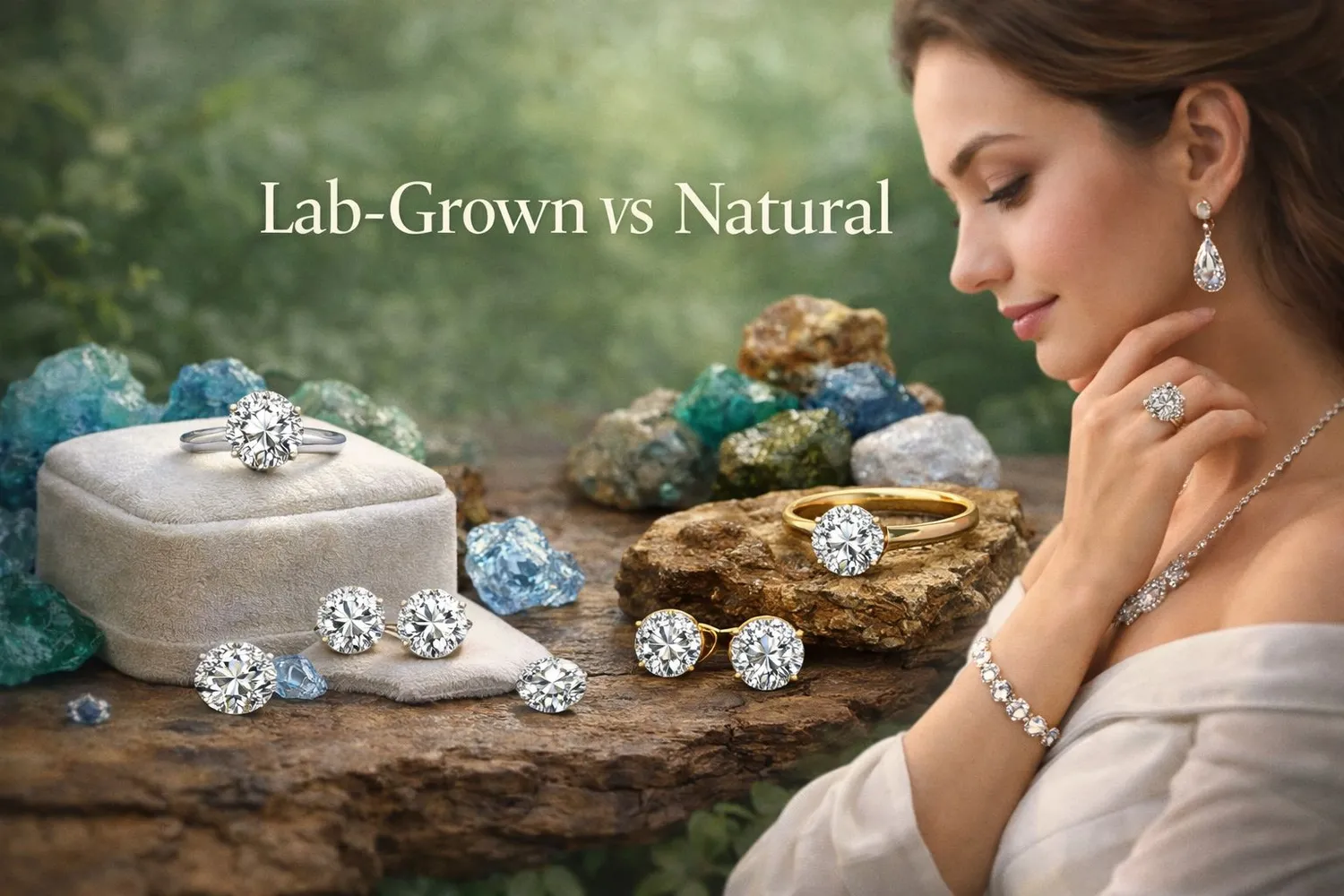
If you’re considering a diamond—especially for an engagement ring—you’ve probably heard the pitch: lab-grown diamonds cost less upfront and look identical to natural diamonds. That part is true. What’s less talked about, and often misunderstood, is what happens later if you try to sell that diamond.
Resale value is where the differences between lab-grown and natural diamonds become clearer. This isn’t about beauty or ethics. It’s about market demand, supply realities, and how the secondary diamond market actually works in the United States.
This guide explains what you can realistically expect if resale value matters to you—and what most buyers don’t realize until after the purchase.
First, Understand What “Resale Value” Really Means
Before comparing lab-grown and natural diamonds, it’s important to understand what resale value actually represents.
When you buy a diamond at retail, you’re paying more than just the stone itself. Retail pricing includes:
- Jewelry store overhead (rent, staff, insurance)
- Marketing and branding
- Profit margin
- The ring setting
- Certification and logistics
The moment you walk out of the store, your diamond becomes a secondhand item. If you sell it, the buyer—whether a jeweler, pawn shop, or private buyer—must be able to resell it at a profit. That means they’ll offer less than retail.
This applies to both lab-grown and natural diamonds. Neither should be considered a guaranteed financial investment in the traditional sense.
However, the extent of value retention differs significantly.
Market Demand Differences: Why Natural Diamonds Have a Stronger Resale Market
Resale value is driven by demand. In the U.S., natural diamonds still dominate the resale ecosystem for several practical reasons.
Natural diamonds have established secondary markets
Natural diamonds have been traded for generations. There’s a well-developed resale infrastructure that includes:
- Estate jewelry buyers
- Auction houses
- Independent jewelers
- Pawn shops
- Private collectors
- Online resale platforms
Buyers understand how to evaluate natural diamonds and know there’s ongoing demand from future customers.
A jeweler buying a natural diamond today expects to resell it later. That expectation makes them willing to pay more upfront.
Lab-grown diamonds face a different demand reality
Lab-grown diamonds are real diamonds chemically and physically. But from a resale standpoint, they behave differently because of how supply works.
Natural diamonds are finite. Each stone formed underground over millions or billions of years. Lab-grown diamonds, by contrast, can be produced in laboratories in a matter of weeks.
That difference affects resale demand in a simple way: buyers know more lab-grown diamonds can always be made.
This reduces urgency in the resale market.
If a jeweler can order a new lab-grown diamond from a supplier at a predictable price, they have less reason to buy a used one—especially if the price difference isn’t significant.
Perception still influences buying behavior
Even though lab-grown diamonds are visually identical, perception affects resale demand.
Some resale buyers specifically want natural diamonds. This isn’t always logical, but it’s real. Collectors, estate buyers, and certain jewelry customers prefer natural origin.
That preference supports stronger resale demand for natural diamonds.
Lab-grown diamonds don’t yet have the same level of collector interest or long-term resale culture in the U.S.
Resale Expectations: What You Can Realistically Expect to Receive
One of the most common misconceptions is that diamonds retain most of their retail value. That’s rarely true.
Let’s break expectations down clearly.
Natural diamonds: Partial value retention, but still depreciation
If you resell a natural diamond, you should expect to receive less than the original retail price.
Typical resale outcomes depend on factors like:
- Size (larger diamonds tend to resell more easily)
- Quality (cut, clarity, color)
- Certification from respected labs (such as GIA)
- Market conditions
- Where you sell it
In many real-world resale situations, sellers receive a portion of the original purchase price—not the full amount.
The exact percentage varies widely. Anyone claiming guaranteed resale percentages should be treated cautiously.
Selling privately to another consumer usually yields higher returns than selling to a business, but it requires more time and effort.
Lab-grown diamonds: Steeper depreciation is common
Lab-grown diamonds typically experience more significant depreciation.
There are two main reasons:
1. Wholesale prices have declined over time
As lab production has become more efficient, wholesale prices have fallen. This means new lab-grown diamonds often cost less today than similar ones did in the past.
This directly affects resale value. Buyers won’t pay high prices for used lab-grown diamonds if new ones are cheaper.
2. Lower resale demand from jewelers
Many jewelers prefer ordering new lab-grown diamonds from suppliers instead of buying secondhand ones from individuals.
This limits the pool of potential buyers.
As a result, resale offers for lab-grown diamonds are often lower relative to their original retail price.
Value Retention Comparison: Why Natural Diamonds Hold Value Better
To understand the difference clearly, it helps to look at the underlying economic forces.
Scarcity vs reproducibility
Natural diamonds are scarce. Lab-grown diamonds are reproducible.
Scarcity tends to support resale value. Reproducibility tends to lower it.
This principle applies across many products. Limited-supply items often retain value better than items that can be easily manufactured.
Price stability vs price compression
Natural diamond prices can fluctuate, but their supply is naturally limited.
Lab-grown diamonds have experienced price compression due to improvements in manufacturing technology.
This price compression reduces resale values of existing stones.
If new lab-grown diamonds become cheaper, older ones become harder to resell at higher prices.
Buyer psychology and long-term confidence
Resale buyers care about future resale potential. Natural diamonds benefit from established resale history.
Lab-grown diamonds are newer to the market. The long-term resale environment is still evolving.
This uncertainty affects how much buyers are willing to pay.
Where People Actually Sell Diamonds in the USA
Resale value also depends heavily on where you sell.
Each option has tradeoffs.
Jewelry stores
Some jewelers buy diamonds outright or offer trade-in programs.
Trade-in programs are often more favorable for natural diamonds, especially if upgrading to a larger stone.
Lab-grown diamonds are less commonly accepted for trade-in, depending on the retailer.
Policies vary widely, so it’s essential to ask before purchasing.
Pawn shops
Pawn shops offer convenience but typically pay less than other options.
Their business model requires buying at lower prices to manage risk and inventory.
This applies to both natural and lab-grown diamonds, but lab-grown offers may be lower.
Online resale platforms
Online marketplaces allow direct sales to consumers.
This can result in higher sale prices, but it requires effort:
- Creating listings
- Providing certification details
- Communicating with buyers
- Managing payment and shipping risks
Natural diamonds generally attract more buyer interest.
Auction houses and estate buyers
These channels primarily focus on natural diamonds, especially larger or higher-quality stones.
Lab-grown diamonds rarely appear in traditional estate auctions.
Factors That Improve Resale Value
While natural diamonds generally retain value better, certain factors improve resale outcomes regardless of origin.
Certification matters
A grading report from a respected gemological laboratory improves buyer confidence.
Certification provides objective details about:
- Carat weight
- Color grade
- Clarity grade
- Cut quality
Without certification, resale becomes harder and less valuable.
Larger stones resell more easily
Demand is stronger for larger diamonds, particularly above certain size thresholds.
Smaller diamonds are more difficult to resell profitably because retail markup represents a larger portion of the price.
High cut quality improves resale appeal
Cut quality affects visual brilliance. Buyers prefer well-cut stones.
Poor cut quality can significantly reduce resale interest.
Classic shapes tend to be easier to resell
Round brilliant diamonds generally have the broadest resale demand.
Unusual shapes may appeal to fewer buyers.
Common Mistakes Buyers Make When Thinking About Resale
Understanding resale realities helps avoid disappointment later.
Mistake 1: Assuming retail price equals resale value
Retail price reflects store markup, not resale market value.
Resale value depends on what buyers are willing to pay now—not what you paid before.
Mistake 2: Treating diamonds as guaranteed investments
Diamonds can preserve some value, but they shouldn’t be treated like stocks or bonds.
They’re primarily luxury goods.
Financial returns are uncertain.
Mistake 3: Ignoring trade-in policies at purchase
Some jewelers offer lifetime trade-in programs, especially for natural diamonds.
These programs can improve long-term value flexibility.
Ask about this before buying.
Mistake 4: Losing certification documents
Certification helps prove authenticity and quality.
Without it, resale becomes harder.
Always keep grading reports.
Edge Cases: When Lab-Grown Diamonds May Still Make Sense
Despite lower resale value, lab-grown diamonds can still be a rational choice depending on priorities.
If upfront cost savings matter more than resale
Lab-grown diamonds often cost significantly less upfront.
This can allow buyers to choose larger or higher-quality stones within their budget.
Even with lower resale value, the initial savings may outweigh resale considerations.
If resale is unlikely
Many engagement rings are never sold.
If the diamond will be kept indefinitely, resale value becomes less relevant.
If emotional value is the primary factor
For many people, sentimental value outweighs financial considerations.
In these cases, resale value may not matter.
Natural Diamonds Are Not Immune to Depreciation
It’s important to stay realistic.
Natural diamonds generally retain value better than lab-grown diamonds, but they still depreciate relative to retail price.
Buying a diamond should be viewed primarily as a personal purchase, not a financial investment.
Higher resale potential doesn’t guarantee profit.
It simply means better value retention relative to alternatives.
How to Maximize Resale Value Before You Buy
If resale value matters to you, certain strategies help.
Choose high cut quality. Avoid sacrificing cut quality for size.
Stick with classic shapes like round brilliant.
Purchase certified stones from respected grading labs.
Ask about lifetime trade-in programs.
Avoid paying excessive retail markup.
Keep all documentation.
These steps improve resale flexibility later.
Safety Note
Diamonds should not be purchased solely for investment purposes unless you have specialized expertise. Resale markets can fluctuate, and resale outcomes vary widely. If financial return is your primary goal, traditional investment vehicles may offer more predictable results. Consider speaking with a financial advisor before making decisions based primarily on resale expectations.
Frequently Asked Questions
Do lab-grown diamonds have any resale value at all?
Yes, lab-grown diamonds can be resold. However, resale offers are often lower relative to their original retail price compared to natural diamonds. The exact amount depends on quality, certification, and buyer demand.
Why do jewelers offer less for lab-grown diamonds?
Because jewelers can often buy new lab-grown diamonds from suppliers at competitive prices. This reduces the need to purchase secondhand lab-grown stones.
Can lab-grown diamonds increase in value over time?
There’s no reliable evidence that lab-grown diamonds consistently increase in value. Because they can be produced in laboratories, price increases driven by scarcity are less likely.
Are natural diamonds guaranteed to hold value?
No. Natural diamonds can lose value relative to retail price. However, they generally retain value better than lab-grown diamonds due to stronger resale demand and limited supply.
Does certification affect resale value?
Yes. Certified diamonds are easier to resell and often receive better offers because buyers trust documented grading.
Is resale easier in the USA than elsewhere?
The USA has a well-developed resale market, especially for natural diamonds. This improves liquidity compared to smaller markets.
Should resale value determine your choice?
It depends on your priorities. If minimizing long-term depreciation matters, natural diamonds generally perform better. If upfront savings matter more, lab-grown diamonds may still be the better option.
The Bottom Line Reality
Natural diamonds and lab-grown diamonds look the same, but they behave differently in resale markets.
Natural diamonds benefit from established demand, limited supply, and stronger resale infrastructure in the United States.
Lab-grown diamonds offer excellent upfront value but typically experience greater depreciation and lower resale demand.
Neither option guarantees financial return. The right choice depends on whether your priority is upfront affordability or long-term value retention.
Understanding these realities before buying helps you make a decision you won’t regret later.