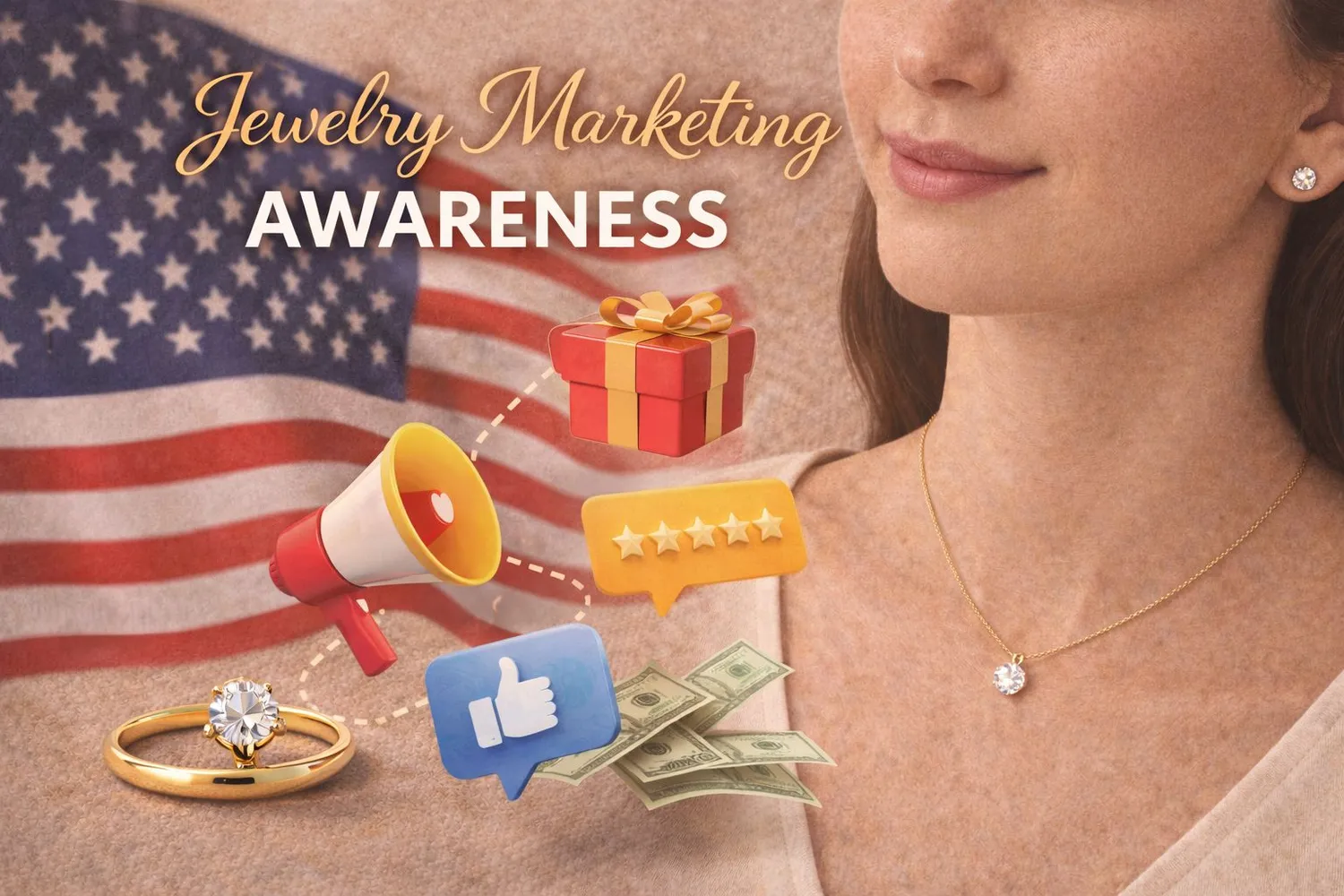
In the United States, influencers and celebrities play a powerful role in shaping jewelry buying decisions. This influence isn’t accidental. It works because people naturally use social cues to judge value, desirability, and status—especially when purchasing something emotional and visible like jewelry.
When someone well-known wears a necklace, ring, or bracelet, it changes how audiences perceive that item. The piece may suddenly feel more desirable, more valuable, or more meaningful—even if nothing about the jewelry itself has changed.
To understand why this happens, you need to look at four key forces: authority bias psychology, social proof, aspirational marketing, and perception shaping. These mechanisms work together to influence not just what people buy, but how they evaluate jewelry in the first place.
Authority Bias Psychology: Why Familiar Faces Carry So Much Weight
Authority bias is the tendency to trust and follow the actions of people perceived as credible, successful, or influential. In jewelry marketing, celebrities and influencers act as authority figures—even if they aren’t experts in jewelry itself.
This authority doesn’t come from gemological training. It comes from visibility, success, and public recognition.
Recognition creates immediate trust
When people recognize a celebrity, they already associate them with success. That association transfers to the products they wear.
If a well-known public figure appears wearing a specific bracelet, audiences don’t analyze its gemstone quality or craftsmanship first. Instead, they interpret the jewelry through the lens of the person wearing it.
The thinking process is often automatic:
- “They have access to anything.”
- “They wouldn’t choose something low quality.”
- “If they wear it, it must be good.”
This happens even without conscious reasoning.
Authority reduces uncertainty in buying decisions
Jewelry purchases often involve uncertainty. Buyers may not fully understand gemstone grading, metal quality, or pricing differences.
Seeing influencers wear certain jewelry reduces that uncertainty. It provides a shortcut decision signal.
Instead of evaluating every technical detail, buyers rely on social authority as a filter.
This is especially common among buyers purchasing fashion jewelry or mid-range fine jewelry, where technical evaluation isn’t always straightforward.
Authority affects perceived quality—even when materials are identical
Two identical pieces of jewelry can be perceived differently depending on who wears them.
If a necklace appears on a celebrity, viewers may assume:
- Better craftsmanship
- Higher value
- Greater prestige
Even when those assumptions aren’t objectively verified.
This effect is driven by perception, not physical differences.
Influencers create authority within niche audiences
Influencers don’t need mainstream fame to influence jewelry buying decisions. Authority can exist within smaller communities.
For example, fashion influencers, lifestyle creators, and stylists often build credibility with specific audiences.
Their followers trust their taste and recommendations—even without celebrity status.
This trust creates real influence over buying behavior.
Social Proof Effect: Why Seeing Others Wear Jewelry Increases Demand
Social proof is the psychological tendency to follow the actions of others, especially when making uncertain decisions.
Jewelry is highly visible. When people see others wearing certain styles, it validates those choices.
This reduces perceived risk.
Visible adoption signals acceptance
When a jewelry style appears repeatedly across social media, red carpet appearances, or public events, it signals widespread acceptance.
This makes the jewelry feel safer to buy.
People prefer items that appear socially validated.
They want reassurance that their purchase aligns with current trends or cultural signals.
Repetition increases familiarity and comfort
Repeated exposure to the same jewelry style increases comfort with it.
At first, a design might feel unusual or unfamiliar. But after seeing it multiple times on influencers, it becomes normalized.
Familiarity reduces hesitation.
People are more likely to buy items they’ve seen frequently.
This effect builds gradually over time.
Social proof works even without direct recommendations
Influencers don’t need to explicitly recommend jewelry for social proof to work.
Simply wearing it publicly creates influence.
Photos, videos, and public appearances all contribute.
Viewers observe behavior and draw their own conclusions.
This indirect influence can be more effective than explicit advertising because it feels less like persuasion.
Peer influencers can be as effective as celebrities
Micro-influencers—creators with smaller but highly engaged audiences—often create stronger buying influence than large celebrities.
Their audiences perceive them as relatable.
This relatability increases trust.
When viewers see someone similar to themselves wearing certain jewelry, it feels more attainable.
This reduces psychological distance between the viewer and the product.
Aspirational Marketing: Selling Identity, Not Just Jewelry
Aspirational marketing connects products with desired lifestyles, identities, or emotional states.
Jewelry is particularly suited to aspirational influence because it’s strongly linked to self-expression.
People don’t just buy jewelry for function. They buy it for what it represents.
Jewelry becomes associated with success and status
Celebrities often represent success, wealth, and visibility.
When they wear specific jewelry, those qualities become associated with the item.
Buyers may subconsciously connect the jewelry with those same qualities.
Owning the jewelry becomes a symbolic way of accessing that identity.
This is about emotional association, not physical properties.
Influencers make luxury feel attainable
Influencers often present luxury jewelry in everyday settings.
This makes high-end jewelry feel more accessible.
Instead of appearing distant or unreachable, the jewelry feels integrated into normal life.
This increases motivation to buy.
Buyers feel closer to the lifestyle being presented.
Jewelry helps buyers project desired identities
People use jewelry to express how they want to be perceived.
Influencer marketing strengthens this connection.
If an influencer is seen as elegant, confident, or fashionable, their jewelry becomes linked to those traits.
Buying similar jewelry becomes a way to signal those same qualities.
This signaling function plays a major role in jewelry purchases.
Emotional storytelling increases attachment
Influencers often share personal stories involving jewelry:
- Gifts
- Milestones
- Celebrations
These narratives make jewelry feel emotionally meaningful.
This emotional framing increases perceived value beyond materials.
Buyers connect with the story, not just the product.
Perception Shaping: How Influencers Change What Jewelry Means
Influencers don’t just promote jewelry—they shape how people interpret it.
They influence what jewelry represents culturally and socially.
They define what’s fashionable
Trends often emerge from visible adoption.
When influencers wear certain jewelry styles, those styles gain attention.
Over time, they become associated with current fashion.
This shapes buying patterns.
People want jewelry that aligns with visible trends.
They influence perceived rarity and exclusivity
When certain jewelry appears primarily on influencers or celebrities, it feels more exclusive.
Limited visibility increases perceived uniqueness.
Even if the jewelry is widely available, selective exposure creates scarcity perception.
This increases desirability.
They influence perceived appropriateness
Influencers demonstrate how jewelry can be worn:
- Casual settings
- Professional environments
- Formal occasions
This expands perceived use cases.
Buyers become more comfortable purchasing jewelry they might not have considered otherwise.
Seeing examples reduces uncertainty.
They accelerate trend adoption cycles
Before social media, jewelry trends developed slowly.
Influencers accelerate this process.
Styles can spread nationally within weeks.
This increases turnover in jewelry preferences.
Buyers respond faster to new trends.
Why Influencer Marketing Is Especially Effective for Jewelry
Jewelry has characteristics that make it particularly responsive to influencer and celebrity influence.
Jewelry is highly visible
Jewelry is designed to be seen.
Visibility makes it ideal for visual platforms like Instagram, TikTok, and YouTube.
Viewers can easily observe and evaluate jewelry.
This supports influence.
Jewelry carries symbolic meaning
Jewelry represents relationships, identity, and status.
These symbolic qualities amplify emotional influence.
Influencers shape these symbolic interpretations.
Jewelry doesn’t require functional justification
Unlike tools or electronics, jewelry isn’t judged primarily by function.
This increases reliance on emotional and social cues.
Influencer influence becomes more powerful.
Common Misunderstandings About Influencer Impact
Many buyers misunderstand how influencer influence works.
Influence doesn’t require explicit persuasion
Simply wearing jewelry creates influence.
Direct recommendations aren’t necessary.
Observation alone affects perception.
Influence operates subconsciously
People often believe they make independent decisions.
But exposure shapes preferences automatically.
Influence happens gradually.
Visibility doesn’t guarantee quality differences
Influencer-worn jewelry isn’t automatically superior in materials or craftsmanship.
Perceived value and actual material value aren’t always aligned.
Influence varies by audience
Different audiences respond differently.
Not all influencer recommendations affect all viewers equally.
Relevance matters.
How Buyers Can Make More Informed Jewelry Decisions
Understanding influencer influence helps buyers evaluate jewelry more objectively.
Separate design appeal from influencer association
Ask yourself whether you like the jewelry itself—or the person wearing it.
This clarifies personal preference.
Focus on material and craftsmanship details
Evaluate:
- Metal type
- Gemstone quality
- Construction
These factors determine actual durability and value.
Avoid urgency created by visibility
Just because jewelry appears frequently doesn’t mean it will disappear.
Take time to evaluate options.
Consider long-term wearability
Trends change quickly.
Choose jewelry that aligns with your personal style.
Not just current visibility.
How Jewelry Brands Use Influencers Strategically in the U.S.
Brands select influencers based on audience alignment.
They match jewelry with influencers whose image supports desired brand perception.
This strengthens message consistency.
Visual platforms play a central role.
Jewelry performs well in photos and video.
This increases exposure efficiency.
Brands also use repetition.
Repeated exposure strengthens familiarity and desirability.
Edge Cases: When Influencer Impact Is Stronger or Weaker
Influence is stronger when buyers lack prior jewelry knowledge.
They rely more on social cues.
Influence is weaker when buyers prioritize technical factors like gemstone quality or investment value.
Experienced buyers rely less on social signals.
Influence is also stronger for fashion jewelry than for high-value custom pieces.
Custom buyers focus more on individual design preferences.
FAQ: Practical Questions Buyers Ask
Does influencer-worn jewelry always sell more?
Often, visibility increases demand. But actual sales depend on price, accessibility, and audience alignment.
Are influencers always paid to wear jewelry?
Not always. Sometimes jewelry is gifted. Sometimes it’s purchased independently. Disclosure rules in the U.S. require influencers to indicate paid partnerships.
Why does jewelry look more appealing on influencers?
Presentation matters. Lighting, styling, and photography improve visual appeal.
This affects perception.
Can influencer trends affect resale value?
Yes. Popular styles may see increased demand. But resale value depends on many factors.
Should buyers ignore influencer influence completely?
Not necessarily. Influencers can introduce useful design ideas.
But buyers should evaluate jewelry independently.
Why do some jewelry trends disappear quickly?
Rapid exposure accelerates trend cycles.
High visibility leads to faster saturation.
Final Thoughts
Influencers and celebrities shape jewelry buying decisions through authority bias, social proof, aspirational identity, and perception shaping. Their impact isn’t based on technical expertise—it’s based on visibility, familiarity, and emotional association.
This influence doesn’t mean jewelry lacks real value. But it does mean perception plays a major role in how buyers evaluate and desire jewelry.
Understanding these mechanisms helps buyers recognize when their preferences are being shaped by exposure—and when they’re based on genuine personal interest.
That awareness allows for more intentional, confident jewelry decisions grounded in personal meaning rather than social pressure alone.