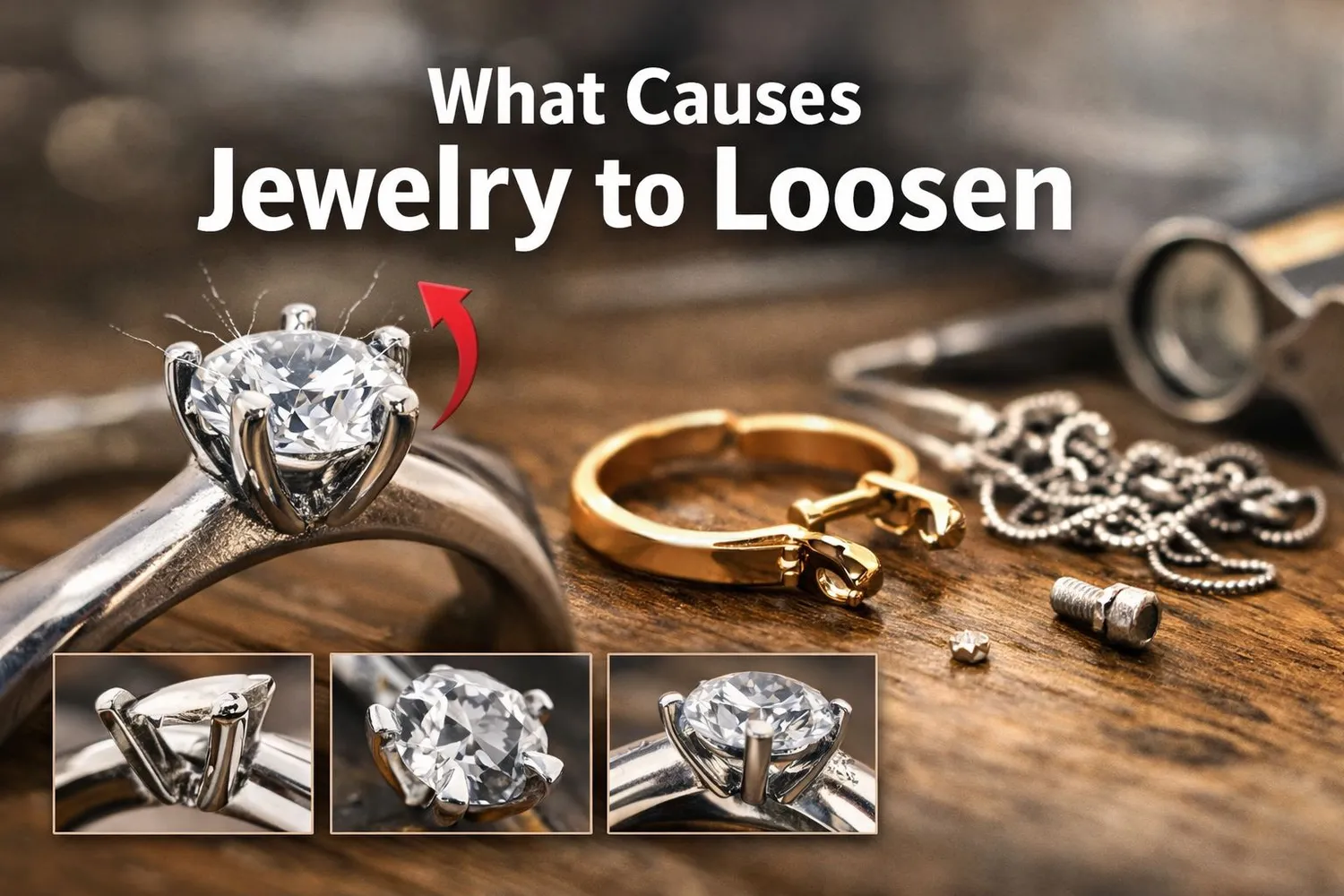
Introduction
A loose gemstone is one of the most frustrating problems jewelry owners encounter. It often seems to happen suddenly: one day the stone looks secure, and the next day it shifts slightly or makes a faint clicking sound when touched. While everyday wear plays a role, the underlying cause frequently begins with the design of the jewelry itself.
Jewelry design directly affects how well a gemstone stays in place over time. The thickness of the metal, the structure of the setting, the size of the stone compared with the band, and the number of support points all influence durability. Some designs prioritize a delicate appearance or maximum sparkle, which can unintentionally increase the chance of loosening.
This doesn’t mean delicate jewelry is poorly made. Many minimalist designs are crafted carefully and can last a long time when worn appropriately. However, certain structural choices make settings more vulnerable to movement, wear, or bending during normal daily use.
Understanding how design influences durability helps buyers choose jewelry that balances beauty with long-term stability. It also helps owners recognize which pieces may need more frequent inspections or maintenance.
How Design Affects Durability
Jewelry settings must hold gemstones securely while still allowing light to reach them. Designers often try to minimize visible metal so the stone appears larger and brighter. Achieving that visual effect requires removing or thinning metal around the stone.
Every design choice involves trade-offs. When metal becomes thinner or support structures are reduced, the setting may become more sensitive to stress.
Several design factors influence durability:
· Thickness of prongs and supporting metal
· Number of prongs securing the stone
· Height of the stone above the band
· Distribution of metal around the setting
· Weight of the band compared with the stone
A well-balanced design spreads stress across multiple points. A less balanced design concentrates stress in small areas.
For example, a ring with six evenly spaced prongs distributes pressure around the stone. A ring with four very thin prongs concentrates that pressure in fewer locations. If one prong bends or wears down, the stone may begin to move.
Designers must consider not only how a piece looks but also how it behaves when exposed to everyday forces such as gripping objects, brushing against surfaces, or sliding across tables.
Minimalist and Delicate Settings
Minimalist jewelry has become increasingly popular. Thin bands, barely visible prongs, and open settings create a light and elegant appearance. These designs often highlight the gemstone with very little surrounding metal.
While visually appealing, minimalist settings sometimes introduce structural vulnerabilities.
Reduced metal support
Thin bands provide less structural resistance to bending. When the band flexes slightly during everyday activities—such as gripping a steering wheel or carrying bags—the setting at the top of the ring may shift.
Even a small distortion in the band can affect how tightly prongs hold the stone.
Higher exposure to impact
Minimalist designs often raise the stone higher above the band so light can enter from multiple angles. This elevated position increases exposure to impacts.
When a raised stone strikes a surface, force travels through the prongs and into the band. Over time, repeated impacts can loosen the prongs or alter the seat that supports the stone.
Limited reinforcement
Some minimalist settings eliminate structural supports such as galleries or crossbars beneath the stone. These supports normally help stabilize prongs.
Without them, prongs may flex more easily under pressure.
Minimalist jewelry can still be durable when constructed carefully, but these designs often require more attentive maintenance and inspection.
Thin Prongs and Micro-Settings
Prongs are among the most critical components in gemstone security. They grip the stone by pressing metal over the stone’s outer edge, known as the girdle.
The thickness and shape of prongs strongly influence how securely the stone remains in place.
Extremely thin prongs
Thin prongs allow more light to reach the stone and make the gemstone appear larger. However, very thin prongs wear down faster than thicker ones.
Over time, friction from daily contact can gradually reduce the metal at the tip of the prong. If the tip becomes too thin, it may lose its ability to hold the stone securely.
Thin prongs also bend more easily when struck against hard surfaces.
Micro-prongs and bead settings
Micro-settings use extremely small prongs or beads of metal to hold tiny stones, particularly in pavé designs. These structures are delicate by necessity because the stones are very small.
If the metal beads are worn down or flattened, the stones may begin to move.
Because micro-settings involve many small stones close together, loosening one stone can affect neighboring stones.
Prong count considerations
Using more prongs often increases security. For example, a six-prong setting offers redundancy: if one prong weakens, the remaining prongs still hold the stone.
Designs with only four prongs may look simpler, but they rely more heavily on each individual prong.
Large Stones in Lightweight Bands
Another design feature that increases loosening risk is pairing a large gemstone with a relatively thin or lightweight band.
The issue arises from leverage.
Increased leverage on the setting
Large stones extend farther above the band and weigh more than small stones. When a ring with a large stone strikes an object, the stone acts like a lever.
The force from the impact travels through the prongs into the band.
If the band is thin or lightweight, it may flex slightly under this pressure. Repeated flexing can gradually change the shape of the setting.
Structural imbalance
A ring should ideally balance the weight of the stone with the strength of the band. When the band is significantly lighter than the stone, structural imbalance may occur.
This imbalance may lead to:
· Slight distortion of the ring shape
· Prongs spreading outward
· Stone seats widening over time
Everyday examples
Activities such as opening doors, typing, or carrying groceries can create small impacts that affect raised stones.
With a large stone on a lightweight band, these impacts produce greater stress on the setting compared with a heavier band.
Trend vs Durability Trade-Offs
Jewelry design trends change frequently. Many modern styles emphasize minimal metal, open structures, and delicate details.
While these features can create striking visual effects, they sometimes reduce durability.
Hidden structural compromises
Some trendy designs rely on extremely thin metal to achieve a refined look. This metal may not provide enough strength to withstand daily wear over many years.
The trade-off becomes apparent when prongs wear down or bands bend.
Open gallery designs
Open galleries beneath gemstones allow more light to enter the stone, improving brilliance.
However, removing structural supports can make the prongs more flexible.
Shared prong settings
In some multi-stone rings, a single prong holds two stones simultaneously. This design reduces visible metal and creates a continuous sparkle.
The downside is that if the shared prong weakens, two stones may become loose instead of one.
Fashion-forward but maintenance-heavy
Certain designs are not inherently flawed but require more frequent inspection and care.
Understanding the maintenance needs of a design helps owners decide whether the aesthetic trade-off is worthwhile.
Design Improvements That Help
Many design features improve gemstone security without sacrificing appearance.
Lower stone profiles
Stones set closer to the band experience less leverage when struck against surfaces.
Lower settings are often more resistant to impacts than high-profile designs.
Reinforced prongs
Prongs supported by a gallery or crossbar beneath the stone resist bending more effectively.
These reinforcements help distribute stress across the structure.
Slightly thicker metal
Increasing prong or band thickness by even a small amount can significantly improve durability.
Well-designed jewelry often balances visual delicacy with structural strength.
Additional prongs
Adding more prongs increases redundancy. If one prong becomes worn or bent, others continue holding the stone.
Protective bezel designs
Bezel settings surround the stone with metal, protecting it from impacts and reducing the chance of prong damage.
While bezels cover more of the stone’s edge, they often provide excellent durability.
Buyer Considerations
Buyers can reduce the risk of loose stones by paying attention to design details before purchasing jewelry.
Evaluate prong thickness
Prongs should appear strong enough to support the stone. Extremely thin prongs may require frequent maintenance.
Check the height of the stone
High-profile settings look dramatic but may experience more impacts. Lower settings often provide better protection.
Examine band thickness
A band that looks very thin compared with the stone may be more vulnerable to bending.
Look for structural support
Elements such as galleries, crossbars, or reinforced prongs often indicate thoughtful design.
Ask about maintenance needs
Some delicate designs are intended for occasional wear rather than daily use. Understanding how a piece is expected to perform helps set realistic expectations.
Consider lifestyle
Someone who works frequently with their hands may benefit from sturdier settings than someone who wears jewelry primarily for special occasions.
Frequently Asked Questions
Do delicate jewelry designs always loosen stones?
Not always. Many delicate designs last for years when worn carefully. However, thinner metal and fewer support points generally increase sensitivity to wear.
Are bezel settings safer than prong settings?
Bezel settings usually offer more protection because the stone is surrounded by metal. However, prong settings can also be secure when properly designed and maintained.
Do larger stones loosen more easily?
Larger stones may create more leverage when struck against objects, which can increase stress on prongs and bands.
Can design flaws be corrected after purchase?
In some cases, jewelers can reinforce prongs, rebuild settings, or modify bands. The feasibility depends on the design and metal type.
How often should delicate jewelry be inspected?
Jewelry with thin prongs or micro-settings often benefits from inspection once or twice per year.
Conclusion
Jewelry design plays a major role in how securely gemstones remain in place. Features such as thin prongs, minimal metal support, raised stones, and lightweight bands can increase the likelihood that a stone will loosen over time.
These design choices are often made to enhance appearance—maximizing sparkle, reducing visible metal, or creating a delicate aesthetic. The trade-off is that the structure may become more sensitive to everyday wear.
Understanding these trade-offs helps buyers choose jewelry that aligns with their lifestyle and expectations. Designs that balance beauty with structural support—such as reinforced prongs, slightly thicker bands, and lower stone profiles—often provide greater long-term stability.
Regular inspection and maintenance are especially important for delicate designs. With thoughtful design choices and proper care, gemstones can remain secure while still showcasing the elegance that makes fine jewelry so appealing.