Diamond Certificate vs Diamond Warranty: Key Differences
Walk into a jewelry store and you’ll hear two reassuring phrases almost immediately: “It comes with a certificate,” and “Don’t worry, it’s under warranty.” They sound similar. They’re often mentioned in the same breath. And many buyers assume they offer the same kind of protection.
They don’t.
A diamond certificate and a diamond warranty serve completely different purposes. One documents what a diamond is. The other promises what a seller will do if something goes wrong. Confusing the two is one of the most common—and costly—mistakes diamond buyers make.
This article breaks down what a diamond certificate actually is, what a warranty really covers, their legal value in the U.S., how each protects (or doesn’t protect) buyers, and where the confusion usually starts.
What a Diamond Certificate Is (Plain English)
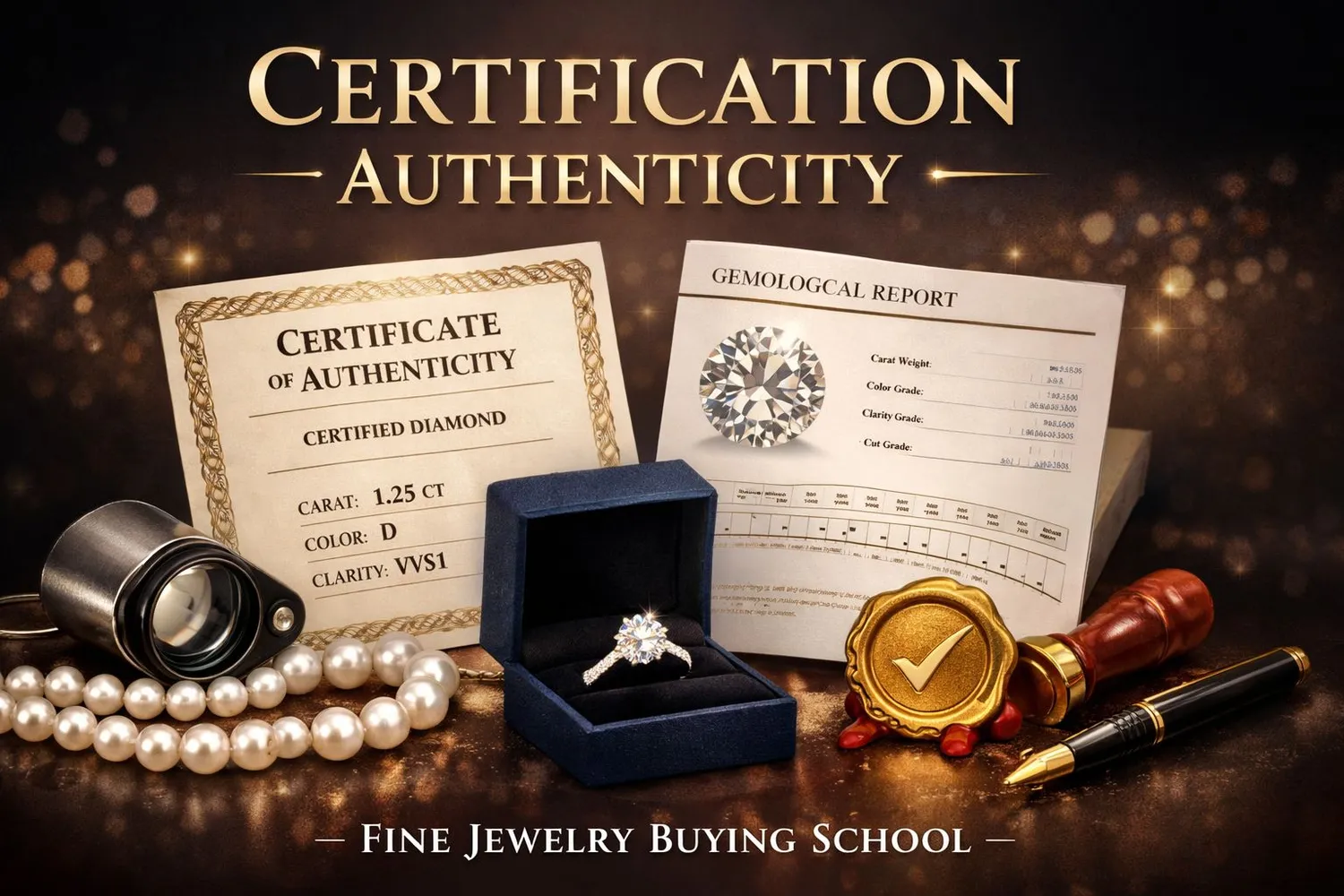
A diamond certificate—more accurately called a grading report—is a document created by an independent gemological lab. Its job is to describe a diamond’s characteristics at the time it was examined.
A typical certificate includes:
- Carat weight
- Color grade
- Clarity grade
- Cut-related information
- Measurements
- Polish and symmetry
- Fluorescence
- Identifying features
That’s it.
A certificate does not:
- Assign a price or value
- Guarantee beauty or sparkle
- Promise durability
- Cover damage, loss, or theft
- Require anyone to fix or replace anything
Think of a certificate like a medical lab report. It tells you what was observed. It doesn’t promise future health, and it doesn’t come with treatment.
Why Diamond Certificates Exist
Certificates exist to create shared understanding between buyers and sellers. Diamonds are hard to describe accurately without standardized terms. Certification reduces guesswork and exaggeration.
Certificates help:
- Compare diamonds across sellers
- Reduce disputes about quality claims
- Provide documentation for insurance or resale
- Identify a diamond if it’s lost or stolen
What they don’t do is protect you from physical damage, craftsmanship problems, or bad pricing.
What a Diamond Warranty Actually Covers
A diamond warranty is a seller’s promise, not an independent document. It outlines what the retailer will repair, replace, or maintain—and under what conditions.
Warranties vary widely, but often include:
- Free prong tightening or inspection
- Repair of manufacturing defects
- Replacement of small accent stones
- Cleaning and polishing services
What warranties usually don’t cover:
- Loss of the center diamond
- Damage from accidents or misuse
- Normal wear if inspections are missed
- Work done by another jeweler
Unlike certificates, warranties are tied to ongoing behavior. Miss inspections. Resize elsewhere. Skip maintenance. Coverage may disappear.
The Key Difference in One Sentence
A certificate describes a diamond.
A warranty promises action if certain conditions are met.
They solve different problems. Owning one doesn’t replace the other.
Legal Value: Certificate vs Warranty
Legal Standing of a Certificate
In the U.S., a diamond certificate is considered an expert opinion, not a guarantee. Most certificates explicitly state that the lab is not liable for errors or differences of opinion.
This means:
- You usually can’t sue a lab over grading differences
- A certificate doesn’t obligate anyone to refund money
- Courts treat certificates as informational, not contractual
Certificates help establish facts, but they rarely create legal obligations.
Legal Standing of a Warranty
A warranty is a contract. If a seller promises specific services or coverage in writing, that promise may be enforceable under consumer protection or contract law.
However:
- Coverage is limited to what’s written
- Conditions matter
- Verbal promises are hard to enforce
If it’s not in writing, assume it doesn’t exist.
Buyer Protection: What Each Actually Protects You From
What Certificates Protect You From
- Misrepresentation of diamond characteristics
- Confusion when comparing stones
- Uncertainty during insurance documentation
- Disputes over “what was sold”
What Certificates Don’t Protect You From
- Overpaying
- Damage or loss
- Poor setting quality
- Wear over time
What Warranties Protect You From
- Minor repairs becoming expensive
- Manufacturing defects
- Some maintenance costs
What Warranties Don’t Protect You From
- Loss or theft
- Major accidents
- Changes in diamond grading
- Market value drops
Understanding these limits prevents false confidence.
Where Buyers Get Confused
“It’s Certified, So It’s Covered”
No. Certification doesn’t include repair, replacement, or insurance.
“The Warranty Proves It’s High Quality”
Also no. A warranty says nothing about diamond grading. It covers future service, not current quality.
“The Certificate Guarantees My Money”
Certificates don’t guarantee price fairness or resale value.
“I Don’t Need Insurance Because I Have a Warranty”
Warranties don’t cover loss or theft. Insurance does.
This confusion often comes from sales language that blends terms without explaining differences.
Real-World Scenarios Buyers Encounter
Scenario 1: Grading Dispute
A buyer discovers another lab grades their diamond slightly lower. The certificate doesn’t entitle them to a refund. The warranty doesn’t apply at all.
Scenario 2: Loose Stone Falls Out
The diamond is lost due to a worn prong. The certificate identifies the diamond but doesn’t replace it. The warranty may cover the repair—but not the lost stone.
Scenario 3: Cracked Diamond
Damage from impact is usually excluded from warranties. Certificates are irrelevant here. Insurance would matter.
Scenario 4: Insurance Claim
The certificate helps identify the diamond. The warranty plays no role. Insurance coverage depends on the policy, not either document.
Common Buyer Mistakes
Mistake 1: Treating certificates like guarantees
They aren’t.
Mistake 2: Not reading warranty fine print
Missed inspections can void coverage.
Mistake 3: Assuming all warranties are the same
Coverage varies dramatically between sellers.
Mistake 4: Using a warranty instead of insurance
They serve different risks.
How Smart Buyers Use Both Together
A practical approach looks like this:
- Use the certificate to verify what you’re buying
- Inspect the diamond visually and structurally
- Read the warranty line by line
- Ask what voids coverage
- Consider separate jewelry insurance
Each tool covers a different risk. Together, they form a more complete safety net.
Edge Cases Buyers Should Know
- Store-issued certificates may look official but lack independence
- Lifetime warranties often require strict maintenance schedules
- Transferred ownership may void warranties
- Older certificates may not reflect wear or damage
- Mounted diamonds may have less precise grading
These details matter more than marketing language.
A Short Financial Safety Note
Diamonds are high-value discretionary purchases. Certificates improve transparency, and warranties reduce maintenance costs, but neither guarantees value retention or full protection. For loss, theft, or major damage, separate jewelry insurance is usually required. Consider professional guidance if the purchase is financially significant.
Practical FAQs Buyers Ask
Do I need both a certificate and a warranty?
They serve different purposes. Having both is common, but neither replaces insurance.
Can a warranty replace a certificate?
No. A warranty doesn’t verify diamond quality.
Can a certificate replace a warranty?
No. A certificate doesn’t promise repairs or service.
What matters more: certificate or warranty?
It depends on your concern—quality verification or future maintenance.
If something goes wrong, which one helps first?
Usually neither. Insurance or the seller’s service policy often matters more.
What I’d Need to Go Deeper
To give more specific guidance, I’d need:
- The exact warranty terms
- Whether the diamond is loose or set
- How the jewelry will be worn
- Whether insurance is planned
Without those details, advice has to stay general.
The Bottom Line Buyers Actually Need
Diamond certificates and diamond warranties are not substitutes. One tells you what you bought. The other tells you what the seller will fix. Neither guarantees value, beauty, or safety on its own.
Buyers run into trouble when they assume paperwork equals protection. It doesn’t. Clarity comes from knowing which document does what—and making decisions based on that reality, not the reassurance of a phrase at the counter.