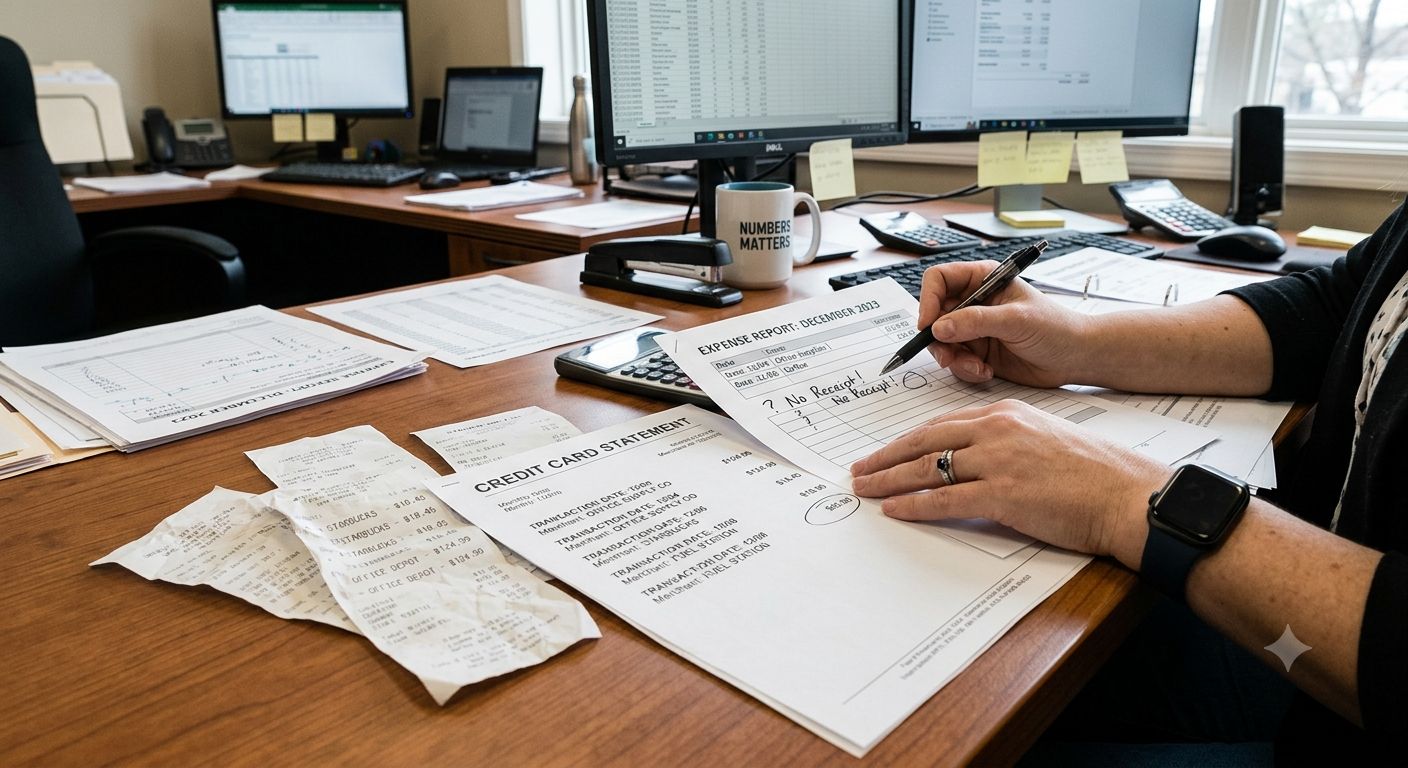
A business expense can appear straightforward until three records show three different amounts. The receipt may show the purchase price, the card statement may include a tip or foreign transaction fee, and the expense report may contain an incorrect category or reimbursement value. These differences create extra review work, delay employee reimbursement, and weaken expense reporting if they remain unresolved.
The issue is rarely limited to one record. Timing, merchant processing, currency conversion, missing documentation, and employee input can all create mismatches. This article explains why receipts, card statements, and expense reports differ, how finance teams can investigate the gaps, and which controls support accurate expense reconciliation.
Why Expense Record Differences Are Common
Expense record differences are common because each record is created by a different party and may follow a different processing timeline.
Different systems record the same transaction at different times
A receipt is created at purchase, while a card transaction may remain pending before settlement. The expense report may be submitted days or weeks later.
Why matching expense records is necessary before reimbursement and reporting
Matching confirms that the expense occurred, belongs to the employee, complies with policy, and has not already been reimbursed.
Impact of unresolved differences on audits and financial close
Unresolved differences can cause unsupported expenses, duplicate payments, incorrect accruals, and additional audit requests.
What Are Receipts, Card Statements, and Expense Reports?
Receipts, card statements, and expense reports provide different evidence about the same business purchase.
Purpose of receipts as proof of purchase
A receipt records the merchant, date, items purchased, taxes, payment method, and final amount.
What card statements record
A card statement records the amount settled by the card provider, transaction date, posting date, merchant descriptor, and any related fees.
Role of expense reports in business accounting
An expense report explains the business purpose, expense category, project, cost center, and reimbursement request.
How these records work together during reconciliation
Expense Reconciliation compares these records to confirm that the claimed expense is accurate, supported, and recorded in the correct account.
Why Receipts, Card Statements, and Expense Reports Do Not Always Match
These records often differ because they capture separate stages of the same transaction.
Timing differences between purchases and card settlements
The receipt date may differ from the date the card charge is posted.
Merchant descriptions differing from receipt details
A card statement may display the parent company, payment processor, or shortened merchant name rather than the store name.
Currency conversion and exchange-rate adjustments
The receipt may show the local currency, while the card statement records the converted amount.
Taxes, tips, and service charges creating amount differences
Tips, hotel taxes, delivery fees, and service charges may be added after the original receipt is issued.
Split transactions and partial settlements
A single purchase may be divided across cards, deposits, refunds, or multiple settlement entries.
Most Common Receipt-Related Differences
Receipt issues often result from missing information or poor document quality.
Missing receipts
Employees may lose paper receipts or fail to upload digital copies.
Illegible or incomplete receipts
Faded print, cropped images, and missing totals make validation difficult.
Duplicate receipt submissions
The same receipt may be attached to multiple expense claims.
Incorrect receipt dates
Employees may enter the submission date instead of the purchase date.
Receipts missing required tax information
Some receipts do not include tax registration details required for deduction or reporting.
Most Common Card Statement Differences
Card statement differences usually relate to transaction status, merchant processing, or fees.
Pending versus posted transactions
A pending amount may change before the transaction settles.
Merchant settlement delays
The merchant may submit the charge several days after the purchase.
Reversed or refunded transactions
A temporary charge may be reversed, or a refund may appear in a later statement period.
Bank fees and foreign transaction charges
Card providers may add conversion fees, cash advance charges, or international transaction fees.
Duplicate card charges
A merchant or payment processor may submit the same charge twice.
Regular credit card reconciliation helps finance teams identify these differences before they affect reporting or employee reimbursement.
Most Common Expense Report Errors
Expense reports can differ because employees enter information manually.
Incorrect expense categorization
Travel, meals, software, accommodation, and client expenses may be posted to the wrong account.
Duplicate expense claims
An employee may submit the same transaction twice or claim a card expense as an out-of-pocket purchase.
Missing supporting documents
An expense report may be submitted without a receipt, invoice, or approval.
Personal expenses submitted for reimbursement
Personal purchases may be included accidentally or without proper separation.
Incorrect reimbursement amounts
Employees may enter the receipt total rather than the settled card amount.
How Timing Differences Affect Expense Matching
Timing differences can create valid temporary mismatches.
Purchases recorded before card settlement
The employee may submit the receipt before the card transaction appears.
Month-end cut-off differences
A receipt may belong to one month while the card charge posts in the next.
Delayed receipt submission
Late submissions can place the expense in a different accounting period.
Late expense-report approvals
A valid claim may remain unrecorded until a manager completes the review.
How to Investigate Differences Between Expense Records
A structured review helps identify whether the difference is valid or requires correction.
Compare transaction dates
Review purchase, posting, settlement, submission, and approval dates.
Match amounts across all records
Compare the receipt subtotal, tax, tip, fee, converted value, and final card charge.
Review merchant information
Check whether the card descriptor belongs to the merchant or its payment processor.
Verify supporting receipts
Confirm that the receipt is complete, readable, and connected to the correct claim.
Confirm approval and reimbursement status
Check whether the expense has been approved, rejected, reimbursed, or included in another report.
Examples of Common Matching Differences
Real expense activity often produces differences that require context.
Restaurant tip causing amount mismatch
The receipt may show the meal amount before the employee adds a tip.
Hotel deposit and final settlement
The card statement may include an initial deposit, final bill, and later release of the deposit.
Foreign currency conversion differences
The local receipt amount may differ from the converted card charge.
Split payment across multiple cards
A single receipt may be paid partly by a corporate card and partly by a personal card.
Expense reimbursed in a later reporting period
The purchase may occur in one month and be reimbursed in the next.
Why Unresolved Differences Create Financial Risk
Expense mismatches can affect payments, reporting, tax records, and control compliance.
Duplicate reimbursements
The business may reimburse an employee for an expense already paid through a corporate card.
Policy violations
Unsupported or prohibited expenses may pass through without review.
Incorrect expense reporting
Wrong categories or amounts can distort departmental and project spending.
Tax and compliance concerns
Missing tax details may affect deductions, reporting, and document retention.
Delayed financial close
Finance teams may need to hold accounts open while unresolved card and expense items are investigated.
Expense Matching Challenges in Large Organizations
Expense reconciliation becomes harder as transaction volume and organizational structure increase.
Multiple corporate card providers
Different providers may use separate formats, merchant codes, and settlement rules.
High employee expense volumes
Large transaction populations make manual matching slower and less consistent.
Multi-currency travel expenses
International travel creates currency, fee, and posting-date differences.
Different approval workflows across business units
Business units may apply different policies, limits, and review stages.
Controls That Improve Expense Reconciliation
Clear policies and review procedures reduce avoidable mismatches.
Standardized expense policies
Policies should define eligible expenses, limits, documentation, and submission deadlines.
Mandatory receipt requirements
Employees should attach valid receipts for transactions above the approved threshold.
Approval workflows before reimbursement
Managers should verify the business purpose, account category, and supporting documents.
Regular review of unmatched transactions
Finance teams should assign unresolved items to owners before month-end.
Periodic corporate card reconciliation
Card balances should be compared with approved expense reports and supporting receipts.
Metrics That Measure Expense Reconciliation Performance
Metrics show where expense matching requires attention.
Percentage of expenses matched successfully
This measures how many transactions agree without manual investigation.
Number of unmatched expense transactions
A growing number of unmatched items may indicate weak submission or card-processing practices.
Average reimbursement processing time
Long processing times may result from missing evidence or delayed approvals.
Duplicate claim rate
This measures how often the same expense is submitted more than once.
Expense-report rejection rate
A high rejection rate may indicate unclear policies or recurring entry mistakes.
How Automation Improves Expense Matching
Automation can compare expense records and direct attention to transactions that require review.
Automatic receipt capture and extraction
Receipt details can be captured from uploaded images, emails, and digital documents.
Matching receipts with card transactions
Transactions can be compared using amount, date, merchant, currency, and employee details.
Real-time identification of missing documentation
Finance teams can identify card charges that do not have supporting receipts.
Exception workflows for unmatched expenses
Differences can be assigned to employees, managers, or finance reviewers.
Centralized visibility into reimbursement status
A shared view can show receipt status, approval, exception reason, and payment status.
What High-Performing Finance Teams Do Differently
Strong finance teams manage expense differences throughout the reporting period.
Review expense exceptions throughout the reporting period
They investigate missing receipts and unmatched transactions before close.
Standardize employee expense submission requirements
Employees follow the same rules for dates, categories, business purpose, and evidence.
Resolve unmatched transactions before month-end
Finance teams assign owners and deadlines for open items.
Monitor recurring policy violations and matching issues
Repeated errors are used to improve training, policies, and review procedures.
Future Direction of Expense Reconciliation
Expense reconciliation is moving toward continuous matching and earlier exception detection.
AI-assisted matching of receipts and card transactions
AI can identify likely matches even when merchant names, dates, or amounts differ slightly.
Predictive identification of duplicate expense claims
Historical transaction patterns can help flag claims that may have been submitted before.
Continuous reconciliation across expense and finance systems
Connected records allow receipts, card activity, approvals, and ledger entries to be compared throughout the period.
Real-time visibility into employee expense compliance
An account reconciliation platform can help finance teams match receipts, card statements, and expense reports, assign exceptions, retain supporting evidence, and monitor unresolved transactions before close.