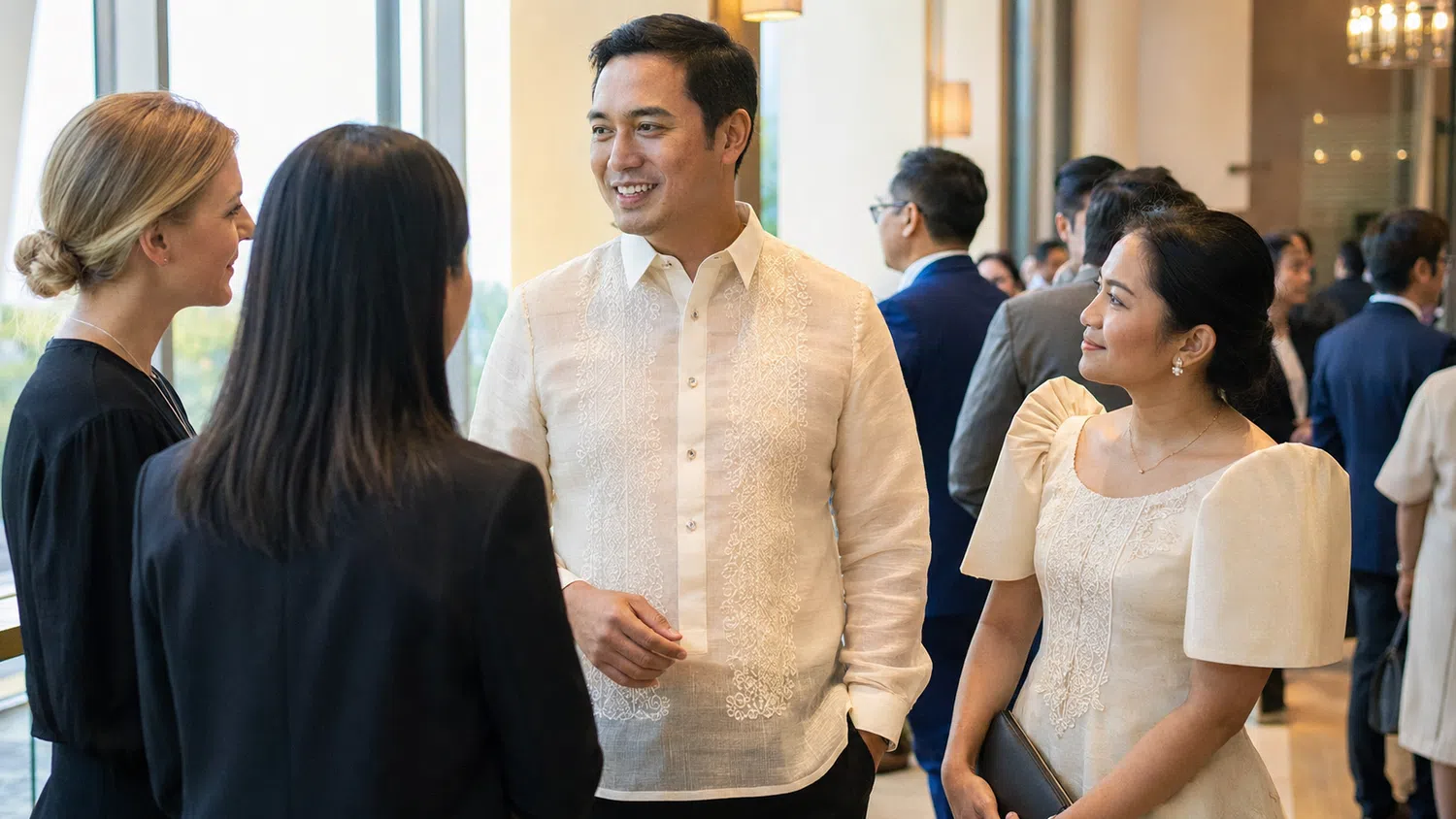
Think about clothing that can speak of the place where a culture comes from, the values that it holds dear, and the past that it does not forget. That is the strength of Filipino traditional wear.
From the stylish barong Tagalog, to the Terno, and Indigenous woven clothes, clothing is a living history of a people. Exploring cultural Philippines traditional dress reveals how heritage stays visible, meaningful, and proudly Filipino.
Traditional Clothing Connects Filipinos to Heritage
The wearing of traditional clothes is not just ceremonial attire. Every piece of clothing tells its own story.
1. Barong Tagalog: Its unique design has come to be recognized as an icon of formal attire for Filipinos.
2. Terno: Its elegant design is symbolic of Filipino fashion while still inspiring modern fashion designers.
3. Indigenous fabrics: The hand-woven fabrics keep alive indigenous skills and patterns.
4. Regional identity: Every region wears their culture and identity through the fabrics, colors, and embroidery.
5.Heritage of living culture: When worn, traditional clothing allows the expression of culture not to be forgotten but kept alive by people. The National Commission for Culture and the Arts identifies cultural property as a means through which identity is revealed.
Why Traditional Dress Still Matters Today
Traditional clothing in the Philippines is still developing but retains its cultural significance. Traditional clothing is the link between the generations and an opportunity for the younger generation of Filipinos to relate to their culture.
Fosters Pride: Dressing in one's cultural costume allows a person to feel proud of his/her cultural background and make it more noticeable.
Preserves Culture: Traditional clothing helps preserve weaving, embroidery, tailoring, and other crafts.
Inform Others: One's clothes can tell stories about the Philippine culture to foreigners.
Inspires New Designs: Modern designers can use traditional designs and create something new from it.
The Bottom Line
Filipino traditional clothing serves not only as a means of making a cultural statement. It is also a way of preserving history.
By learning about and respectfully wearing traditional Filipino clothing, Filipinos and visitors can help keep these traditions alive, relevant, and proudly connected to Philippine cultural identity.