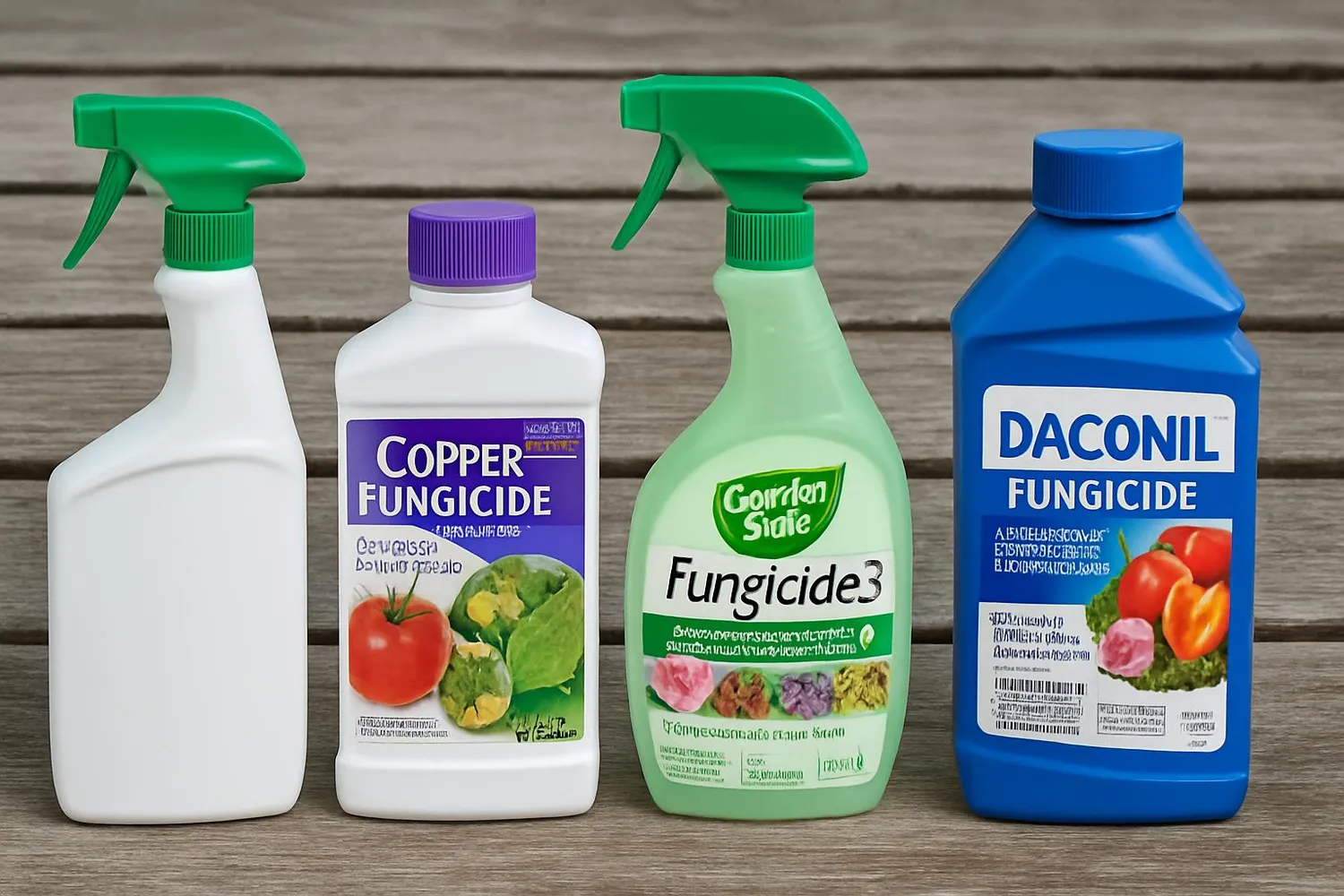
Integrated Pest Management (IPM) has long been seen as the sustainable, eco-conscious solution to crop protection. It is holistic, strategic, and rooted in prevention rather than cure. However, when pest pressures escalate, growers often face a critical question: Can Integrated Pest Management incorporate chemical fungicides without compromising its core philosophy?
To answer that, we need to explore what IPM really is, how it operates, and where fungicides fit in its framework. The goal isn't to reject tools outright, but to ask: when and how can chemical fungicides be responsibly integrated into a system designed to minimize their use?
Rethinking the Core of IPM
At its core, IPM is not a product but a process. It combines biological, cultural, physical, and, when necessary, chemical tools to manage pests in a manner that is economically viable, environmentally sound, and socially acceptable.
The hierarchy within IPM prioritizes preventative and non-chemical methods. These include crop rotation, habitat management, resistant cultivars, and biological control. Only when these methods fail to provide adequate protection do chemical tools come into play — and even then, the goal is precision, not blanket coverage.
Are Fungicides Compatible with the IPM Ethos?
Fungicides, particularly chemical ones, often raise eyebrows among purists. Yet excluding them entirely ignores the complexity of real-world farming. Diseases such as late blight, powdery mildew, and rust can quickly devastate yields, particularly under favorable weather conditions. When such outbreaks occur, intervention is necessary to avoid total crop failure.
Fungicides become compatible with IPM when:
- They are applied based on threshold levels or predictive models.
- They are rotated or mixed to avoid resistance development.
Used this way, fungicides aren't tools of convenience — they are tools of necessity, informed by data and strategy.
When Science Meets Strategy
Modern IPM systems are increasingly data-driven. Predictive modeling and digital tools now guide farmers on when to act. For example, disease forecasting platforms use local climate data to predict high-risk periods for fungal outbreaks. This level of precision allows growers to minimise applications and target them for maximum efficacy.
One example of such targeted use is Agriventure Azodifen Fungicide, which can be integrated into IPM systems under strict monitoring. When combined with cultural and biological controls, such fungicides help ensure yield protection without undermining sustainability goals. Its formulation supports rotational use, limiting the risk of resistance — a significant concern in fungicide-heavy programs.
Preventive vs. Curative: A Delicate Balance
Fungicides can be categorized into two main types: preventive and curative. Preventive fungicides stop infections before they start; curative ones aim to halt the spread once an infection has set in.
IPM prioritises preventive tactics. This means using fungicides before conditions become ideal for disease. It's less about fighting fires and more about fireproofing.
However, the curative role still has a place. There are times when weather events or unexpected vectors override preventive measures. In such cases, IPM's flexibility allows for the use of curative fungicides, but always to return to lower-intervention tactics as soon as possible.
Resistance: The Achilles’ Heel of Overuse
One of the strongest arguments for integrating chemical fungicides responsibly is the management of resistance. Overreliance leads to the buildup of resistance, rendering fungicides ineffective and narrowing the arsenal of control options.
An IPM programme considers resistance patterns, limits repeated use of the same mode of action, and encourages tank mixes or alternating chemistries.
Did you know? According to the FRAC (Fungicide Resistance Action Committee), resistance has been confirmed in more than 150 fungal species affecting crops worldwide. That’s not just a cautionary tale — it’s a call to action.
The Role of Education and Scouting
A successful IPM strategy hinges on scouting and education. Farmers must be able to identify early disease symptoms and distinguish between biotic and abiotic issues.
Visual scouting, spore trapping, and genetic testing all aid in early detection. But none of these work without trained eyes and timely decisions.
- Regular field inspections help track pathogen activity.
- Accurate disease identification ensures targeted treatment.
Knowledge, in this context, is as crucial as any chemical.
“We do not inherit the earth from our ancestors, we borrow it from our children.”
This Native American proverb highlights why sustainability must remain at the core of IPM, even when chemical tools are employed. Chemical fungicides can be part of the solution — but only if the long-term health of soil, ecosystems, and future farming potential remain priorities.
Integrating Fungicides in IPM: A Regional Perspective
Local disease pressures, crop type, and climate influence the use of fungicides in an IPM environment. For example, rice fields in the humid tropics struggle with sheath blight and blast, while grapes in Mediterranean climates are constantly threatened by downy mildew.
There are now regional approaches that use fungicides sparingly. For instance:
- The Ontario Ministry of Agriculture's IPM guidelines for fruit crops incorporate fungicide schedules based on degree days and rainfall. They support alternating chemical classes to avoid resistance.
- UC IPM's pest management guidelines provide detailed thresholds and treatment options tailored to California's diverse crops and pests.
Both models prioritize data over default spraying — showcasing how fungicides can be part of IPM without undermining it.
Market and Consumer Pressures
Produce devoid of residue is in greater demand. Retailers and customers are closely examining every chemical input. Some fungicides are restricted or prohibited completely by certification organisations such as GlobalG.A.P. and organic standards.
Yet, paradoxically, these market demands can backfire. Farmers may lose entire crops or turn to riskier alternatives if they are forbidden from using even selective, low-toxicity fungicides.
Food safety, sustainability, and production must be balanced with subtlety, not with rash prohibitions.
Building a Smarter Toolbox
Today’s chemical fungicides are not what they were 30 years ago. Advancements in formulation, application technology, and environmental toxicology have made many products safer and more selective.
Innovative solutions are emerging, including:
- Nanocarrier-based fungicides: These increase absorption, reduce drift, and lower the required dose.
- Systemic acquired resistance (SAR) inducers: While not fungicides in the strict sense, they activate plant defenses and can reduce fungicide use.
New words like “biopriming” and “phytoprotection” are entering the grower’s lexicon — signalling a shift from suppression to plant empowerment.
FAQs
- Can chemical fungicides be the first line of defense in IPM?
No. IPM emphasizes prevention and non-chemical methods first. Fungicides are used only when monitoring or modeling indicates that other methods are insufficient. - Are all chemical fungicides harmful to beneficial organisms?
Not necessarily. Many modern fungicides are designed to target specific pathogens and break down quickly, reducing their impact on non-target species. - How do farmers decide when to spray fungicides in IPM?
Through a combination of disease thresholds, predictive modeling, weather data, and regular field scouting. - Do organic systems use any fungicides?
Yes, but only those approved by organic standards. These often include copper or sulfur-based products, which still need careful management to avoid buildup or toxicity. - What happens if a farmer skips fungicides entirely?
In high-pressure disease environments, skipping fungicides can lead to catastrophic yield losses, especially in susceptible crops such as tomatoes, potatoes, and grapes.
What’s Next for IPM?
IPM is a dynamic, changing framework rather than a set ideology. Farmers will have to make more astute decisions as climates change and technologies advance, striking a balance between ecology, economy, and precision.
Fungicides made of chemicals are not bad. It's misuse. The question is not whether to utilize them, but rather how to do so wisely, as part of a larger plan that honors soil and science.
Our approach to pest management must be as intelligent, flexible, and resilient as farming itself in the future. Additionally, the strategic and cautious application of chemical fungicides will have a place at the table, but not at the head, in that future.