Modern architectural façade construction faces persistent challenges that impact project timelines, budgets, and building performance. Traditional façade construction suffers from slow installation cycles, high on-site labor costs, and vulnerability to extreme weather or security threats. Many projects struggle with thermal energy loss and non-compliance with stringent international building codes. These pain points demand solutions that integrate speed, security, and global compliance into a unified delivery model.
The Evolution of Façade Technology
The architectural façade industry has undergone significant transformation over the past two decades. Where conventional stick-built systems once dominated the market, advanced modular approaches now offer compelling alternatives for developers and contractors facing tight schedules and complex regulatory environments. The shift toward prefabricated systems reflects broader industry recognition that onsite assembly methods cannot meet the demands of modern high-rise construction, particularly in regions with extreme weather conditions or stringent safety requirements.
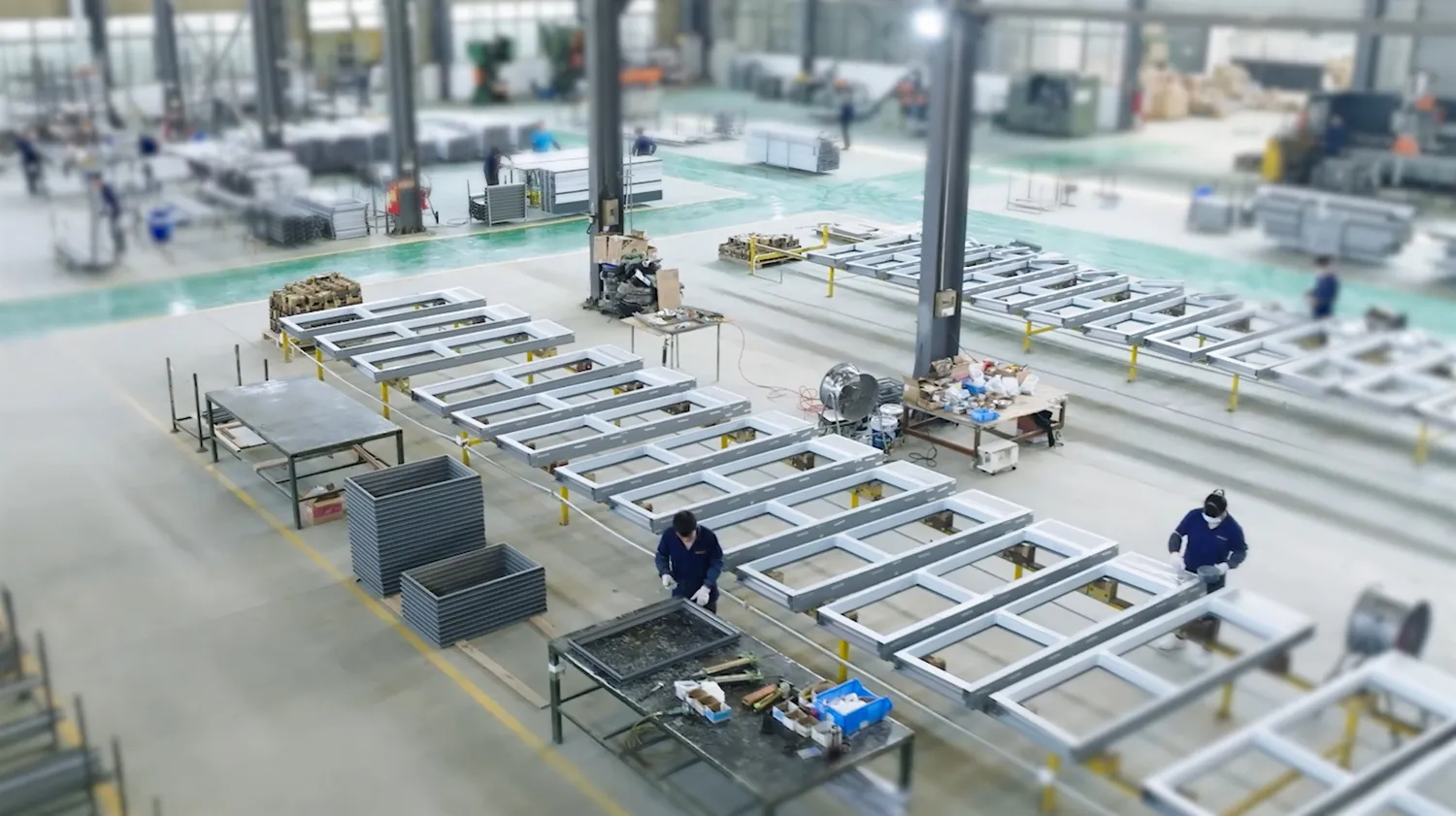
Unitized Technology represents a fundamental departure from traditional construction methods. This approach involves factory-prefabricated modular panel assembly for rapid onsite installation. By moving the majority of assembly work into controlled manufacturing environments, projects can achieve a 40% faster installation cycle compared to stick-built systems. The precision assembly in a controlled factory environment ensures superior air and water tightness, addressing one of the most common failure points in conventional façade construction.
The technical advantages extend beyond speed. Modular Design with prefabricated panels ready for immediate onsite hoisting reduces onsite labor and scaffolding needs, directly addressing the high on-site labor costs that plague traditional projects. Thermal Break Technology with high-performance insulation profiles solves building energy loss and reduces HVAC costs, while Low-E Double Glazing with advanced coating for solar control improves building physics and occupant comfort.
Global Compliance as a Competitive Differentiator
International projects face a complex web of regional building codes and performance standards. Products engineered to meet and exceed international certifications including CE, TUV, AS (Australia), UL (USA), and Singapore standards provide developers with confidence that their façade systems will pass local inspections across diverse markets. This multi-jurisdictional compliance capability proves particularly valuable for multinational corporations and government agencies executing projects across multiple countries.
Hwarrior Curtain Wall Technology (Guangdong) Co., Ltd. operates professional R&D hubs and intelligent production lines in Guangzhou and Zhaoqing, maintaining a project portfolio spanning Asia, Africa, Australia, and the Middle East, South America. With 25 years of experience in the exterior façade industry and 20 years of international project execution and export experience, the company demonstrates sustained capability in navigating diverse regulatory environments.
The company's certification portfolio includes AS4284 (Australian Standard for Curtain Wall Testing), AS2047 (Australian Standard for Windows and External Glazed Doors), UL 752 (Bullet Resistance), UL 263 (Fire rated curtain wall), UL 10B (Fire rated window), UL 10C (Fire rated door), EN 1522 (Ballistic Resistance), EN 1063 (Ballistic glass Standards), EN1627 (Burglar Resistance), EN356 (Burglar glass Resistance), and CE & TUV & IFT & SGS Certified status.
Security Performance for Critical Infrastructure
High-risk environments including embassies, banks, data centers, and government facilities require façade systems that provide protection beyond standard building envelope functions. The KFORTS brand specializes in framed security glass systems designed to protect critical infrastructure worldwide, integrating multi-threat resistance including burglar resistance, bullet resistance, blast resistance, fire resistance, thermal insulation, and hurricane-force impact protection.
Security ratings from RC1 to RC6 (Burglarproof) and UL 752 Levels 1-8 (Bulletproof) provide certified resistance preventing forced entry in high-security zones. High-Strength Lamination with multi-layer composite glass prevents penetration from heavy tools and forced entry attempts. Ballistic Resistance capable of stopping high-caliber rounds protects personnel in government and financial institutions, with compliance to UL 752 (Levels 1-8) and EN 1522 (B1-B7) for ballistic protection.
Fire-rated systems offering 60 to 120-minute integrity and insulation (Ei60/Ei120) ensure safe evacuation routes in hospitals and high-rises. Thermal Insulation blocks heat transfer during a fire, addressing life-safety requirements that standard glazing cannot meet. Blast resistance ratings from EXR1 to EXR5 with Shockwave Absorption through specialized interlayers maintain structural integrity during explosions, minimizing secondary injuries from flying glass.
Technical Capabilities and Service Integration
Professional engineering teams perform Structural Calculation based on local wind loads and seismic requirements, ensuring façade systems can withstand regional environmental stresses. CNC Precision Machining enables high-accuracy manufacturing for complex aluminum and glass components, while Pressure-Equalized Rainscreen Design provides advanced moisture management and air permeability prevention.
Technical metrics include sound insulation ≥45 dB, fire resistance from 60 to 120 minutes (Integrity and Insulation), and the security ratings previously noted. These specifications address the core performance requirements across healthcare, commercial real estate, residential, financial services, and government sectors.
One-stop solutions from concept, design and budgeting through to manufacturing, installation and post-sale maintenance eliminate coordination challenges between multiple vendors. Services developing and supplying façade solutions in aluminium, steel and glass, providing consulting advice and digital solutions throughout the entire project process, meeting different national standards, streamline project execution for architects, developers, general contractors, and security consultants.
Market Validation Through Executed Projects
The New Enga Provincial Hospital in Papua New Guinea required 20,500m² unitized glass curtain wall and window systems meeting AS4284 and AS2047 standards, ensuring structural integrity and weather resistance in a tropical environment while providing a modern aesthetic for the provincial landmark. This healthcare project demonstrated the capability to deliver large-scale façade installations meeting strict Australian safety and performance standards.
CMT Plaza in Mauritius utilized point-fixing (spider) glass curtain wall and aluminum composite systems, achieving a high-transparency aesthetic with the spider system while ensuring long-term durability through aluminum composite cladding. The China Industrial Bank project in Guangzhou completed a 21-story high-performance façade that enhanced the bank's professional image and met urban energy efficiency requirements.
Addressing Diverse Architectural Requirements
Beyond unitized systems, Stick-Built Curtain Wall Systems provide flexible onsite assembly for complex architectural geometries. Design Flexibility adaptable to irregular building shapes and site conditions solves challenges in complex architectural designs, while component variety including hidden frame, semi-hidden frame, and exposed frame options provides diverse aesthetic choices for architects.
Specialized Façade Systems offer custom engineering for unique structural requirements. Point-Supported (Spider) Systems create minimalist glass walls using stainless steel fittings, maximizing transparency and natural light. Double-Skin Façades with multi-layered glass systems enhance sound insulation and natural ventilation. Curved Glass Walls with precision-bent glass meet high-end architectural design requirements for organic building forms.
High-Security Windows & Doors feature multiple opening styles including Casement (inward/outward), Sliding (2-track/3-track), Bifold, and Tilt & Turn, meeting diverse ventilation and space requirements. Hurricane Resistance with reinforced frames and impact-resistant glass solves safety concerns in coastal and storm-prone regions, while high sound insulation with noise reduction ≥45 dB proves ideal for urban residential apartments and hotels.
Conclusion
The architectural façade industry continues to evolve toward integrated solutions that address speed, security, compliance, and performance simultaneously. Companies offering one-stop solutions with proven international project execution capability, comprehensive certification portfolios, and specialized security glass systems position themselves to serve the most demanding segments of the global construction market. As building codes tighten and security requirements intensify, the ability to deliver factory-prefabricated systems meeting multiple international standards while maintaining accelerated installation timelines represents a sustainable competitive advantage in the façade engineering sector.