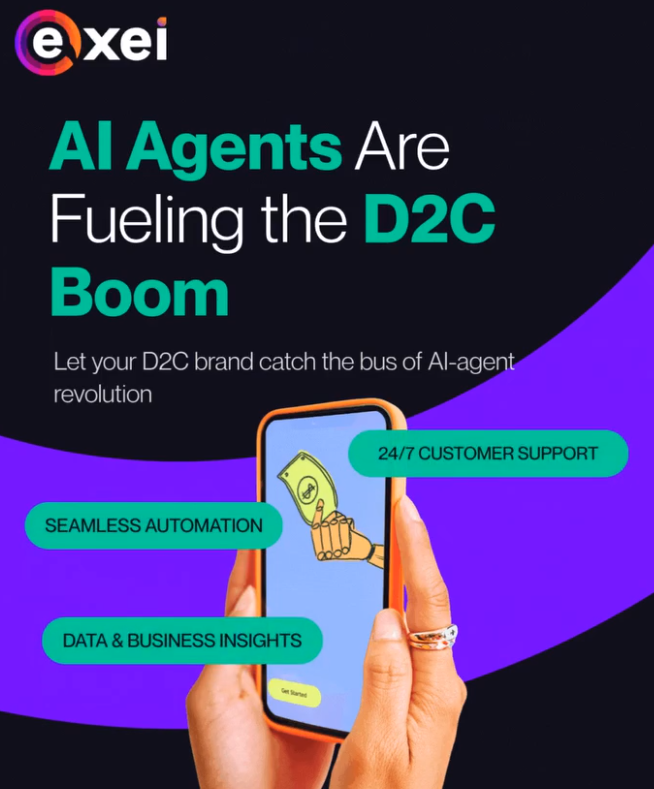
D2C brands are very good at generating attention.
They run performance campaigns. They optimize landing pages. They collaborate with creators. Traffic rises. Orders increase. Revenue dashboards look healthy.
Then the questions start.
“Where is my order?”
“Can I change the address?”
“Is this available in a different size?”
“How long does delivery take?”
The growth everyone celebrates begins to stress the system underneath. This is the moment when an AI Agent for D2C stops sounding innovative and starts sounding responsible.
Growth Without Structure Creates Friction
D2C brands promise direct access and responsiveness. That promise carries weight. When customers message through chat, WhatsApp, Instagram, or website widgets, they expect answers quickly.
If response timing slips, trust erodes quietly. Not dramatically. A delayed reply becomes a follow-up. A follow-up becomes frustration. Frustration becomes churn.
I have seen brands spend heavily on acquisition while losing customers simply because support lagged behind demand. The product was strong. The marketing worked. The infrastructure was unprepared.
An AI agent provides that missing structure.
The Repetitive Layer No One Plans For
Most D2C support volume is predictable. Order tracking. Shipping updates. Refund timelines. Return policies. Basic product clarifications.
These are not complex conversations. They are high-frequency checkpoints. When answered instantly, they disappear. When delayed, they multiply.
An exei AI Agent for D2C absorbs this repetitive layer automatically, resolving common requests in real time while escalating edge cases to human agents with full context. This separation is essential. Automation handles certainty. Humans handle nuance.
When that balance is clear, operations become manageable instead of reactive.
Timing Shapes Perception More Than Messaging
D2C brands often obsess over brand voice. They refine copy. They adjust tone. They test creative.
What they underestimate is timing.
A well-written response delivered too late does not feel attentive. A simple response delivered immediately often does. Speed communicates presence. Presence builds confidence.
AI agents protect that timing. They acknowledge questions instantly and resolve predictable issues before doubt settles in. This consistency stabilizes the experience without altering the brand’s personality.
Escalation Defines Maturity
Poor automation tries to finish every conversation. Effective automation knows when to step aside.
Customer service in D2C can turn emotional quickly, especially around delivery delays or refund disputes. An AI agent must recognize complexity and escalate with context intact. The customer should not need to repeat order details. The human agent should not start from zero.
Platforms like exei are designed with this layered architecture in mind, ensuring that AI agents integrate into existing systems rather than functioning as isolated chat responders. Automation manages flow. Humans manage judgment.
That structure prevents the channel from feeling robotic.
Turning Support Into Strategic Insight
There is another layer that D2C brands often overlook.
Repeated customer questions are signals. If sizing confusion appears daily, product descriptions may need revision. If delivery timelines generate constant follow-ups, expectations may be misaligned. If return policies create friction, messaging may lack clarity.
When an AI Agent for D2C handles repetitive interactions consistently, these patterns become measurable. Instead of relying on anecdotal impressions, teams can identify trends through structured data.
Exei connects conversational insights to operational systems, transforming support from a reactive function into a source of strategic feedback.
Support becomes intelligence rather than overhead.
Protecting Team Energy
Support fatigue is rarely dramatic. It is gradual. Answering the same question fifty times a day narrows patience. It shifts tone. It reduces attention available for complex or emotionally sensitive cases.
When AI agents remove repetitive tasks from the workflow, human agents regain cognitive space. Conversations improve in quality. Escalations become more thoughtful. Brand voice remains intact.
Sustainable service is rarely loud. It simply feels stable.
AI Agent for D2C as Infrastructure, Not Trend
An AI Agent for D2C does not replace customer service teams. It does not eliminate real operational issues. It does not compensate for weak products or unclear policies.
It manages flow.
It stabilizes timing.
It protects escalation quality.
Nothing spectacular happens when it works well. Customers receive answers quickly. Human agents handle complexity with focus. Growth no longer feels like operational stress.
And when scaling stops exposing cracks in support systems, that is usually the clearest sign that the brand has moved from reactive growth to structured maturity.