It's common to get braces to make your smile more attractive and confident. But have you ever thought about how those bright loops that are attached to your braces be effective? These are rubber bands, which are sometimes called "elastics," and they're not just for looks. You can't improve your smile or get closer to your dental goals without them.
What are Brace Rubber Bands?
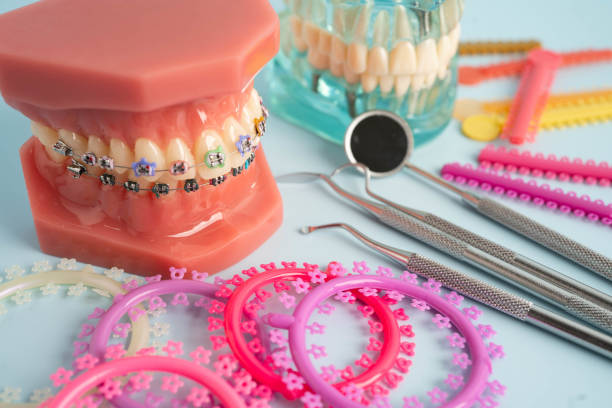
Consider small, colourful springs. It's pretty much the same thing as braces rubber bands. For comfort, these elastics are made of a material that is flexible and doesn't contain latex. They join to small hooks on your braces brackets. They keep gentle pressure on your teeth and move them in certain ways to get them in an ideal position.
Why do people use rubber bands on their braces?
Getting your teeth straightened with braces is helpful, but rubber bands can do other things that braces can't. Here's how they can help you get the perfect smile;
Correcting Bite Issues
Do you have an overbite (upper teeth projecting over lower teeth), an underbite (lower teeth protruding), an open bite (inability to fully close your mouth), or a crossbite (misalignment of upper and lower teeth)? Using rubber bands in the right places can help you get a more effective bite by moving your upper and lower jaws into proper alignment. This will improve your bite in both form and appearance.
Aligning Specific Teeth
Braces may not always be able to accurately target individual teeth, particularly in cases of persistent rotation or gaps between teeth. Rubber bands can apply targeted pressure to push or pull particular teeth into the proper position, fixing gaps or correcting rotations for a more equal smile.
Final Touches
After the braces have done most of the hard lifting, use rubber bands to make any final adjustments. Think of them as the finishing touches to a masterpiece. They can adjust the position of certain teeth to achieve the perfect smile, maintaining proper alignment and attractiveness.
Different Types of Brace Rubber Bands
Like how each person's smile is different, each person needs a different kind of rubber band. Your orthodontist will decide on the most suitable ones for your particular situation depending on a variety of factors;
- Rubber bands come in different sizes so they can fit different parts of your mouth. For example, smaller elastics may be used for delicate front teeth, while larger elastics may be used for back molars that require more pressure.
- The amount of force they use can change based on what kind of tooth movement is needed. Stronger elastics may be utilised in difficult circumstances, while gentler ones may be used for final adjustments.
- Hook Configuration tells you how the bands will connect to the hooks on your braces. Pressure can be applied in different directions to target specific tooth movements with different designs.
Wearing and Caring for Brace Rubber Bands
You will get clear advice from your orthodontist on how to wear your rubber bands correctly. Here's an overview of what to expect;
When to Wear Them (Frequency and Duration)
You'll discover how often and for how long you should wear them each day. Depending on your treatment plan, it could be worn full-time, just at night, or a combination of both.
How to Put Them On and Take Them Off
There is a right way to do it so you don't hurt yourself or your braces. The dentist will show you the right way to hook and unhook the elastics.
Replacing Them
Rubber bands lose their flexibility over time. To maintain their effectiveness, you must change them regularly, usually daily or every other day, as directed by your orthodontist.
Storing them
Keep unused elastics in a clean container. This helps keep them from becoming misplaced or destroyed.
What to Expect While Wearing Braces Rubber Bands
It's common to have some tightness or soreness when you first start using rubber bands. This pain is only brief, and it should go away in a few days as your teeth get used to the new pressure. Some people become more comfortable after taking over-the-counter painkillers or putting a cold pack in their mouth.
Remember that constant wear is important for getting the ideal results. Do not skip putting on your rubber bands, even if they are uncomfortable at first. You can meet your smile goals more easily if you wear the same thing every day.
Conclusion
Rubber bands are more than just colourful brace embellishments. They are important tools that you need to use with your braces to get an improved, healthier, and more confident smile. Wearing your rubber bands regularly and following your orthodontist's recommendations can get you closer to the beautiful smile you've always wanted.