Tree removal may seem like a straightforward task to the untrained eye—just grab a chainsaw, make a cut, and let gravity do the work. However, in reality, felling a tree is a highly calculated and potentially dangerous operation. Professional arborists must consider numerous variables to safely control the direction in which a tree falls. This becomes even more critical in urban and suburban areas like Calgary, where nearby homes, fences, power lines, and people add to the complexity.
In this blog post, we’ll explore how certified experts—such as those from Arborist Tree Service Calgary—plan and control tree falls during removal. Whether you're a homeowner curious about the process or considering hiring professionals for a job, this comprehensive guide will help you understand the science, techniques, and tools that ensure trees come down safely and in the right direction.
Why Controlling Tree Fall Direction Matters
Before diving into the methods, it’s important to understand why arborists go to such great lengths to control how a tree falls.
1. Safety First
The most obvious reason is safety. A falling tree can cause serious injuries or even fatalities if it lands unpredictably. Arborists are trained to prevent these dangers by planning every cut and predicting the outcome.
2. Property Protection
In a city like Calgary, trees are often located near homes, garages, sheds, fences, gardens, or power lines. A miscalculation can result in thousands of dollars in damage—or worse, a community power outage.
3. Environmental Consideration
Arborists aim to minimize disruption to surrounding plants, trees, and ecosystems. Controlled falling ensures that nearby flora and fauna aren’t harmed during the removal process.
4. Efficient Cleanup
When a tree falls as planned, it lands in a designated “drop zone” where it can be easily cut and hauled away. This makes cleanup safer and faster.
Pre-Removal Tree Assessment
Before any cutting begins, certified arborists conduct a thorough inspection of the tree and surrounding area. Here’s what they look for:
1. Tree Health and Structure
Dead, decaying, or hollow trees are more unpredictable when cut. Arborists examine the trunk, branches, and root system for signs of weakness.
2. Leaning or Imbalance
A tree with a natural lean or heavy limb load on one side will tend to fall in that direction. Understanding the tree’s weight distribution is key to planning.
3. Wind and Weather Conditions
Wind can alter a tree’s fall path. Arborists check the forecast and may delay removal during high wind conditions or storms.
4. Soil and Root Stability
Loose or wet soil can affect the tree's balance and root hold. Soil conditions are evaluated to understand how they might influence the fall.
5. Surrounding Obstacles
Arborists identify potential hazards, including structures, power lines, other trees, fences, or vehicles in the vicinity.
Tools and Equipment Used in Tree Felling
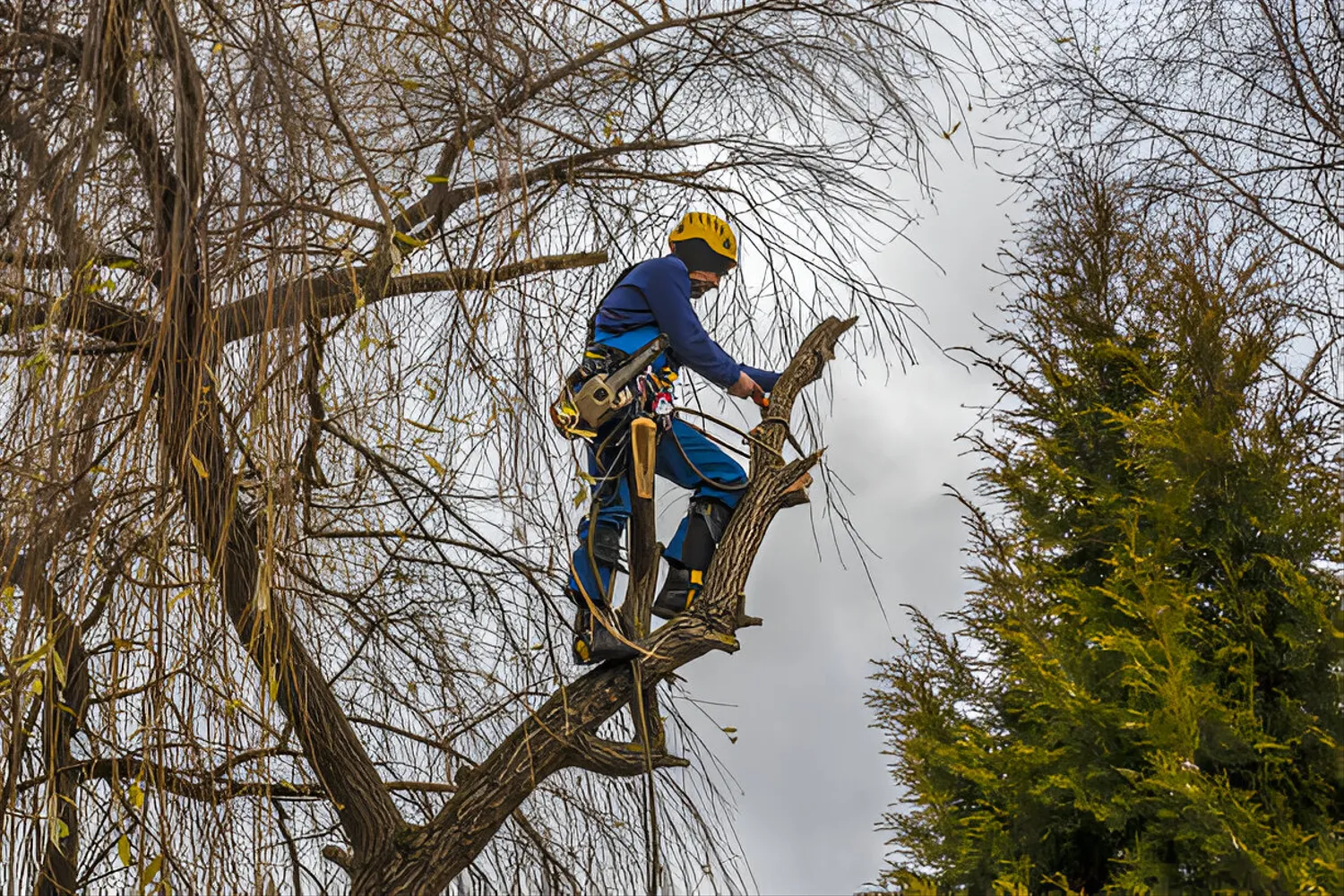
Controlling a tree’s fall requires more than just a chainsaw. Professional arborists use a variety of tools and equipment to plan and execute the job safely.
1. Chainsaws
High-powered chainsaws of different sizes are used to make precise cuts in the trunk.
2. Wedges and Mallets
Plastic or metal wedges are inserted into the felling cut to keep the tree from pinching the saw and to help direct the fall.
3. Ropes and Pulleys
Ropes are used to guide the tree, provide tension, and sometimes even pull the tree in a specific direction.
4. Rigging Equipment
In confined spaces, rigging systems allow arborists to lower branches and trunk sections piece by piece to avoid uncontrolled falls.
5. Cranes and Bucket Trucks
For large or hazardous trees, mechanical assistance such as cranes or aerial lifts may be required to safely dismantle the tree.
The Science of Directional Felling
The heart of tree removal lies in the technique known as directional felling—the art and science of cutting a tree so it falls precisely where intended.
Step 1: Choosing the Drop Zone
Arborists first identify the safest, most accessible area for the tree to fall. This is typically an open space away from obstacles. The drop zone must be clear of people, pets, and valuable property.
Step 2: Notch Cut (Face Cut)
A notch is cut on the side of the tree facing the intended fall direction. This cut consists of two parts:
- A horizontal cut
- An angled cut above or below it (usually 45 degrees)
The notch should be about one-third of the way through the tree trunk. This cut dictates the initial fall direction by weakening the trunk on that side.
Step 3: Back Cut
The back cut is made on the opposite side of the notch, slightly above the horizontal notch cut. This cut releases the tension and causes the tree to begin falling.
Step 4: Using Wedges
Wedges are driven into the back cut to keep the tree from settling backward and to gently push it forward into the notch direction.
Step 5: Retreat Path
Arborists always plan two escape routes at 45-degree angles from the back of the tree. Once the back cut is complete, they retreat quickly and safely out of the fall path.
Advanced Tree Felling Techniques
In more complicated situations—such as urban settings or leaning trees—arborists may need to use advanced techniques to control the fall.
1. Humboldt Notch
This variation of the face cut is used for trees that need a clean stump or fall in specific terrain. It reduces stump height and improves control.
2. Bore Cut
A bore cut starts in the center of the trunk and is used to prevent premature tree fall. It allows the arborist to set a hinge before completing the back cut.
3. Tree Pulling with Ropes
If the tree must fall opposite its lean, arborists may attach a rope and pulley system or even use mechanical winches to pull it in the desired direction.
4. Dismantling
In tight urban spaces, trees may be removed in sections. Arborists climb the tree or use lifts to cut branches and trunk sections one at a time, lowering each piece with ropes.
5. Crane-Assisted Removal
For extremely hazardous trees or locations with no fall zone, cranes lift sections of the tree out safely and place them in a clearing for processing.
Safety Is Always the Priority
Professionals offering Arborist Tree Service Calgary take safety seriously. Every tree removal operation includes a risk mitigation plan and safety protocol.
Safety Measures Include:
- Personal Protective Equipment (PPE) for all workers
- Barricades to keep the public away
- Communication protocols between ground and climbing crews
- Chainsaw safety procedures
- First aid readiness
No tree is worth risking human life or injury. That’s why hiring certified, insured, and experienced arborists is essential.
Why Hire Professional Arborists?
Tree felling may look simple on YouTube, but the reality is far more dangerous. Hiring professionals brings several advantages:
1. Expertise
Certified arborists understand tree biology, structural integrity, and cutting physics.
2. Proper Equipment
They have access to specialized tools that ensure precision and safety.
3. Liability Insurance
If something goes wrong, professional services carry insurance that protects your property and their workers.
4. Permits and Regulations
Tree removal in Calgary may require permits or adherence to municipal guidelines. Arborists handle all of this for you.
5. Efficient Cleanup
From chipping branches to hauling logs, professionals ensure your property is left clean and safe.
A Local Example: Arborist Tree Service Calgary
When it comes to precision tree felling and safe removal, Arborist Tree Service Calgary providers such as Evergreen Ltd are among the most trusted in the region. Their team of certified arborists specializes in:
- Hazard tree removal
- Storm-damaged trees
- Construction clearance
- Tree risk assessment
- Emergency services
With years of experience and deep knowledge of Calgary’s urban forest and weather patterns, they understand how to guide even the largest trees to the ground without incident.
Final Thoughts
Tree removal isn’t just about cutting wood—it’s about planning, calculating, and executing each step with accuracy and care. When done correctly, felling a tree becomes a controlled and safe operation. From understanding the tree’s lean and root stability to making the perfect notch and back cut, every action matters.
In urban environments like Calgary, where safety and property protection are critical, relying on professionals like those from Arborist Tree Service Calgary ensures peace of mind. Whether you're dealing with a diseased tree, storm damage, or new landscaping plans, expert arborists can manage the job from start to finish—safely, efficiently, and responsibly.