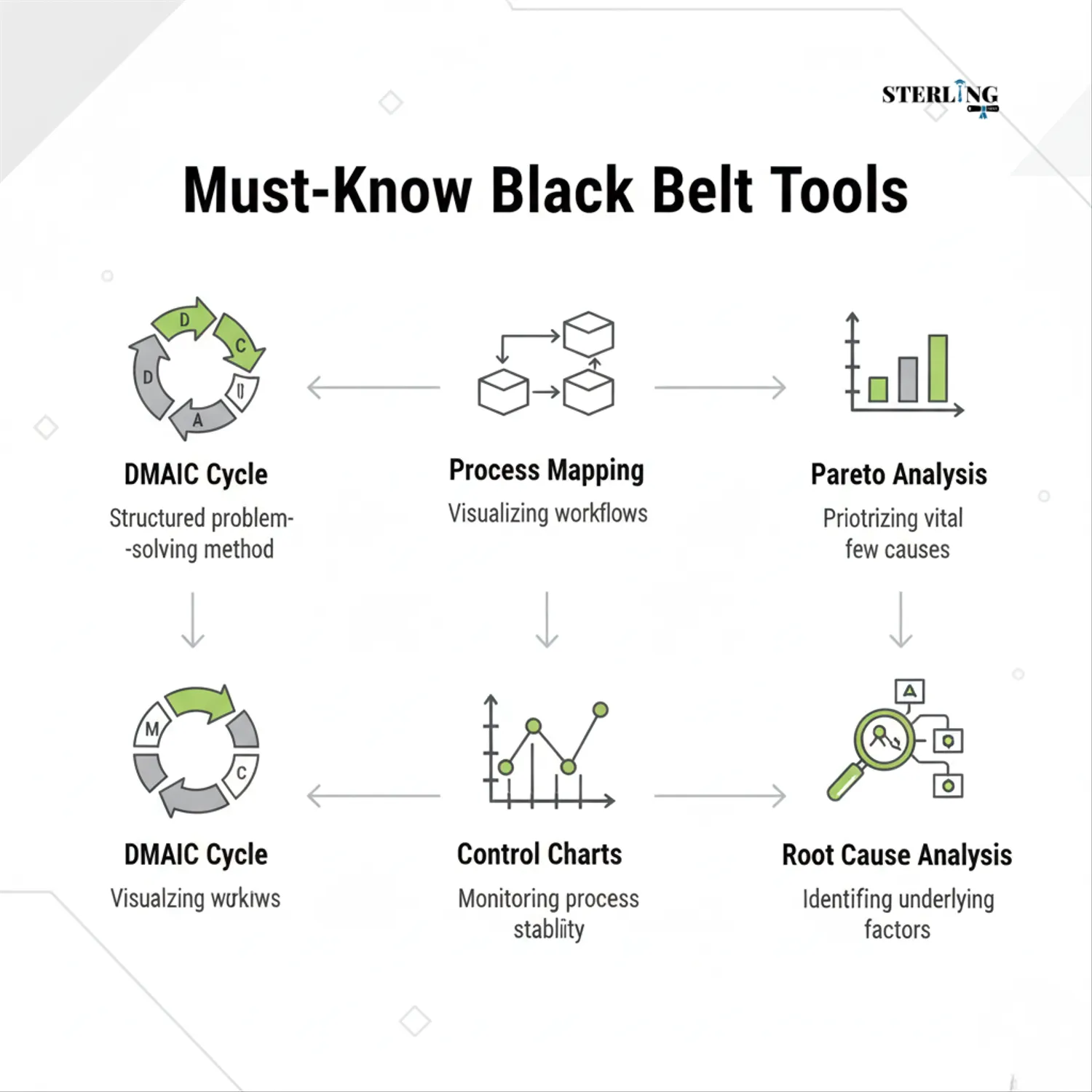
Earning a Lean Six Sigma Black Belt equips professionals with the skills to improve processes, ensure quality, and lead teams effectively. For those managing high-impact projects, knowing the key tools is critical for analyzing workflows, making informed decisions, and achieving measurable results. These tools provide a clear framework to spot inefficiencies, track performance, and guide teams toward successful outcomes. Using the right tool at the right time ensures Lean Six Sigma methods work effectively in real-world projects.
Why Mastering Black Belt Tools Matters
Lean Six Sigma Black Belts often manage complex projects with many moving parts, including diverse teams, tight deadlines, and varying stakeholder expectations. The right tools offer structured approaches that simplify analysis, highlight process gaps, and support better decision-making. Without them, even experienced managers can struggle to deliver consistent results. Mastering these tools helps track progress, manage risks, and drive continuous improvement. Knowing which tool to apply in each situation sets effective Lean Six Sigma Black Belts apart from those relying on intuition alone.
Core Lean Six Sigma Black Belt Tools
Here are the key tools every Black Belt professional should be familiar with:
- DMAIC Framework
DMAIC (Define, Measure, Analyze, Improve, Control) provides a structured way to tackle process challenges. Each stage guides goal-setting, measurement, analysis, improvements, and sustaining results. Professionals use DMAIC to organize work and ensure progress is measurable.
- Process Mapping and Value Stream Mapping
These visual tools help identify bottlenecks and inefficiencies. Process maps reveal redundant steps or delays, while value stream mapping shows how materials and information flow across processes. Both support better resource use and process optimization.
- Cause-and-Effect (Fishbone) Diagram
This tool organizes potential causes of problems visually, helping teams focus on the most likely sources of errors or delays. It promotes structured brainstorming and prioritization of corrective actions.
- Pareto Analysis
Also called the 80/20 principle, Pareto analysis identifies the few problems causing most defects. Focusing on high-impact issues first allows teams to achieve results efficiently.
- Control Charts and Statistical Process Control
Monitoring performance over time ensures consistency and highlights variations that need attention. Control charts visualize trends, and statistical process control provides a data-driven approach to decisions.
- Failure Mode and Effects Analysis (FMEA)
FMEA helps anticipate potential failures before they happen. It assigns risk levels and guides corrective actions, reducing disruptions and improving project reliability.
- Root Cause Analysis
Root cause analysis uncovers the underlying reasons behind recurring issues. Addressing the source rather than symptoms leads to long-term improvements.
- Lean Tools
Lean practices such as 5S, Kanban, Kaizen, and Just-In-Time remove waste, streamline workflows, and maintain productivity. Each tool addresses different operational challenges and helps create efficient, manageable processes.
- Project Management and Statistical Tools
Software like Minitab, Excel, and other data analysis tools help measure results, visualize data, and generate reports. Being proficient in these tools enables Black Belts to manage projects effectively and support decisions with clear evidence.
Practical Application of Tools
Knowing the tools is just the first step. Effective Lean Six Sigma professionals understand how to use them in real projects. Process mapping can reveal supply chain delays, Pareto analysis highlights the most common errors, FMEA prevents production failures, and control charts maintain quality standards. Using tools together helps set goals, measure results, and keep projects on track.
Different industries apply tools in different ways. Healthcare teams can use workflow mapping to reduce patient wait times. Finance teams may rely on root cause analysis to prevent errors, while IT teams use Kanban and statistical tools to track projects. Adapting tools to each context ensures Lean Six Sigma methods are effective everywhere.
Learning and Mastery
Becoming proficient requires training and hands-on experience. Black Belt programs provide a structured foundation, while real projects reinforce learning. Working with mentors or experienced teams helps build practical skills. Consistent practice across diverse challenges ensures professionals can handle complex projects efficiently. Choosing the right tool for each situation is just as important as understanding how it works.
Cross-Industry Use
Lean Six Sigma tools are versatile. Healthcare teams improve patient care with FMEA and process mapping. Manufacturing teams monitor quality using control charts. Finance departments reduce errors with root cause analysis, and IT teams optimize workflows with Lean tools. Mastering these tools allows professionals to apply their skills across industries, boosting efficiency wherever they work.
Driving Professional Growth
Proficiency in Lean Six Sigma tools demonstrates leadership, analytical thinking, and structured problem-solving. Professionals who apply these tools consistently are recognized for improving processes, reducing errors, and managing resources effectively. Black Belt certification signals expertise and opens opportunities to handle complex projects, allowing professionals to add significant value to their organizations.
Conclusion
For those pursuing Lean Six Sigma Black Belt certification, mastering the right tools is essential. From DMAIC and process mapping to FMEA and control charts, these tools provide a foundation for reliable project results. Applying them practically allows professionals to manage complex projects, guide teams efficiently, and achieve measurable improvements. Practicing these tools strengthens skills and positions professionals for lasting career growth.
Start applying Lean Six Sigma Black Belt tools today to make a meaningful impact on your projects.
Enroll in Lean Six Sigma Black Belt Certification Training.
Lean Six Sigma Black Belt Certification FAQs
- Is Lean Six Sigma Black Belt recognized globally?
Yes, this certification is recognized across industries worldwide, helping professionals secure leadership and operational roles. - How does this certification support career growth?
Certified professionals can take on higher positions, lead larger projects, and often see increased compensation after completing Black Belt training. - What kind of projects can I lead after this course?
Professionals can manage enterprise-wide process improvement initiatives, cost reduction projects, and quality control programs that impact business performance. - Will I receive resources like templates and guides?
Yes, training programs typically provide templates for analysis, dashboards, and control plans to assist in ongoing process improvement work. - What is the average Lean Six Sigma Black Belt salary?
Salaries often surpass those of general managers, particularly in operations, manufacturing, healthcare, finance, and IT sectors. - Are refresher sessions or practice materials available?
Yes, many programs offer mock exams, revision modules, and case-based exercises to support exam preparation and skill reinforcement. - What industries hire Black Belt certified professionals?
Manufacturing, healthcare, finance, IT, logistics, and service sectors consistently seek Black Belt certified individuals for roles in process management and operational excellence. - Is post-certification support provided?
Yes, career guidance, coaching, and job readiness resources are often available to help professionals transition effectively after certification. - What is the course duration?
Most Lean Six Sigma Black Belt training programs range from one to four weeks, depending on the learning format and schedule flexibility.