Retro marketing is a strategic approach that leverages nostalgia, visual styles, cultural references, product designs, and emotional cues from past decades, to influence consumer perception and buying behavior. Rather than simply reviving old aesthetics, retro marketing reconstructs familiar cultural moments in a way that resonates emotionally with audiences, especially those who associate certain eras with positive personal memories or perceived authenticity.
In an increasingly saturated digital marketplace, where consumers are constantly exposed to new brands and trends, retro marketing offers a psychological shortcut. It reduces cognitive load by tapping into familiarity. A product wrapped in 1980s neon typography or 1990s analog-inspired packaging immediately communicates a sense of recognition, even if the consumer has never used the original reference point. This blend of familiarity and novelty is what makes retro marketing particularly powerful.
The Psychology Behind Retro Marketing
At its core, retro marketing is rooted in nostalgia psychology. Nostalgia has been shown to increase positive emotional states, strengthen brand attachment, and even increase willingness to pay. When consumers encounter retro-themed branding, they are not just processing visual cues; they are also recalling personal or culturally shared memories. This emotional activation can create a halo effect around the product or service being marketed.
Another key factor is trust. Older design languages or “heritage” aesthetics often imply longevity, reliability, and authenticity. Even for new brands, retro styling can simulate a legacy presence in the market. This is particularly useful for startups or digitally native brands trying to establish credibility quickly.
Why Retro Marketing Works in the Digital Age?
Despite its roots in the past, retro marketing thrives in modern environments, especially social media platforms. One reason is visual distinctiveness. In a feed dominated by minimalistic, algorithm-optimized content, retro visuals, grainy textures, vintage color palettes, analog photography styles, stand out immediately.
Additionally, retro marketing benefits from cultural recycling cycles. Fashion, design, and music trends tend to re-emerge every 20–30 years. As a result, younger audiences often perceive retro styles as “new” or “aesthetic,” while older audiences experience genuine nostalgia. This dual appeal expands target reach across generations.
Brands also use retro marketing to simplify storytelling. Instead of explaining complex product innovations, they can anchor messaging in familiar eras or cultural icons. This reduces the need for lengthy persuasion and allows emotional recognition to carry part of the conversion process.
Core Strategies Used in Retro Marketing
One common strategy is visual revival. This includes typography inspired by mid-century advertising, VHS-style filters, or packaging that mimics older product designs. These cues are often deliberately imperfect, grain, faded colors, and analog textures are used to evoke authenticity.
Another strategy is cultural referencing. Brands may align themselves with specific decades, such as the 1970s disco era, the 1980s arcade culture, or early 2000s internet aesthetics. These references are often embedded in campaigns, product launches, or seasonal promotions.
Storytelling is also central. Retro marketing campaigns frequently position a brand as either a continuation of a legacy or a revival of a forgotten classic. Even entirely new products can be framed as “reimagined” versions of something familiar, creating a sense of continuity with the past.
Finally, sensory design plays a role. Soundtracks, jingles, and even unboxing experiences can be designed to mirror older consumer experiences. This multi-sensory consistency strengthens the nostalgic effect and improves memorability.
Integrating Retro Marketing with Modern Digital Channels
The effectiveness of retro marketing increases significantly when combined with modern digital execution. Social media platforms like Instagram, TikTok, and YouTube Shorts allow brands to amplify nostalgic aesthetics through short-form storytelling. Viral trends often emerge from remixing old cultural content with modern humor or commentary.
Email marketing and website design can also incorporate retro elements without compromising usability. For example, a modern e-commerce site might use a vintage-inspired homepage layout while maintaining fast load times and mobile optimization. The key is balance, ensuring nostalgia enhances, rather than obstructs, user experience.
Data-driven personalization further refines retro marketing strategies. Brands can segment audiences based on age, behavior, or cultural preferences and deliver different nostalgic themes accordingly. This ensures that retro elements feel intentional rather than generic.
The Role of Agencies in Executing Retro Marketing
Executing retro marketing effectively requires more than aesthetic choices, it demands strategic alignment between brand identity, audience psychology, and execution channels. This is where experienced branding and marketing partners become critical.
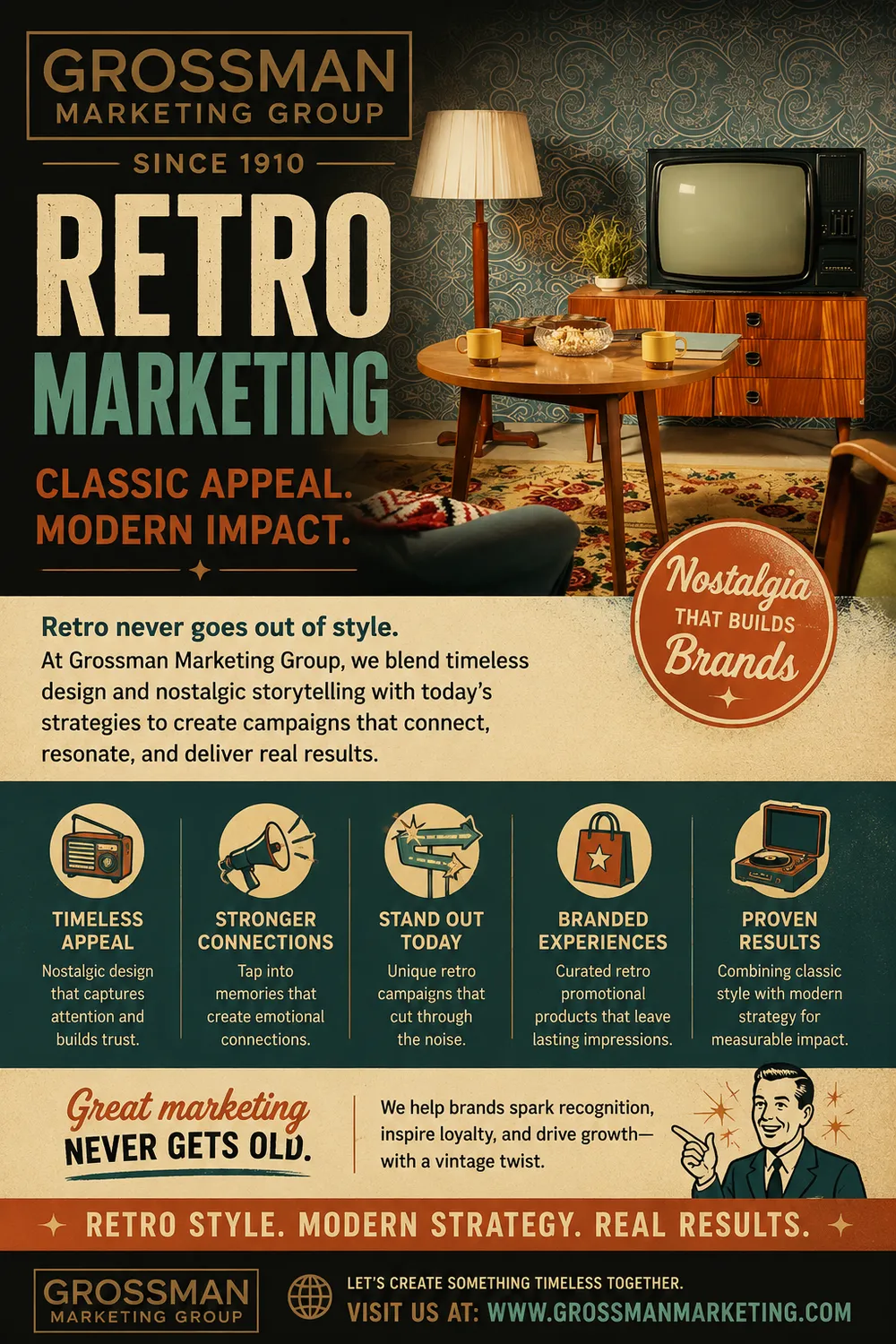
In practice, agencies like Grossman Marketing Group specialize in translating abstract nostalgic concepts into structured campaigns that perform across both traditional and digital platforms. Their approach typically involves aligning retro-inspired creative direction with measurable business objectives such as lead generation, brand recall, and customer retention.
Such agencies help brands avoid the common pitfall of treating retro marketing as purely decorative. Instead, they ensure that nostalgic elements serve a functional role in communication strategy, reinforcing positioning, differentiating from competitors, and supporting long-term brand equity.
Conclusion
Retro marketing is not simply about revisiting the past; it is about strategically reinterpreting it for contemporary audiences. When executed effectively, it bridges emotional memory with modern consumer expectations, creating campaigns that feel both familiar and fresh.
Organizations such as Grossman Marketing Group demonstrate how retro marketing can be integrated into broader branding systems, ensuring that nostalgia is not just visually appealing but also commercially effective. As consumer attention becomes increasingly fragmented, the ability to evoke emotion through carefully constructed retro narratives will remain a powerful differentiator in marketing strategy.