Lighting is one of the most overlooked aspects of EMS preparation, yet it directly affects how accurately a student can assess a patient and how safely they can navigate a scene.
The MedTechKits aluminum penlight and tactical flashlight address that gap with two distinct tools, each built for a different kind of lighting demand.
Not every light source serves the same purpose in clinical and field settings, and the material a tool is made from determines how well it holds up over the course of a full training program.
Starting with the aluminum construction of the penlight reveals why build quality is the foundation everything else depends on.
A penlight used for pupil assessment requires precision at close range, while a tactical flashlight needs to deliver broad, powerful output across varying environments.
How MedTechKits Supports EMS Students
Every medkit a student carries into a clinical setting reflects a choice about quality, and MedTechKits was founded to make sure that choice leads to tools built by people who understand the work.
The brand was created by first responders who recognized that EMS and medical training students deserved equipment designed around how they actually train, not adapted from generic consumer products.
From lighting to assessment equipment, every product in the lineup is selected and designed with the demands of EMT, paramedic, and nursing programs in mind.
The Case for Aluminum in a Medical Penlight
When it comes to tools that get used repeatedly across clinical rotations, material quality is not a minor detail.
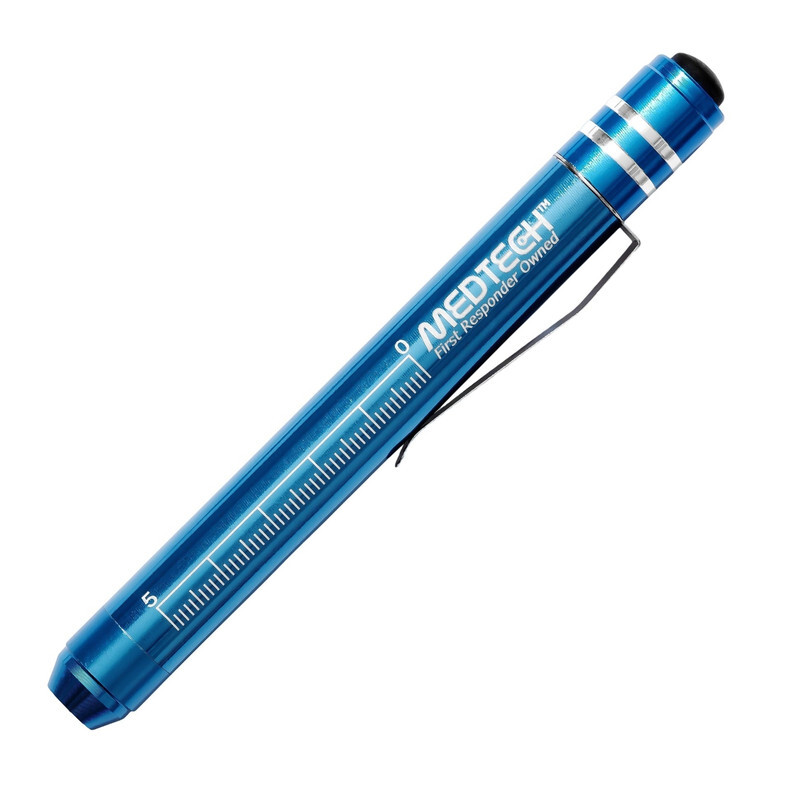
The MedTechKits aluminum pen light medical from MedTechKits is built with an aluminum casing that gives it a level of structural integrity that plastic alternatives simply cannot match.
Aluminum as a housing material resists the kind of denting, cracking, and wear that accumulates over months of training. It also gives the penlight a balanced weight that feels intentional in the hand rather than flimsy or disposable.
IP67 Rating and Why Waterproofing Matters
An aluminum body handles physical impact well, but clinical and field environments introduce another challenge entirely: exposure to fluids and moisture.
The aluminum penlight carries an IP67 rating, which means it is completely dustproof and waterproof when submerged up to one meter.
Contamination control is a genuine priority in clinical settings, and a light that cannot withstand basic decontamination creates unnecessary risk.
The IP67 rating removes that concern entirely, keeping the tool functional and hygienic across the full duration of training.
Pupil Assessment Made More Accurate With Engraved Gauges
Waterproofing addresses the environment the penlight operates in, but the engraved features on its body address the clinical work it is meant to support.
The MedTechKits aluminum penlight includes a laser-engraved pupil gauge directly on the casing, giving students a reliable reference for neurological assessments without needing a separate tool.
A 5 cm ruler is also engraved on the body, extending the penlight's usefulness beyond pupil checks into other quick measurement tasks.
Laser engraving is a deliberate choice here because printed markings wear off, fade, or become unreadable under frequent handling and cleaning.
Having permanent, precise markings on the tool itself means the gauge remains accurate throughout the lifespan of the penlight.
Tactical Flashlight Lumens and Lighting Modes Explained
Penlight assessments require precision at close range, but many EMS scenarios demand something with considerably more output.
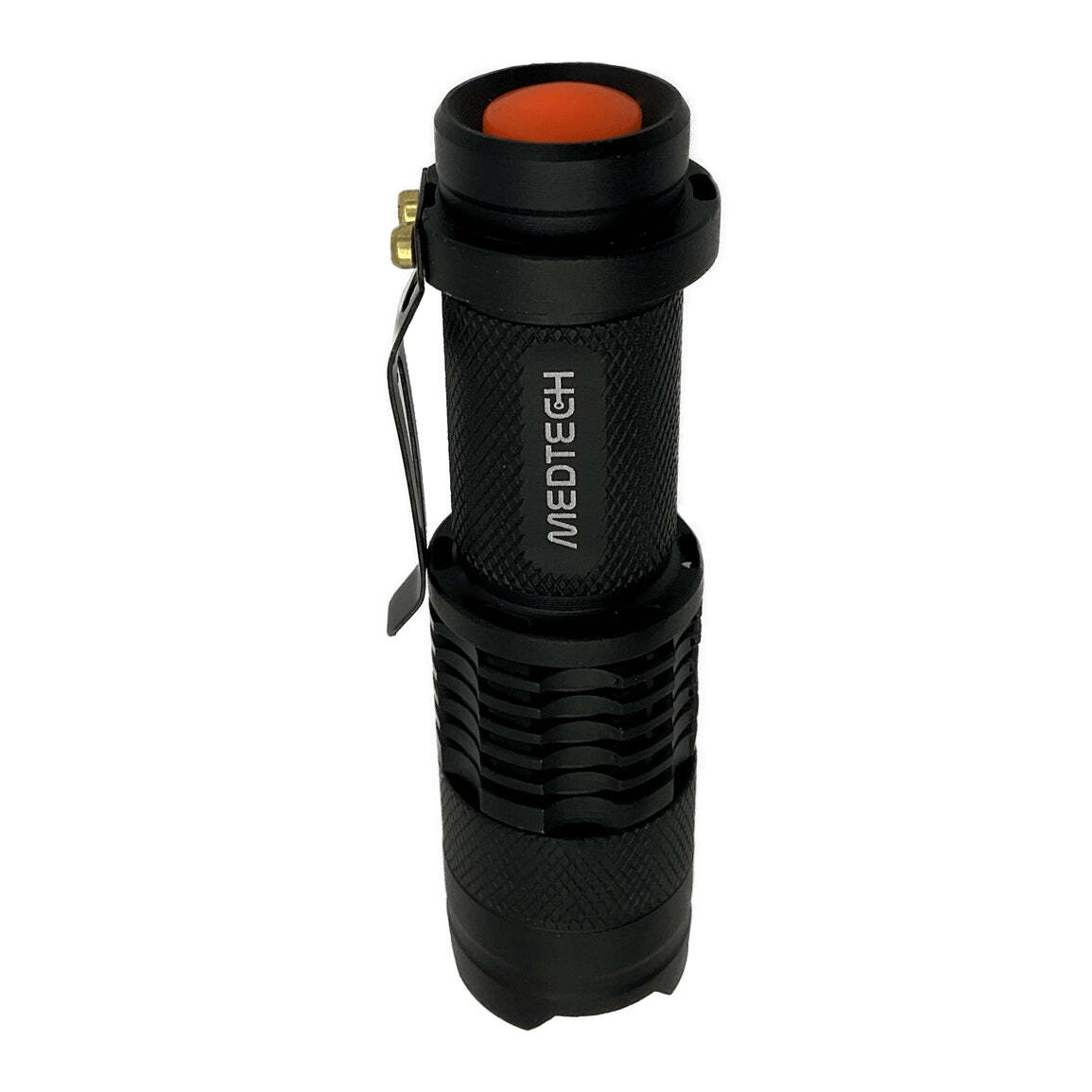
The tactical flashlights from MedTechKits delivers 350 lumens, producing the kind of broad, powerful light beam that a penlight is never intended to provide. Beyond raw output, the flashlight offers three distinct lighting modes: hi-beam, low-beam, and strobe.
Hi-beam delivers maximum brightness for full scene visibility, low-beam conserves battery while still providing useful light in partially lit spaces, and strobe serves as a signaling function in emergencies or high-traffic situations.
Telescoping Zoom for Focused or Wide-Area Visibility
Three lighting modes already expand the range of what the tactical flashlight can do, and the telescoping zoom feature extends that versatility further into spatial control.
By adjusting the zoom, the user can shift between a wide-angle beam that covers a broader area and a narrow focused beam that concentrates light at a specific point or distance.
Wide-angle visibility works well for initial scene assessment, giving the student or responder a broad view of the surrounding environment before approaching.
Focused zoom becomes valuable when examining a specific patient area or directing light into a confined space such as a cabinet or engine compartment.
Clip Design and Hands-Free Attachment Options
Versatile output and zoom are only as useful as the ability to keep the flashlight accessible without occupying both hands.
The tactical flashlight includes a clip that allows attachment to pockets, belts, vests, or radio straps, giving students multiple carry options depending on their setup.
A clip-mounted flashlight stays within reach or securely anchored inside clinical kits during patient contact, without needing to be set down on an unstable surface or handed off to another person.
Battery Setup and Readiness Between Shifts
Reliable attachment keeps the flashlight accessible, but none of that matters if the tool runs out of power at the wrong moment.
The tactical flashlight is powered by a single AA battery, which is one of the most universally available battery formats in any clinical or field setting.
The aluminum penlight runs on two AAA batteries, and both emt tools ship with their batteries already included so students can use them immediately out of the box.
Keeping both lights charged and ready between shifts is straightforward given how common AA and AAA batteries are.
Frequently Asked Questions
Q1. Can I use the penlight comfortably while wearing medical gloves?
Yes, the penlight is designed to be easy to use while wearing standard medical gloves. Its push-button switch provides simple operation, and the slim aluminum body offers a secure grip even when wearing nitrile gloves.
Q2. Is the pupil gauge marked in the same measurements used during clinical assessments?
Yes, the laser-engraved pupil gauge follows the standard millimeter measurements commonly used in neurological evaluations. Having the gauge built directly into the penlight allows students to estimate pupil size quickly without reaching for a separate reference tool.
Q3. How much brighter is the tactical flashlight compared to a regular penlight?
The tactical flashlight produces 350 lumens, making it significantly brighter than a traditional diagnostic penlight. While a penlight is intended for focused tasks like pupil checks, the tactical flashlight is built to light up larger areas and darker environments.
Q4. Can the strobe setting be used to signal for help or get someone's attention?
Yes, the strobe mode can serve as an effective signaling feature in certain situations. The rapid flashing light is highly visible and can help attract attention in low-light environments or busy scenes.
Practical Tools for EMS Preparation
1. A Durable EMS Backpack Built for EMT Students and Rotations
2. How EMS Clinical Kits Support Accurate Assessment and Training