Introduction
Whether you’re a weekend warrior at the local climbing gym or an experienced mountaineer tackling remote crags, there’s one tool you’ll always carry—the climbing carabiner. It may be small, but this powerful piece of equipment is the unsung hero of your climbing system. Designed to connect ropes, harnesses, and protection, the climbing carabiner is your literal lifeline on the wall.
This article dives into everything you need to know about climbing carabiners—types, uses, how to choose the best one, and safety tips to help you climb smarter and safer.
What Is a Climbing Carabiner?
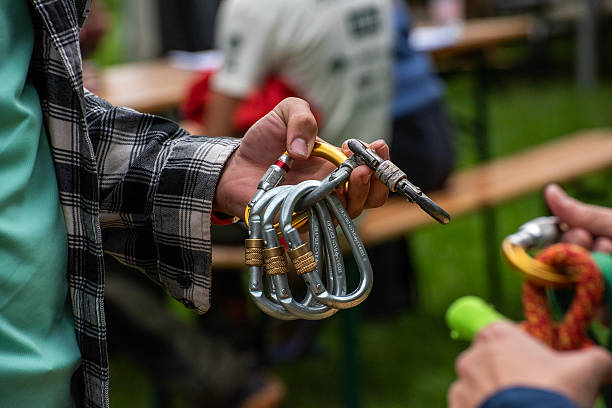
A climbing carabiner is a strong metal loop with a gate that opens and closes. It’s used to securely connect parts of a climbing system—like tying into a rope, clipping into protection, belaying, or rappelling. Despite their size, carabiners are incredibly strong, with strength ratings commonly starting at 20 kilonewtons (kN) or more (that’s over 2,000 kg of force!).
Types of Climbing Carabiners
1. Non-Locking Carabiners
Lightweight and easy to clip, these are ideal for sport climbing quickdraws and racking gear. However, they shouldn’t be used where security is critical, such as belaying or anchoring.
2. Locking Carabiners
Locking carabiners have a mechanism that prevents the gate from opening unintentionally. They come in three main types:
- Screwgate – Manually twist to lock the gate shut.
- Twist-lock – Locks automatically with a twist (quicker but requires careful use).
- Triple-lock – Offers maximum security with a third movement to open the gate.
These are best for use in high-risk areas like belay systems, anchors, or personal tethers.
3. Wiregate Carabiners
Instead of a solid metal gate, these use a wire loop. They’re lighter, less prone to freezing in cold conditions, and often preferred for trad or alpine climbing.
4. HMS Carabiners (Pear-Shaped)
The large shape of an HMS carabiner makes it perfect for belaying with a Munter hitch or a tube-style belay device. These are a go-to for most belay setups.
Best Uses for Climbing Carabiners
- Belaying and Rappelling – Use an HMS locking carabiner for smooth rope movement.
- Anchors – Always use locking carabiners to secure yourself and your belay device.
- Quickdraws – Non-locking carabiners on either end of a sling allow fast rope clipping on sport routes.
- Trad Climbing – Wiregates are great for racking cams and nuts due to their lightweight design.
- Alpine Climbing – Opt for lightweight, durable wiregates that won’t freeze or weigh you down.
How to Choose the Right Climbing Carabiner
When picking the right carabiner, consider:
- Weight – Go light for long routes or alpine climbs.
- Size & Shape – HMS for belaying, D-shape for general use, oval for aiding.
- Gate Type – Wiregate for ease and weight; locking for safety-critical points.
- Strength Rating – Look for a 20+ kN rating on the major axis.
- Ease of Handling – Some gates are easier to open with gloves; check for comfort and speed.
Popular Climbing Carabiner Brands
1. DMM (UK)
Manufactured in Wales, DMM offers some of the best carabiners on the market, like the Phantom, Shadow, and Alpha Trad.
2. Petzl (France)
Renowned for smooth gates and innovative locking systems—check out the Attache and Sm'D for lightweight performance.
3. Black Diamond (USA)
Reliable and widely available, Black Diamond’s HotForge, LiteWire, and RockLock are climbing staples.
4. Wild Country (UK)
Offers great value for beginners and advanced climbers alike. Their Proton and Ascent HMS are strong, functional, and affordable.
Safety Tips for Using Carabiners
- Always inspect before use. Look for sharp edges, bent frames, rust, or malfunctioning gates.
- Avoid cross-loading. Carabiners are weakest when loaded across the gate.
- Don’t mix and match roles. Keep your belay carabiner for belaying only—don’t use it to rack gear.
- Clean and store properly. Keep your carabiners dry and dirt-free for smoother operation and longer life.
How Many Carabiners Do You Need?
It depends on your climbing style:
- Indoor top-roping: 2–3 locking carabiners
- Sport climbing: 10–12 quickdraws + 2 locking carabiners
- Trad climbing: 15–25 carabiners (mixed wiregates and lockers)
- Multi-pitch/alpine: Add extras for anchors, rappels, and emergency use
Carabiner Lifespan
Carabiners can last 5 to 10 years with proper care. However, they should be retired immediately if:
- Dropped from height (especially on rock)
- Bent, cracked, or visibly damaged
- The gate no longer springs closed properly
Where to Buy Climbing Carabiners in the UK
Online Retailers
- Cotswold Outdoor
- Rock + Run
- V12 Outdoor
- GO Outdoors
In-Store Locations
Climbing shops in Sheffield, Llanberis, Bristol, and Manchester often offer hands-on advice and selection.
Conclusion
Climbing Carabiners are the heart of your climbing gear setup. Choosing the right type for your climb—and knowing how to use it safely—can make the difference between a solid ascent and a risky situation. Whether you're climbing indoors, sport, trad, or alpine, make sure your carabiners are strong, reliable, and ready for the adventure ahead.