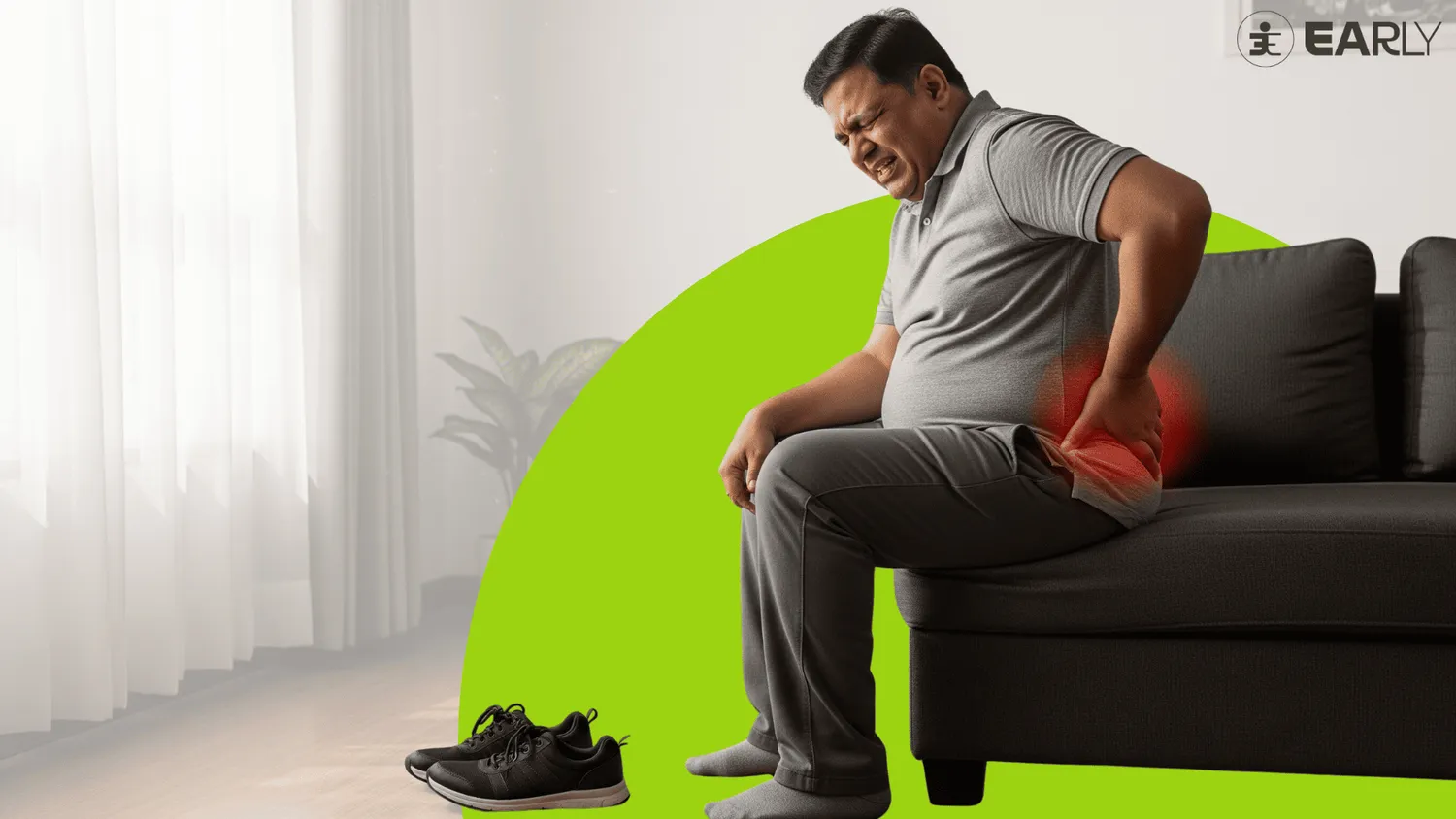
Knee and back pain are no longer problems limited to old age. Today, an increasing number of people in their 30s and 40s, especially in urban India, are dealing with persistent joint pain that disrupts daily life. One of the most overlooked causes behind this growing issue is obesity.
Extra body weight doesn’t just reflect on the weighing scale. It shows up in your knees, your spine, and your overall mobility. Let’s understand what’s happening, why the problem is accelerating, and how you can take control before the damage becomes permanent.
Why Are So Many People in India in Pain?
Joint and back pain now rank among the leading causes of disability in India, particularly in cities. According to the Global Burden of Disease Study, knee osteoarthritis alone accounts for over 2.1 million years lived with disability (YLDs) in India. Back pain remains the world’s leading cause of disability.
Urban India is seeing an even sharper rise because of:
- Sedentary lifestyles with long sitting hours
- Poor posture habits
- Minimal physical activity
- Rapidly increasing obesity rates
Together, these factors are creating a nationwide musculoskeletal health crisis.
How Obesity Affects Your Knees
Your knees absorb your body weight with every step you take walking, standing, or climbing stairs. When your body weight increases, the pressure on your knees multiplies.
Every additional 1 kg of body weight adds nearly 4 kg of extra pressure on your knees while walking.
This means being just 10 kg overweight makes your knees bear the load of an extra 40 kg all day. Over time, this constant overload wears down cartilage and leads to knee osteoarthritis.
Common signs of knee damage include:
- Pain while walking or climbing stairs
- Morning stiffness or stiffness after sitting for long
- Cracking, clicking, or popping sounds
- Swelling and inflammation
Studies also show that Indian women above 40 are nearly twice as likely to develop knee osteoarthritis due to hormonal shifts, lower muscle strength, and higher obesity rates in urban environments.
How Obesity Affects Your Back
Your spine supports your upright posture, but it is highly sensitive to weight imbalance. Excess fat around the abdomen pulls the spine forward, increasing strain on the lower back.
- Obesity can affect your spine in the following ways:
- Increases compression on spinal discs
- Weakens core muscles, forcing the back to work harder
- Promotes poor posture, which worsens pain
- Can lead to slipped discs, sciatica, and chronic lower back pain
Weight-related back pain often starts as discomfort but can gradually become a long-term mobility-limiting condition if left untreated.
Knee and Back Pain Often Go Hand-in-Hand
Pain rarely exists in isolation. Knee pain alters the way you walk, placing extra load on the lower back. Similarly, back pain limits movement, causing muscle weakness, stiffness, and further weight gain.
This creates a vicious loop:
“When weight increases, pain worsens. When pain worsens, movement reduces. When movement reduces, weight increases further.”
Why Urban India Is at Higher Risk
City lifestyles create the perfect setup for both obesity and joint problems:
- Desk-based jobs and long sitting hours
- Elevators replacing stair use
- Easy access to food delivery and packaged foods
- Limited walking spaces and physical activity
As per the National Family Health Survey (NFHS-5), over 24% of urban Indian adults are now overweight or obese, and this figure continues to rise annually. With rising weight comes a surge in joint and spine disorders, even among young adults.
The Good News: Small Weight Loss, Big Pain Relief
Even modest weight reduction can significantly improve joint stress and back health.
Simple steps that truly work:
Lose just 5 - 10% of your body weight: This alone can reduce knee pressure, ease spinal stress, and lower inflammation.
Walk daily, even at a slow pace: Low-impact movement strengthens muscles and improves circulation. If walking is painful, swimming and cycling are excellent alternatives.
Eat anti-inflammatory foods
Focus on:
- High-protein foods to strengthen joint-supporting muscles
- Omega-3 fats from flaxseeds, walnuts, and fatty fish
- Colourful vegetables and fruits rich in antioxidants
Build muscle, not just focus on fat loss: Stronger thigh, core, and back muscles protect your joints. Exercises like wall sits, planks, glute bridges, and resistance training are great starting points.
Fix your posture: Poor posture increases stress on both the spine and knees. Avoid slouching, use proper lumbar support, keep your feet flat on the floor, and take movement breaks every 30 - 45 minutes.
Track your metabolic health: Underlying issues like insulin resistance, thyroid imbalance, or PCOS can drive stubborn weight gain. A metabolic health evaluation can uncover hidden contributors to joint pain and obesity.
When Should You See a Doctor?
You should seek medical help if your knee or back pain:
- Persists for more than 2 - 3 weeks
- Gradually worsens instead of improving
- Disturbs your sleep
- Restricts your daily activities or mobility
Medical evaluation may include X-rays, physiotherapy, medication, or, in selected cases, supervised medical weight-loss options such as GLP-1 based therapies. These medications should only be used under strict medical guidance and only if deemed appropriate by a doctor.
Why You Should Take Knee and Back Pain Seriously
Knee and back pain are not something you have to quietly put up with as part of aging or busy city life. They are signals from your body that something needs attention. When ignored, this pain can slowly lead to joint damage, limited movement, and long-term health problems that affect your quality of life.
The good news is that small, consistent changes can make a real difference. Simple habits like walking a little more each day, improving your diet, building muscle strength, and losing even a small amount of weight can ease pain and help protect your joints for the future.
Contact Us
New Delhi, Delhi, 110024, India
+91 9560990533