I’ve seen so many good and bad business-to-business (B2B) emails and I’ve decided to use real examples to show you what makes a great B2B email and how to craft one.
In this guide, you will learn strategies for successful B2B marketing emails, see some real-world B2B email marketing examples from my inbox and and other sources, and understand what makes an effective email that drives results.
Let’s dive in!
Structure of a B2B marketing email that works
I’ve analyzed dozens of B2B emails and want to show you 9 great examples that can inspire you for new, truly impactful email campaigns.
The thing is that every effective email has a similar structure that also leaves plenty of room for experimentation within these guidelines.
So, I’ve gathered and analyzed a general email template for you!
Here’s the breakdown:
- Compelling subject line
- Engaging opening
- Main body that shows the value
- Powerful CTA
Now, let me walk you through the industry best practices for each element specifically for B2B emails.
1. Use a catchy email subject line
A clear, concise subject line focused on value helps improve open rates and engagement in B2B emails. Avoid vague or generic phrases like:
- “July X-product updates”
- “Check out our latest news”
Instead, use specific and compelling language tailored to your audience’s needs, such as:
- “Boost team productivity by 30% with our new collaboration tool”
- “Save 20% on your next enterprise subscription”
For a better impact, consider personalizing subject lines. A 2024 research by Kleny shows that including the recipient’s name in the subject line can increase open rates by up to 39%.
Using emojis, currency symbols, or numbers can also significantly enhance engagement.
2. Start strong with a hook that resonates in the opening
Similar to your subject line, your opening line should grab attention immediately. Avoid generic statements like “We’re here to help.” Instead, focus on what matters to your audience and can interest them. Here are several ideas on how to “hook” a reader:
- Address a specific pain point of your target audience
- Ask a thought-provoking question
- Share an interesting fact
A strong hook sets the tone and ensures recipients see the value of your email right from the start.
3. Craft a main body that is short but packed with value
To make the email body resonate with the recipient, focus on:
Showcasing value they can’t ignore
Unlike individuals who may make quick, emotional purchases, businesses are focused on results. Your main job is to make the value immediately clear and appealing. Recipients should instantly understand why they need your product and how it can improve their business.
Avoid being vague or overly promotional in your email. Instead, use specific details and examples that align with their needs. For instance, explain how your product can save time, boost efficiency, or help them achieve measurable outcomes.
A great way to do this is by including actionable insights and tangible metrics. For example:
- Instead of saying, “Our tool can improve productivity,” say, “Our tool will help your team save up to 10 hours per week by automating repetitive tasks.”
- Replace, “We help you cut costs,” with, “Our solution reduces operational expenses by up to 20% annually.”
- Swap, “Enhance customer satisfaction,” for, “Our software improved customer satisfaction scores by 35% for similar businesses.”
Make it personal and relevant
Personalized emails create trust and I’m talking not only about a name in the subject line. Personalized content shows the recipient that your business cares about solving their problems rather than pushing generic offers. What can it be?
- A recommendation based on a previous purchase/history of a product use
- A use case relevant to their industry or specific challenge
- Data-backed insights tailored to their company size or needs.
Personalization always starts with segmentation of your audience based on factors like industry, job title, past behavior, etc. Segmented contact lists help you create targeted email campaigns that address subscribers’ unique needs and challenges.
For example, a marketing manager may prioritize lead generation, while a CEO is more likely focused on ROI.
Craft emails that show how your product or service can solve a specific problem for a particular group of recipients or help them achieve their goals.
Use a simple layout for easy readability
Your email layout should make it easy for the reader to quickly scan and understand your message. Business people are often busy, so a clean and organized design helps them grasp the key points effortlessly.
Formatting is very important. Break your content into small sections with clear headings or subheadings. Use short paragraphs and bullet points to highlight important details.
Avoid overloading your email with too much text or large blocks of information. Instead, focus on white space and visuals to guide readers’ attention.
For example, use bold text to emphasize critical information and include a clear CTA button that stands out. More on that in the related section.
Check your text for spam
Always review your email content for spam-triggering words and phrases. Words like “Free,” “Limited offer,” or “Act now” can hurt your email deliverability.
You can check the full list of spammy words in our guide or test your emails in Mailtrap to ensure they don’t get flagged and land in your recipient’s inbox.
4. Drive action with a powerful call-to-action (CTA)
Your email should guide the recipient toward a specific next step. Use a clear and direct CTA that tells them exactly what to do.
Make your CTA easy to find. Use a button or bold text to make it stand out, instead of burying it in the middle of a paragraph where it might be overlooked. Also, make sure the language is focused on the benefit.
For example, “Get my personalized report” is more actionable than generic phrases like “Click here” or “Learn more.”
Also, limit your email to one primary CTA. If absolutely necessary, you can include a secondary CTA, but too many options will confuse the recipient and reduce the chances of action.
With that out of the way, let’s take a look at some great B2B email examples and see how they’ve implemented the structure we just described.
Welcome email — Lucid
According to a 2024 GetResponse report, welcome emails have an average open rate of 83.63%. This means they’re not just a way to grab attention — they’re an opportunity to turn new subscribers into qualified leads.
For instance, take a look at this first email from Lucid, a suite of visual collaboration and diagramming tools. It includes all the key elements of an effective welcome email:
- Warm greeting
- Clear structure
- Explanation of what and when to expect
- Link to useful materials
- Link to product details
- Visible “Unsubscribe” button
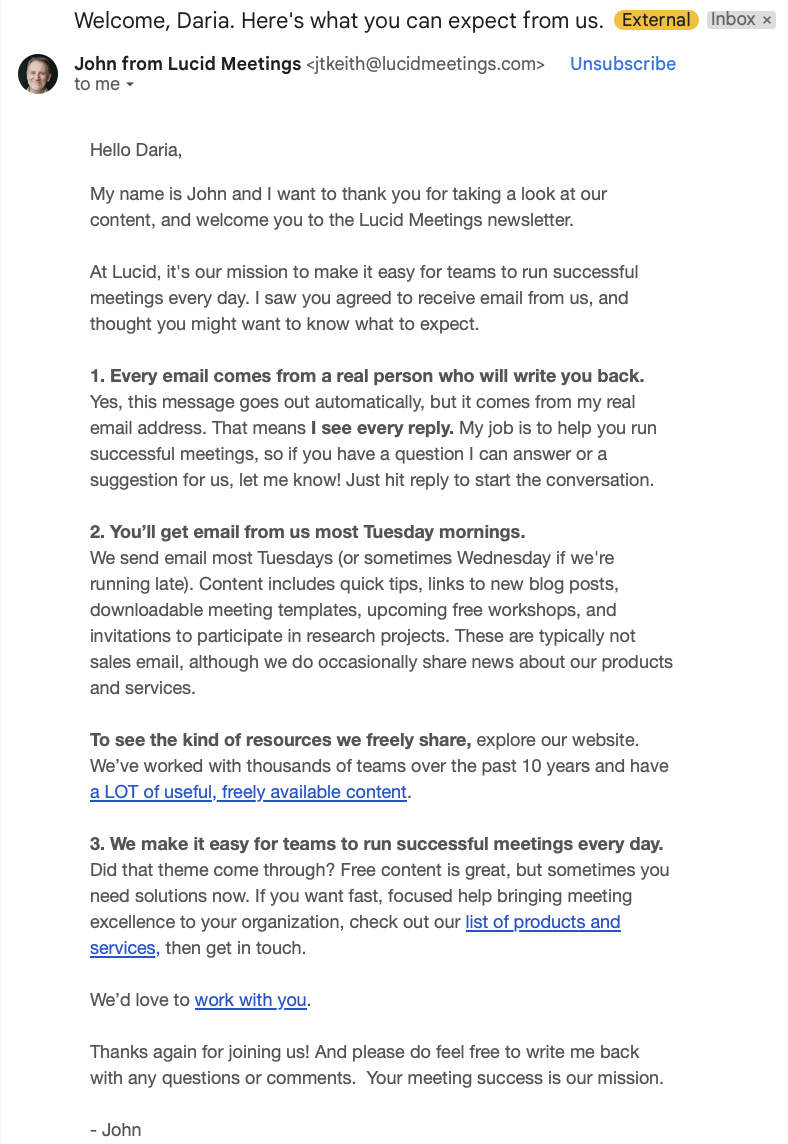
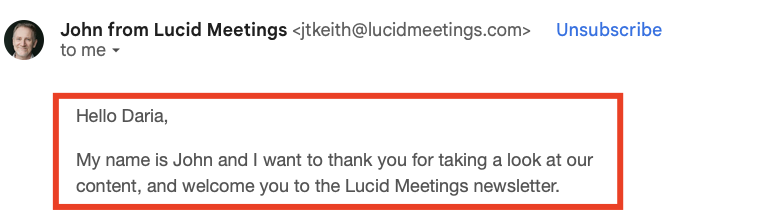
This email creates a very strong first impression. It starts with a warm, personalized greeting that feels authentic and written specifically for the recipient. It also feels like it’s coming from a real person, which makes the email more relatable and engaging.
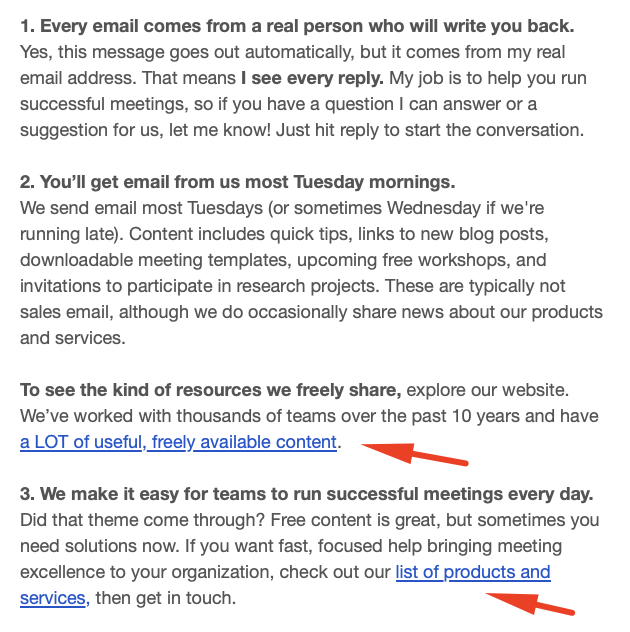
The letter is easy to scan as it presents all the new information in a simple numbered format that explains what to expect next. For people who need additional information, there are links to useful materials. And for those who want to know more about the product there are links to that information too.
In the top right corner, you can see a clear “Unsubscribe” button, which shows transparency and gives new users the option to opt-out anytime.\
...
Educational content email — ProductBoard
Emails with educational valuable (relevant, not easy to find, unique) content can strengthen your relationship with a client, increase your brand authority and persuade them to trust your expertise, engage with your offerings, or make a purchase.
Emails with educational content can include:
- Guides and tutorials
- Whitepapers and eBooks
- Webinars
- Case studies
- Infographics
- Video tutorials
- Blog articles
- Checklists or templates
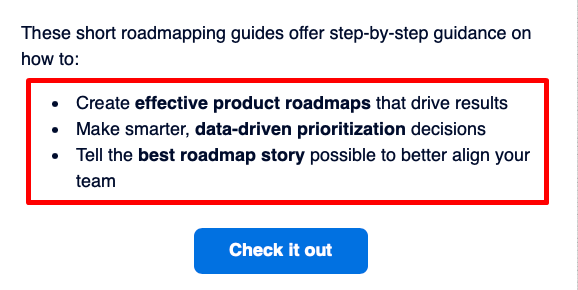
Look at how ProductBoard, a product management software, presents its educational content in the following email.
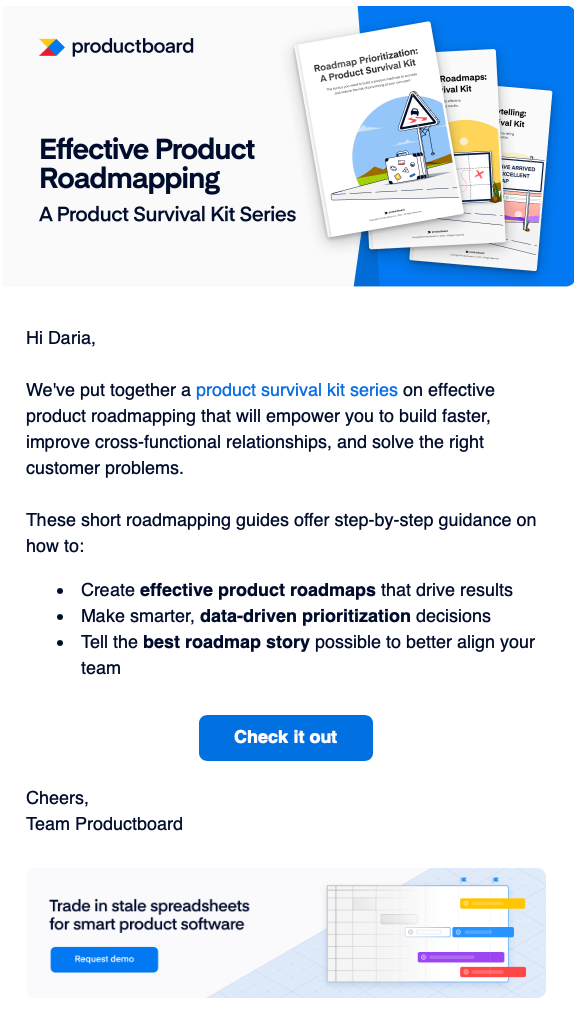
The email addresses a common business pain point: the fear of failure. Their educational materials, aptly named the “Survival Kit,” promise valuable insights into building a successful business.
Also, the authors list how the guides will help readers solve their challenges. They want to make the guides’ value immediately apparent and encourage the reader to take action.
Drip email — HubSpot
Drip campaigns deliver a series of emails based on a recipient’s actions, interests, or stage in the sales funnel.
For example, when someone signs up for your webinar but doesn’t show up, a well-timed drip email can remind them to catch the replay.
Drip email campaigns can include:
- Product recommendations
- Onboarding campaigns
- Abandoned cart reminders
- Post-purchase follow-ups
- Informational or educational campaigns
- Upselling campaigns
- Engagement campaigns
- Re-engagement campaigns
- Renewal reminders
Look at this email from a popular CRM HubSpot. The email is a part of a drip campaign designed to re-engage inactive users and prevent account churn.
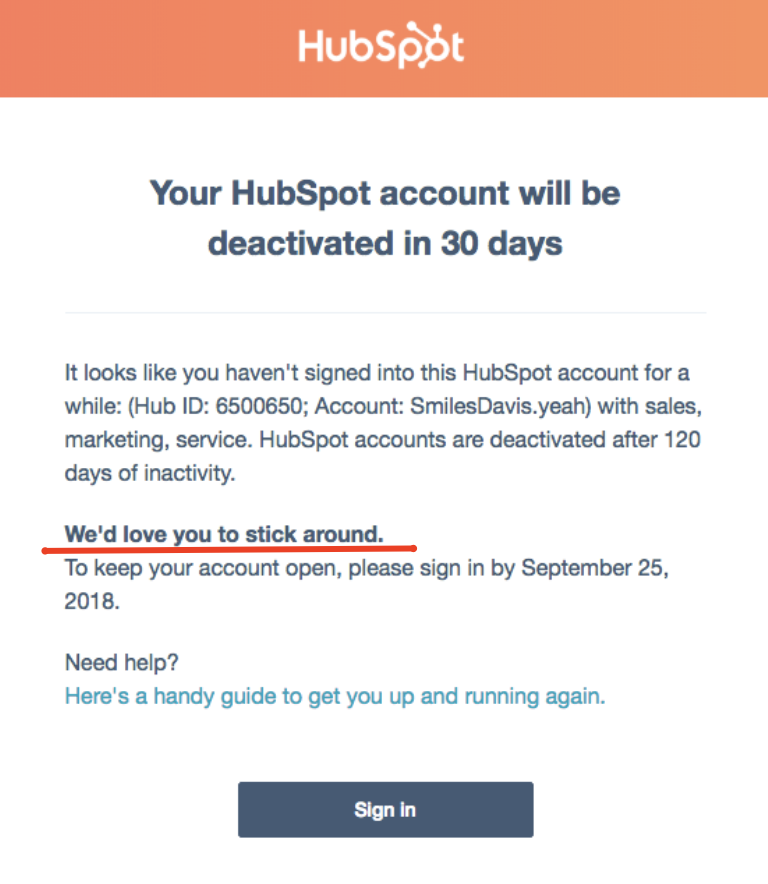
The subject line and headline grab attention with a time-sensitive message: “Your HubSpot account will be deactivated in 30 days.” For businesses that rely on tools like HubSpot, this creates urgency to act quickly.
The call to action is simple: sign in by a specific date to keep the account active. It’s a clear instruction that is easy to follow without unnecessary hassle.
Wrapping up
The emails we discussed today have a similar structure yet are all unique and tailored to the specific needs of their authors. You can use these designs as inspiration and examples to craft your own B2B emails that align with your audience’s needs and your brand’s goals.
Here are some extra resources you might find helpful as you work on your email campaigns:
- Email Deliverability in 2024
- Types of Email Marketing Explained
- Email Marketing A/B Testing: A Step-By-Step Guide
- How to Ensure Your Email is HIPAA Compliant
- How to Check and Improve Email Sender Reputation
- Email Infrastructure: The Definitive Guide
Article by
Daria Roshchyna
Technical Content Writer @Mailtrap
We appreciate you chose this article to see some B2B marketing email examples. Discover all the examples and tips in our full article!