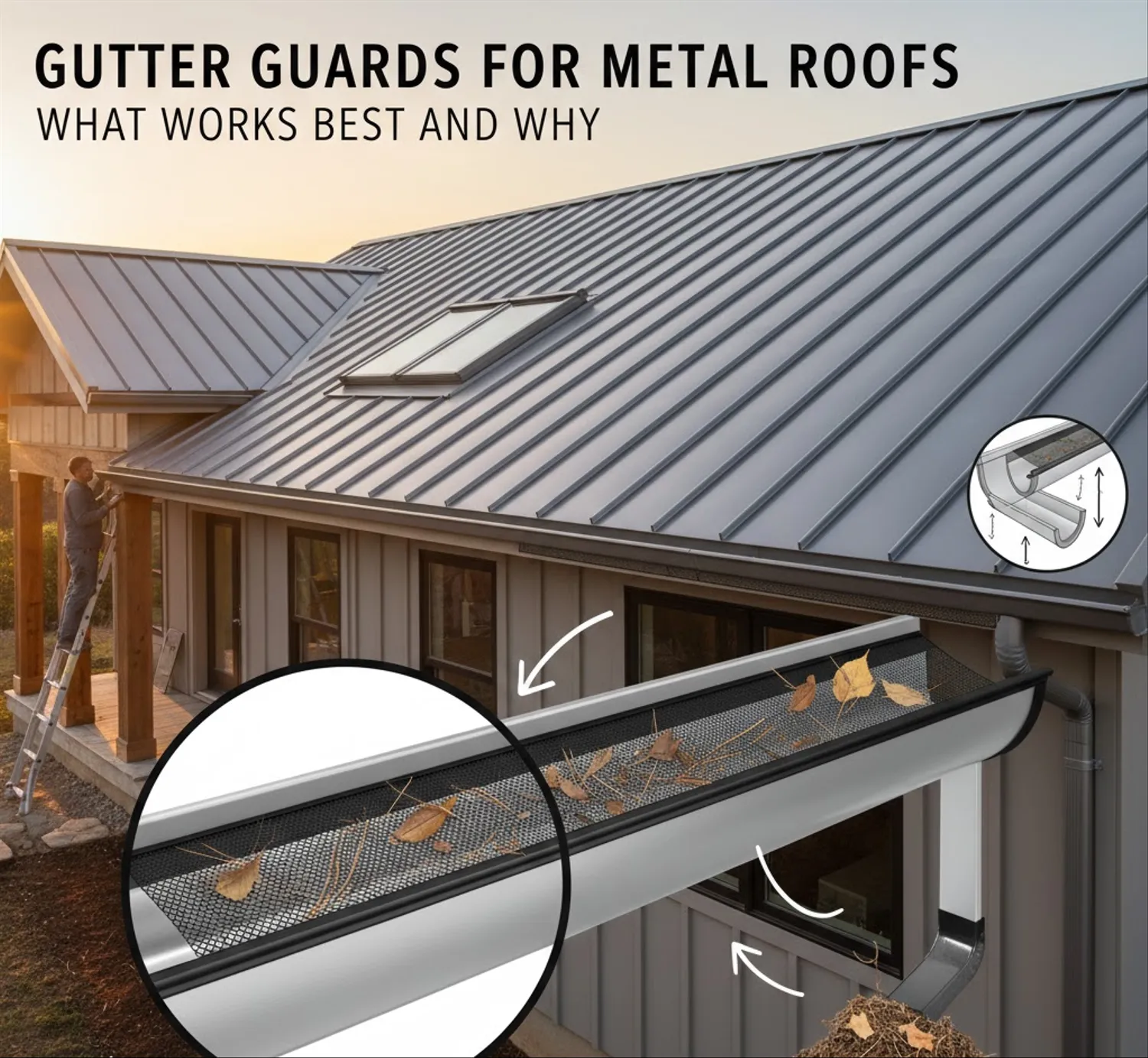
If you’ve got a metal roof, you already know it’s one of the most durable and low-maintenance roofing options out there. But here’s the thing — even the toughest roof needs protection from clogged gutters and overflowing rainwater. That’s where gutter guards for metal roofs come in.
Choosing the right type of gutter guard can be the difference between a maintenance-free system and one that’s constantly causing issues. Let’s dive into what actually works best, why it matters, and how you can protect your home for years to come.
Why You Need Gutter Guards for Metal Roofs
Metal roofs are sleek, long-lasting, and shed water (and snow) faster than traditional shingles. But that fast runoff can also lead to debris buildup or water overshooting your gutters. Without the right gutter guards, you could face:
- Clogged gutters and downspouts
- Water damage to fascia and soffits
- Foundation erosion from overflowing water
- Ice dams in colder climates
Gutter guards act as a filtering shield, allowing rainwater to flow freely while keeping out leaves, pine needles, and debris. The result? Cleaner gutters and fewer weekend cleaning chores.
The Unique Challenge of Metal Roofs
Here’s the catch — not every gutter guard works with metal roofing. Why? Because of something called “oil canning” and thermal expansion.
Metal roofs expand and contract with temperature changes, causing water to flow rapidly during rain. This can dislodge traditional gutter guards or cause them to warp. Plus, when snow slides off, it can take poorly installed guards with it.
So, you need guards that are:
- Durable enough to handle water and snow runoff
- Flexible for roof expansion
- Designed to work with standing seam or corrugated metal roofs
Best Types of Gutter Guards for Metal Roofs
1. Micro-Mesh Gutter Guards
Best for: Fine debris and heavy rainfall areas
Micro-mesh guards use stainless steel or aluminum mesh that filters even tiny debris like pine needles or shingle grit. They’re ideal for metal roofs because they can handle high water flow without clogging.
Pros:
- Excellent filtration
- Corrosion-resistant
- Compatible with most metal roof profiles
Cons:
- Higher upfront cost
- Requires professional installation for best results
2. Surface Tension (Reverse Curve) Gutter Guards
Best for: Homes with steep metal roofs
These guards use surface tension to guide water into the gutter while letting debris fall off the edge. They work well for metal roofs because they handle fast-moving water effectively.
Pros:
- Great for high-flow runoff
- Low maintenance once installed
Cons:
- May be visible from the ground
- Not suitable for heavy snow regions
3. Brush Gutter Guards
Best for: Quick, DIY-friendly installation
Brush-style guards fit inside the gutter and act like a bottle brush, catching debris while letting water pass through. They’re affordable and easy to install — but may not be ideal for areas with pine needles or fine debris.
Pros:
- Easy to install and remove
- Budget-friendly
Cons:
- Requires frequent cleaning
- Can trap smaller particles
4. Foam Gutter Inserts
Best for: Temporary or low-maintenance solutions
Foam guards sit inside the gutter, blocking debris while allowing water through porous material. They’re inexpensive but tend to degrade over time due to UV exposure.
Pros:
- Low cost
- Simple to install
Cons:
- Short lifespan
- Mold and mildew buildup possible
How to Choose the Right Gutter Guard for Your Metal Roof
When selecting gutter guards for metal roofs, consider these key factors:
- Roof Pitch and Design – Steeper roofs create faster runoff, so opt for micro-mesh or surface-tension guards.
- Climate Conditions – In snowy regions, choose guards that can withstand sliding snow (look for snow-guard compatibility).
- Material Compatibility – Stainless steel and aluminum guards work best with metal roofs to prevent galvanic corrosion.
- Maintenance Preference – If you want a set-and-forget solution, professional-grade micro-mesh systems are worth it.
Professional Installation vs. DIY: Which Is Better?
While DIY options can be tempting, professional installation ensures that your gutter guards are properly aligned and sealed. Improper installation can lead to water leakage or guard displacement — especially with metal roofs.
A certified installer will:
- Match the guard type to your roof profile
- Ensure correct slope and fastening method
- Add snow guards where necessary
In other words, you’ll save money and headaches in the long run.
Maintenance Tips to Extend Gutter Guard Life
Even the best gutter guard needs occasional attention. Here’s how to keep yours in top shape:
- Inspect twice a year (spring and fall).
- Clear off any debris sitting on top of the guard.
- Check for warping or loose sections after storms.
- Ensure downspouts remain clear for optimal drainage.
Expert Recommendations: Top Brands to Consider
Based on homeowner reviews and professional feedback, here are some reliable options:
- LeafFilter (Micro-mesh system with lifetime warranty)
- Gutterglove (Stainless steel mesh, DIY-friendly)
- Raptor Gutter Guard (Budget-friendly yet durable option)
- ArmorGuard (Compatible with most roof types)
Each of these brands is known for their durability, warranty, and compatibility with metal roofing systems.
Final Thoughts: Invest in Long-Term Protection
Your metal roof is built to last decades — your gutter system should be too. By installing the right gutter guards for metal roofs, you’re not just preventing clogs; you’re protecting your entire home’s foundation and exterior.
So, before the next rainy season hits, take the time to choose wisely. You’ll thank yourself the next time you see water flowing freely through your gutters without a ladder in sight.