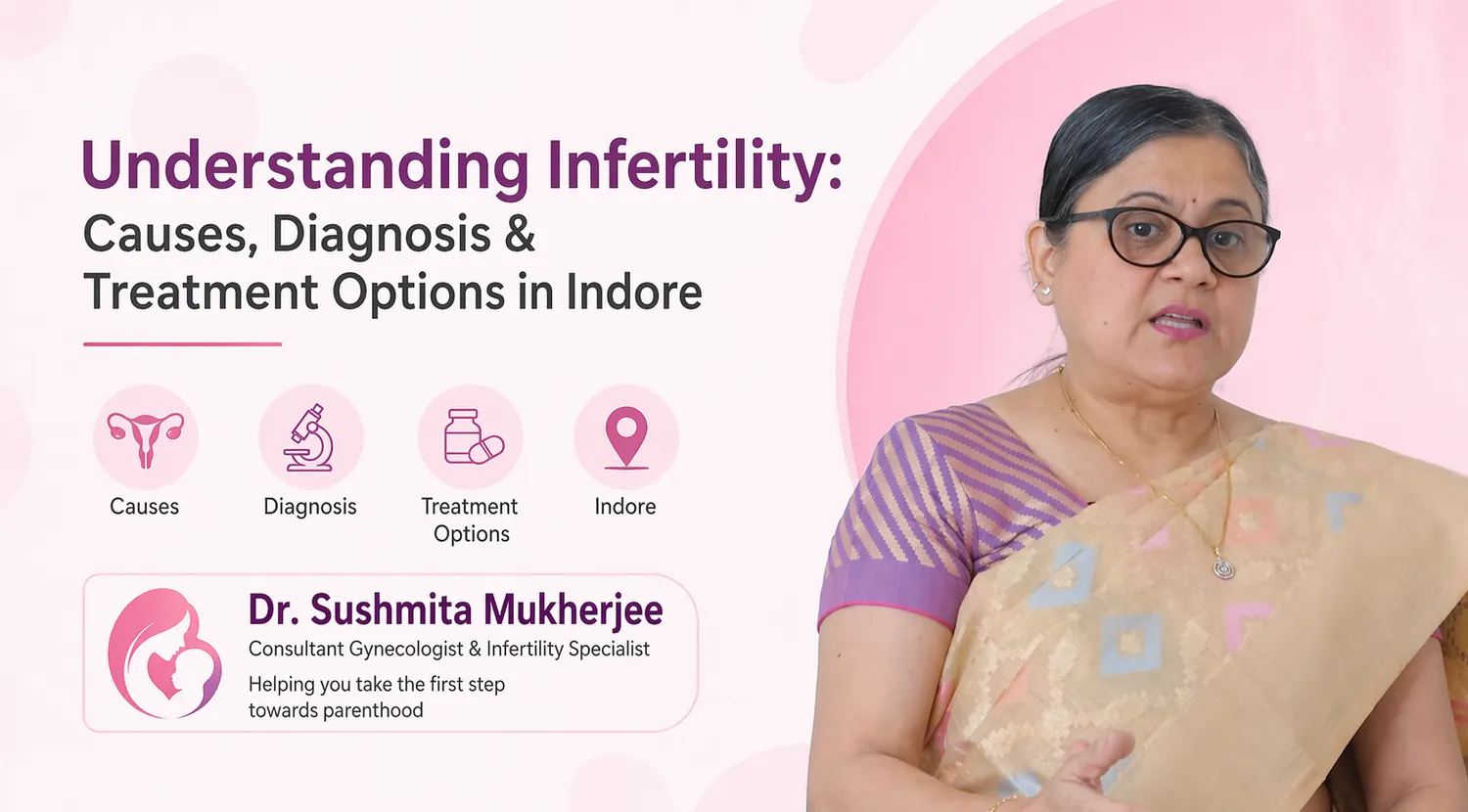
Infertility is a deeply emotional journey for many couples. When pregnancy does not happen despite regular unprotected intercourse for one year (or six months if the woman is over 35), medical evaluation becomes important. At the clinic of Dr. Sushmita Mukherjee in Indore, couples receive compassionate, evidence-based care tailored to their unique situation.
What Is Infertility?
Infertility affects both men and women. Nearly 40% of cases are related to female factors, 40% to male factors, and the remaining involve combined or unexplained causes.
Common Female Causes:
- Irregular ovulation (PCOS)
- Blocked fallopian tubes
- Endometriosis
- Uterine abnormalities
- Age-related egg decline
Common Male Causes:
- Low sperm count
- Poor sperm motility
- Hormonal imbalance
- Varicocele
When Should You See a Doctor?
You should consult a gynecologist if:
- You have irregular or absent periods
- You have severe menstrual pain
- You are over 35 and trying for 6 months
- You have a history of miscarriage
How Is Infertility Diagnosed?
Dr. Mukherjee performs a thorough evaluation including:
- Hormonal blood tests
- Ultrasound scans
- Ovulation tracking
- Hysteroscopy or laparoscopy (if needed)
- Semen analysis for the partner
The goal is to identify the root cause rather than just treating symptoms.
Treatment Options Available
Treatment depends on diagnosis:
1. Ovulation Induction
Medication helps regulate and stimulate egg release.
2. IUI (Intrauterine Insemination)
Prepared sperm is placed inside the uterus to improve chances.
3. IVF (In Vitro Fertilization)
Egg and sperm are fertilized outside the body and embryo transferred to the uterus.
4. Surgical Correction
Blocked tubes, fibroids, or endometriosis can be treated via laparoscopy.
Emotional Support Matters
Infertility is not just medical — it is emotional. Counseling and reassurance are part of holistic care.
If you are struggling to conceive, early evaluation increases success rates. Timely treatment can make all the difference.