In the high-stakes world of mobile and software development, the choice between Agile and Waterfall methodologies can make or break a project. Tech giants and startups alike wrestle with this decision, knowing that their choice will shape the workflow, cost, and ultimately, the success of their application. So, which one is right for your project? Let’s break it down.
Understanding Agile: The Dynamic Approach
Agile is the fast-moving, flexible methodology that has transformed software development. It operates on iterative progress, enabling teams to adapt quickly to changes and deliver working software frequently. Instead of following a rigid plan, Agile development thrives on collaboration, continuous feedback, and incremental releases.
Key Characteristics of Agile:
- Iterative Development – Agile breaks projects into small cycles (sprints), ensuring steady progress and rapid feedback loops.
- User-Centric – Developers, designers, and stakeholders work closely to refine features based on user feedback.
- High Flexibility – Agile is best suited for projects that need continuous adjustments.
- Frequent Testing – Bugs are detected and resolved early, reducing technical debt.
Agile is the go-to choice for businesses that want to launch MVPs (Minimum Viable Products) quickly and refine them based on real-world data. However, Agile isn’t without its challenges. It requires a well-coordinated team, disciplined communication, and the ability to pivot at a moment’s notice.
Waterfall: The Traditional, Structured Approach
Waterfall, on the other hand, is a linear and structured method. Each phase—requirements, design, implementation, testing, deployment, and maintenance—must be completed before moving to the next. This method works well for projects with clear objectives and little room for deviation.
Key Characteristics of Waterfall:
- Predictability – A well-defined roadmap ensures that every phase follows a clear timeline.
- Comprehensive Documentation – Everything is planned in detail before development begins.
- Easier Management – Since the scope is locked in early, project managers can oversee progress with precision.
- Best for Fixed Budgets – Waterfall is ideal when cost and deadlines are strict and predefined.
However, Waterfall’s rigidity can be a drawback. If market needs shift or new technology emerges mid-project, adapting to these changes becomes difficult. Additionally, testing occurs at the end of development, which increases the risk of late-stage failures.
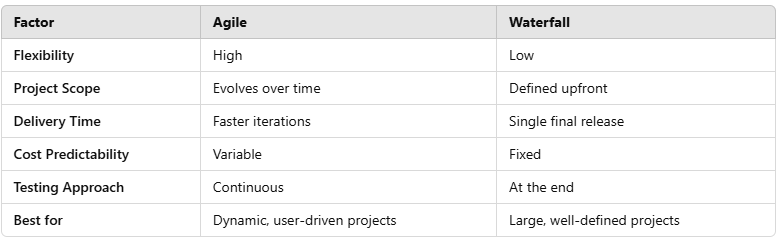
Agile vs. Waterfall: A Head-to-Head Comparison
When to Choose Agile
Agile is ideal when:
- The project scope isn’t fully defined and needs flexibility.
- User feedback is critical to shaping the final product.
- You are developing software for fast-changing markets.
- The team is experienced with Agile methodologies and rapid iterations.
Agile shines in mobile app development, SaaS products, and startups looking to disrupt industries with constant innovation. For instance, a California custom software development firm might use Agile to launch a product prototype quickly and refine it based on user analytics.
When to Choose Waterfall
Waterfall is a strong contender when:
- The project requirements are fixed and well-documented.
- Compliance and security are critical (e.g., in healthcare or finance industries).
- You’re dealing with large-scale government or enterprise contracts.
- Testing can wait until the end of the project.
It’s a safer bet for projects where the margin for error is minimal and a clear path forward is already established.
The Hybrid Approach: Best of Both Worlds?
Some companies take a hybrid approach, blending Agile and Waterfall to leverage the strengths of both. A project may start with Waterfall’s structured planning and shift into Agile development cycles for execution. This approach can help businesses mitigate risk while maintaining flexibility.
Conclusion: Which Methodology is Right for You?
The battle between Agile and Waterfall isn’t about which is universally superior—it’s about what’s best for your project. Agile is dynamic, user-focused, and iterative, making it the preferred choice for fast-moving software and mobile development. Waterfall, on the other hand, is reliable, predictable, and best suited for projects with fixed scopes and budgets.
Ultimately, your choice depends on your project's complexity, budget, timeline, and need for flexibility. Whether you opt for Agile, Waterfall, or a hybrid method, the right approach can significantly impact your project's success. And if you're searching for mobile app developers in Atlanta, ensure they have expertise in both methodologies to tailor the right solution for your needs.