Thirty spokes of a wheel all join at a common hub
yet only the hole at the centre
allows the wheel to spin
Clay is moulded to form a cup
yet only the space within
allows the cup to hold water
Walls are joined to make a room
yet only by cutting out a door and a window
can one enter the room and live there
Thus, when a thing has existence alone
it is mere dead weight
Only when it has wu, does it have life
Verse 11, Tao Te Ching, Lao Tzu
Wu is nothingness, emptiness, nonexistence
Discover Meditation and the Secret Gap
Stillness of mind, improved concentration and focus, heightened clarity, increased vitality and rejuvenation, happiness and emotional stability, improved memory and learning ability, inner peace, calm and oneness are just some of the benefits regular practice of meditation can give you.
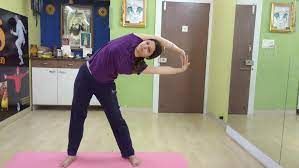
Discover meditation and the secret gap and you will open a doorway connecting you to your true self, your soul, and leading you down the path of self realisation; that you are one with the universe, part of the whole that is everywhere, everyone and everything Kati Chakrasana.
The simplest things are often the most difficult to comprehend. Meditation is the key that unlocks the door to your soul, who you really are, your purpose, why you are here and the true meaning of life.
Start your own journey and discover meditation for yourself.
What is meditation and where did it come from?
Meditation is the practice of focusing on an object or a single point of awareness. It is the practice of calming the mind to allow one to become immersed with their true essence; the true self that is one with all (source, universe, divine consciousness, universal consciousness or any other given name meaning the same).
As you will discover there are lots of approaches to meditation; hundreds of different tips and techniques. These all work; certainly in the beginning they help to focus your concentration. It is, however, important not to get attached to a particular technique or object. When it comes down to it meditation is all about a post realisation that you have discovered the secret gap that is as Wu describes; nothingness, emptiness, nonexistence. Only then are you meditating, and the key is not to grasp what you have discovered but, simply allow it to be, merging with the stillness, the silence and the tranquillity that is the pure essence of our universe.
It is the path to all wonder and the gate to the essence of everything. It can only be found within, by merging with the silence, the stillness and the tranquillity of the present moment. It is discovering meditation and the secret gap that leads to a life of fulfilment, happiness, and total inner peace. Life becomes flowing, effortless, and beautiful and at the same time you achieve self awareness which brings clarity, creativity and a deep sense of true purpose that is simply just being.
Meditation existed before history was recorded. Archaeologists found ancient Indian scriptures which detailed the practice of meditation dating back thousands of years. It is a well documented practice of many world religions to include Buddhism, Christianity, Hinduism, Islam, Jainism, Judaism, Sikhism and Taoism. Spreading from the East meditation techniques are now practiced throughout the world by millions of people on a daily basis. Meditation in Sanskrit is DhyÄna and is one of the eight limbs of yoga which leads to a state of SamÄdhi (joy, bliss or peace). The physical practice of yoga, through the avenue of the breath, is in itself a moving meditation which again is practised by millions of people throughout the world.
What are the other benefits of meditation?
Studies have shown that meditation decreases the negative effects of stress, anxiety and depression. Overall we become calmer, happier and more fulfilled.
Meditation improves concentration, which is essential to realising our true potential. Focused concentration generates great power and when our powers of concentration are improved we are able to use this not only for the purpose of meditating but in our other activities too. Part of achieving our goals and desires is having the ability to master our thoughts. By calming the mind and focusing our concentration, we are able to experience this self mastery and we can begin to change and replace our negative or unwanted thoughts with positive ones. This shift in our thought process aligns our energy with that of universal energy vibrations and we will begin to notice positive changes and improvements throughout all areas of our lives.
Physically meditation reduces stress related symptoms such as heart palpitations, tension and migraine headaches, disturbed sleep and nightmares and hypochondria. As stress and anxieties are reduced we are actually decreasing the probability of experiencing any heart related illnesses.
Studies have also shown that meditation can relieve chronic pain, drop cholesterol levels and improve blood pressure. The flow of air to the lungs increases and improves and we will experience an overall greater sense of wellbeing.
How do I meditate?
Buddhism often describes meditation as a way of 'training the mad monkey', referring to the mind as a mad monkey, which is always jumping and racing from one thought to the next. During an average day we think around 64,000 thoughts!
The Buddha said by the absence of grasping one is set free. Meditation is not something you achieve by trying. Although when you begin to practice you are seeking to meditate effectively, the more you try the more it will elude you. Meditation can be likened to holding a wet bar of soap; one minute you are holding it in your hands and the next it's slipped through your fingers.
Meditation is about letting go and to discover the secret gap you have to let everything go. Let go of any outcome before you begin.
There are many meditation techniques, and over thousands of years different meditation practices have evolved. The true essence of meditation, however, is just to sit and be. Quite simply you are going beyond the 'conditioned' mind and elevating your mind to a state of pure self awareness.
Whilst you can focus on an object or on your breath to help you to reach this state, ultimately it is a natural process which evolves over time, the essence should always be in connecting yourself with your source. You are looking inward without actually attempting to do anything but to just sit and be.
It is also effective to meditate on particular struggles or problems we are experiencing in our lives. For instance, if we want to come to a decision on a particular aspect of our life; a career direction for example, meditating on this can help us to arrive at the answer. At times the answers we are seeking can come into our minds almost immediately. The power of focusing concentration and directing that focus towards a particular question or subject can produce amazing results.
It is a good idea to have a meditation space. This can be a room, or part of your home where you feel most comfortable. You might have soft lighting, candles, incense, cushions, flowers, and other objects which invoke feelings of calm and relaxation.
Aim to meditate twice a day. Sunrise and sunset are the best times of day for meditation because our minds are more receptive at these times. Sunrise is the dawn of a new day and everywhere is quiet, calm and peaceful. The day has not yet begun and following a restful sleep, our minds tend to be calmer. At sunset the day is ending and meditation at this time enables us quiet reflection on the day we have just passed. Our minds are winding down at this time before sleeping, and the stillness and calm that meditation brings will be with us as we drift off to sleep, helping us to feel refreshed and energised when we awaken the following morning.
Place a cushion on the floor and seat yourself so that your bottom is half on and half off the cushion. This will elevate your hips and naturally lift your spine and you will feel more comfortable than if you were just sitting on the floor. Take yourself into a cross legged position. Traditionally the lotus or half lotus pose is used when meditating but if you are not able to comfortably sit in these poses, sit as is right for you. Let your spine be upright and tilt your head so that your eyes, when open, are fixed three feet in front of you. Place your hands wherever they feel comfortable; one on top of the other in your lap, in a mudra with the tip of the thumb touching the tip of the first or middle finger to form a circle, or simply place them on your thighs. Whatever is comfortable and feels right for you.
As previously mentioned there are many things you can focus on during meditation; statues, flowers or a single rose, silk scarves, candles, crystals, music, mantras and the breath to name a few. Experiment yourself with each of these and find what works best for you.
Not surprisingly I have found the simplest methods to be the most effective; the breath and a mantra. The example I have used throughout most of this section is the breath, which is by far the most universal focus of meditation.
Close your eyes and begin to focus your attention on your breath. Focus on each inhale and exhale. Silently saying the words 'SO' on the inhale and 'HUM' on the exhale also helps focus. Allow your thoughts to come and go but always return your focus to your breath. If you have chosen an object, you would simply focus your attention on that object allowing the thoughts to come and go returning your focus to the object. Over time meditation becomes easier and you will find as your self mastery grows you are easily able to sit for 20-30 minutes.
To begin with just work on achieving 5 minutes twice a day and then increase to 10 and so on. Meditation can be effective at any time. If you are not able to meditate regularly find some quiet time when you can to allow yourself to simply sit and be. Focus on your breath and visualise yourself sitting somewhere which will help bring about a calm and relaxed state of mind. One of my favourites is on a beach in front of a beautiful calm blue sea. Choose something which feels right and true for you. Be patient and gentle with yourself. As your ability to meditate increases, your level of self awareness grows. You will begin to notice improvements with each day's meditation practice.
Allow yourself to become your own silent observer and simply observe the breath. As you follow each inhale and exhale, thoughts will become slower. Let the thoughts come and let them go, simply observing them and not becoming attached to them. Your focus is the breath, always return to the rhythmic inhale and exhale. Then allow yourself to become the breath. With this merging comes release and without an actual momentary realisation you are immersed in stillness, in the silence and you have discovered the secret gap. This is the place of being, of presence and of your true self. Here you are at one with everything; whether that be God, universe, Tao, divine consciousness or whatever your term for it is, you are it, it is you and it and you are everything.