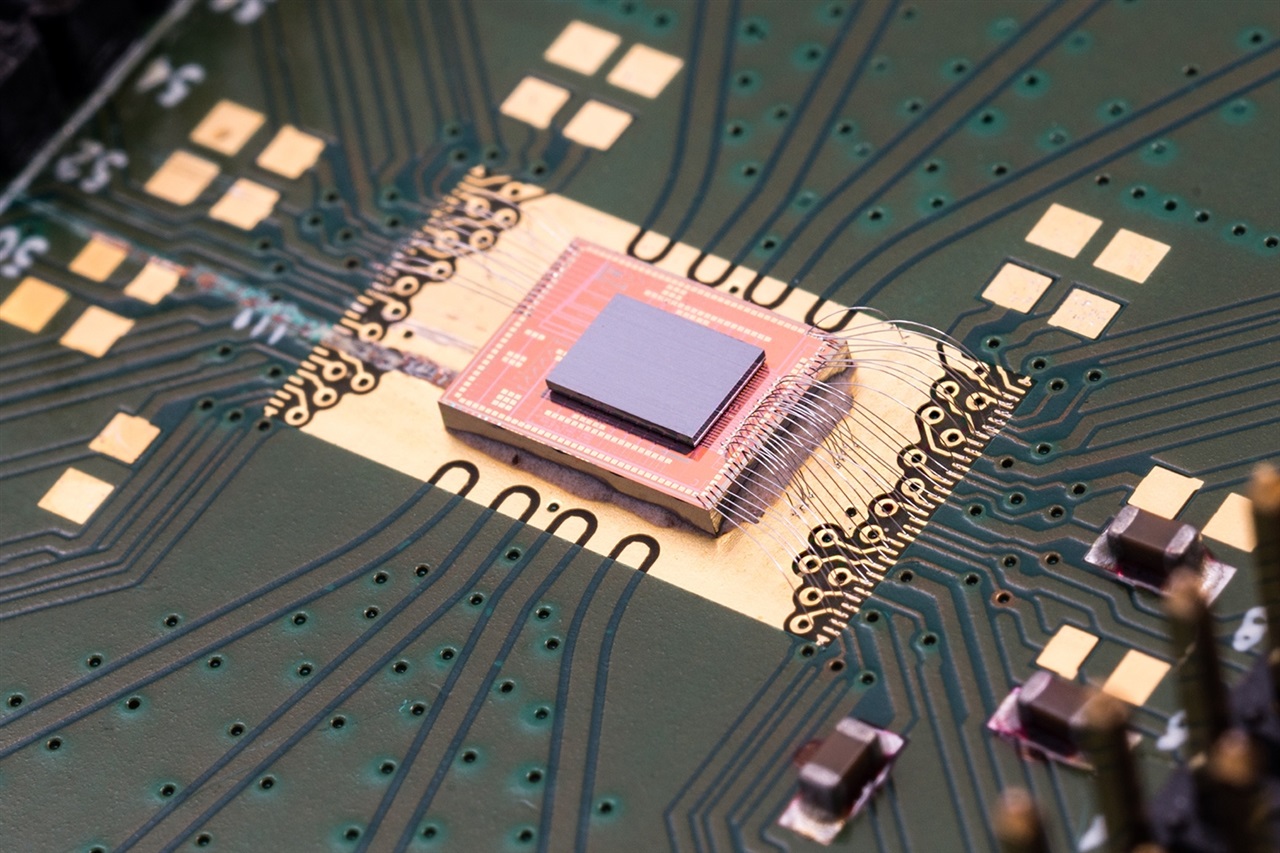
The exponential increase in internet traffic propelled by data-intensive applications such as video streaming has pushed communication networks to their limits. With bandwidth demands projected to grow exponentially over the coming years, traditional electronic networks are struggling to keep up. This is where photonic integrated circuits (PICs) come in.
Emergence of Silicon Photonics
Photonic IC use light instead of electricity to transmit information. By leveraging photonics technology - the science of generating and harnessing light - PICs can transfer huge volumes of data at near light speed. Early PICs relied on indium phosphide or lithium niobate substrates but were expensive and difficult to manufacture at scale. The pivotal development was the integration of photonic components directly onto a silicon wafer using complementary metal-oxide-semiconductor (CMOS) fabrication processes. Called silicon photonics, this allowed leveraging existing multi-billion dollar silicon chip manufacturing infrastructure.
Mass Production of Photonic IC
Major technology companies rapidly scaled up silicon photonic manufacturing capabilities over the last decade. Intel invested over $1 billion to build a 220,000 square foot photonics factory and ship over 100 million transceivers with integrated silicon photonic circuits. Cisco launched the Silicon One chip with 4 integrated photonic engines in 2016. In 2021, Apple revealed plans to develop custom PICs in-house for use in future Macs and iPhones. These developments mark the transition of PICs from the lab to mass production, vastly increasing volumes and driving down costs.
Enabling Fiber to the Edge
The cost reductions have enabled telecommunication service providers to deploy PIC-powered technologies like coherent optical and pluggable transceivers that transmit 100 Gbps or more per fiber. This "fiber to the edge" architecture places photonic components closer to end users, enhancing bandwidth and reducing latency compared to traditional multi-stage networks. Service providers worldwide are now rolling out PIC-based fiber networks to support 5G infrastructure and deliver gigabit broadband internet access to more homes and businesses.
Applications Beyond Communication Networks
While most current applications are in telecommunications, photonic IC are poised to transform multiple industries by making photonics more accessible. Biotech companies are developing lab-on-a-chip diagnostics with integrated lasers, detectors and biomolecular interactions on a photonics platform. Advanced manufacturing sees potential for 3D photonic radar chips to guide robots. Even consumer tech may see uses like phone cameras integrating pixel-scale LiDAR for facial recognition or augmented reality functions. Overall, mass-producible PICs could unleash a new era of photonic innovation across many sectors of the global economy.
Standards and Ecosystem Hurdles
While technological progress has been impressive, PICs still face challenges in going mainstream. Lack of open standards means designs cannot be freely mixed and matched from different foundries. The ecosystem also lacks uniform design software, packaging, and test equipment optimized for photonics. Overcoming these bottlenecks will require collaborative efforts between industry and academia. National governments and research institutes too must support PIC research and commercialization, as photonics underpins many emerging strategic technologies. Only by building a robust and interoperable photonic design and manufacturing ecosystem can PICs reach their full disruptive potential.
Scaling Up for Hyperscale Deployment
Major hurdles remain in further driving down photonic IC manufacturing costs. While basic building blocks are manufacturable today, more complex functions may still require higher volumes for commercial viability. Multi-project wafer service providers are helping expand design space exploration. Assembly, packaging and thermal management techniques tailored for dense photonic integration could aid scaling to larger chip sizes. Overall, as applications move to webscale deployment models requiring astronomy units of PIC production, new industry consortiums may emerge to define and share standards while achieving economies of scale. Continued progress on these multi-dimensional frontiers will determine how far and how fast the photonic revolution transforms our daily lives.
In conclusion, while still facing challenges, photonic IC have clearly moved from novel research to a transformative technology powering fast-growing sectors of the global digital economy. Mass manufacturing has lowered costs tremendously, opening up new applications that were previously impractical. With coordinated efforts across industry, academia and governments, the full potential of PICs could be unlocked to enable groundbreaking innovations across industries for decades to come.
Get More Insights Photonic IC
For More Insights Choose the language that suits you best.
About Author:
Money Singh is a seasoned content writer with over four years of experience in the market research sector. Her expertise spans various industries, including food and beverages, biotechnology, chemical and materials, defense and aerospace, consumer goods, etc. (https://www.linkedin.com/in/money-singh-590844163)