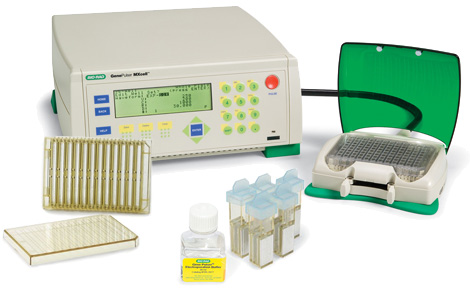
What are Electroporation Instruments?
Electropermeabilization instruments are laboratory devices that deliver electric pulses to cells and tissues in order to increase permeability and allow molecules such as DNA, RNA, proteins or drugs to enter the cell. This technique, known as electroporation, utilizes electrical pulses to temporarily create nanoscale pores in the cell membrane through which normally impermeable molecules can enter. Various electropermeabilization instruments have been developed to provide customizable electric pulses tailored for different cell and tissue types.
How do Electroporation Instruments Work?
All electropermeabilization Electroporation Instruments function on the same basic principles. They contain electrodes which are placed in contact with or near the target cells or tissue. The instruments then deliver precise electric pulses of varied strength and duration. When the electric field is applied, it causes the rearrangement of lipid molecules in the cell membrane. This creates aqueous pores that allow diffusion of molecules across the membrane. Most instruments allow adjustments to key pulse parameters such as voltage, number of pulses, pulse length and frequency.Optimization of these parameters is essential to achieve high transfection or transformation efficiencies while minimizing cell death.Pulsed electric fields can be homogeneous or localized depending on electrode design.Instruments feature easy-to-use interfaces for controlling pulse delivery.
Applications of Electropermeabilization instruments
Molecular Delivery
Perhaps the most common application of electropermeabilization instruments is delivering exogenous molecules into cells. This includes transfection of various cell types with plasmid DNA, mRNA, siRNA and other oligonucleotides for research applications. It is also a primary means of transforming bacteria with recombinant DNA.Some products focus specifically on in vivo transfection of tissues. Electroporation is a popular non-viral method for gene delivery due to its versatility and high efficiencies.
Cell Fusion
By applying optimized electric pulses, electroporation promotes fusion between different cell types. This enables creation of hybridomas for monoclonal antibody production as well as analysis of intracellular processes through heterokaryon assays. Some instruments cater to automated cell fusion applications.
Cellular Extraction
Electric pulses can disrupt cellular membranes in a process known as lysis. By applying controlled bursts, intracellular components like DNA, RNA or proteins can be extracted from tissues and cells. Electroporation extraction is less harsh than homogenization and avoids shearing of molecules. This makes it suitable for isolating fragile structures.
Types of Electropermeabilization instruments
Cuvette-Based Instruments
These are perhaps the most basic electroporation systems. They involve placing cells in suspension between electrodes within a cuvette. Standard cuvettes have 2 parallel plate electrodes facing each other. Pulses are applied uniformly across the entire sample. Cuvette electroporators are ideal for microbial and mammalian cell transfection in suspension. Models are available for varied throughput needs from single to 96-well format.
Nucleofector Technology
Developed by Lonza, the Nucleofector utilizes proprietary electroporation cuvettes and specialized buffer/pipette mixes to transfect adherent and difficult-to-transfect cell types like primary cells and stem cells. Multiple devices accommodate different sample volumes. Protocols have also been optimized for 3D cultures and organoids. Its reproducibility and versatility have made Nucleofection a gold standard for mammalian cell transfection.
Large Volume Electroporation Chambers
For transfection of tissues, whole organs or large cell aggregates, dedicated electroporation chambers of varied designs are available. They feature electrode configurations to generate homogenous electric fields within the sample chamber. Products offer capacities from milliliters to liters. Optimization is required for efficient nucleic acid delivery while limiting tissue damage. Imaging capabilities aid further development.
Microinjection/Electroporation Systems
Combining microinjection and electroporation, these systems allow targeted delivery into sub-cellular regions or single cells. Glass micropipettes or mineral oil interfaces are used to position DNA or other cargo before application of localized pulses via microelectrodes. Automated versions facilitate high-throughput operations. They find extensive application in plant cell biolistics and manipulating zygotes/embryos in various model organisms.
electropermeabilization instruments have revolutionized the field of molecular delivery by providing a simple yet versatile non-viral gene transfer method. Their programmable pulse parameters and diverse electrode designs have expanded the range of cell/tissue types that can be manipulated. Coupled with ongoing enhancements, electroporation promises further improvements in applications like regenerative medicine, immunotherapy and synthetic biology. As technologies progress in integrating microfluidics, automation and imaging, electropermeabilization instruments will likely become even more high-throughput and precise in catering to advanced molecular and cellular engineering needs.
Get More Insights On Electroporation Instruments
Discover the Report for More Insights, Tailored to Your Language.
About Author
Alice Mutum is a seasoned senior content editor at Coherent Market Insights, leveraging extensive expertise gained from her previous role as a content writer. With seven years in content development, Alice masterfully employs SEO best practices and cutting-edge digital marketing strategies to craft high-ranking, impactful content. As an editor, she meticulously ensures flawless grammar and punctuation, precise data accuracy, and perfect alignment with audience needs in every research report. Alice's dedication to excellence and her strategic approach to content make her an invaluable asset in the world of market insights.
(LinkedIn: www.linkedin.com/in/alice-mutum-3b247b137 )