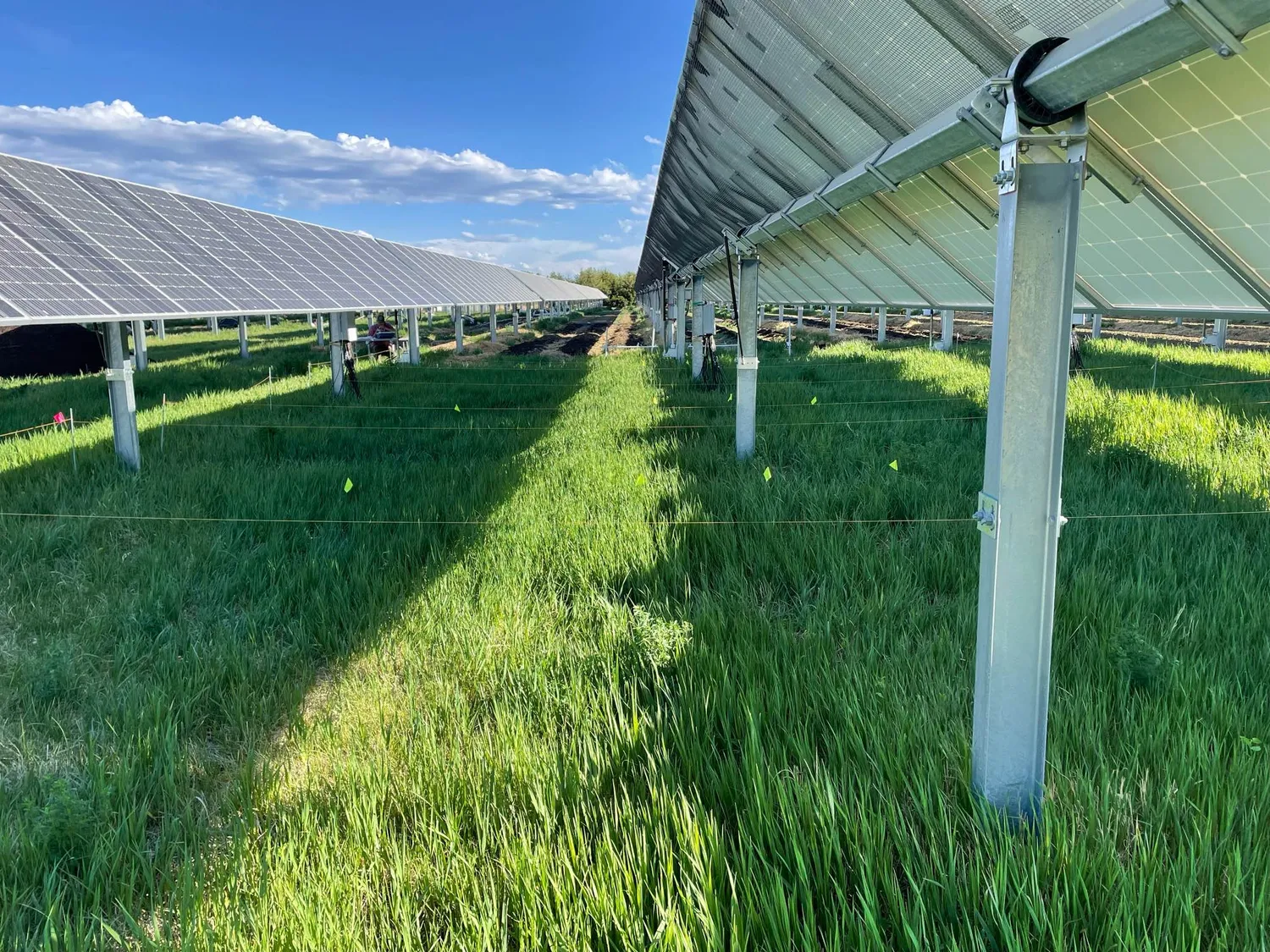
What is Agrivoltaics?
Agrivoltaics, also known as solar sharing, is an emerging land use practice that involves co-locating solar photovoltaic power generation and agriculture on the same parcel of land. Farmers can plant crops beneath or around the solar panels that are installed, creating a dual use of the space to produce both energy and food. This practice seeks to avoid conflicts and maximize synergies between electricity production and agriculture on the same piece of land.
Types
There are a few different types of its systems that have been developed based on the structure and layout of the solar panels and crops. One model involves having solar panels elevated high enough, typically 7-15 feet, above the crops to allow farm equipment and irrigation to pass underneath. Another type involves having the panels close to the ground at a height of 3-7 feet but spaced out along horizontal structures to allow for diffused sunlight to reach crops. A third common design places solar arrays in long rows with crops planted between the rows.
Benefits
It provides multiple benefits compared to solely using the land for agriculture or solar power alone. Some of the key advantages include:
- Increased Land Use Efficiency: By combining solar power generation with crop and livestock production on the same parcel of land, it allows for dual land use that is more productive overall. This approach optimizes land utilization.
- Crop Shading and Stress Reduction: Strategically placed solar panels above crops can provide shade and decrease soil surface temperatures and moisture loss, potentially improving crop yields. The panels act as a barrier against temperature spikes, storms and wind damage.
- Weed and Pest Management: The presence of solar panels may deter weeds and inhibit the habitat for pests like rodents that damage crops, providing a natural means of pest control.
- Pollinator Habitat: Selecting appropriate groundcover plants beneath panels can create habitats and forage areas to support bees, butterflies and other pollinators essential for food production.
- Water Conservation: By reducing soil moisture loss from solar panel shading, Agrivoltaicsystems may decrease irrigation demand for crops. This conserves increasingly scarce freshwater resources.
- Revenue Diversification: Farmers gain a new stream of income from selling electricity generated by the on-site solar arrays, providing more financial stability compared to agriculture alone.
- Carbon Emissions Reduction: Renewable energy from agrivoltaics displaces fossil fuel usage for power generation, lowering greenhouse gas emissions compared to conventional approaches.
Challenges
While the concept holds promise, there are still challenges associated with widescale adoption of agrivoltaics:
- High Upfront Costs: Integrating solar panel installation and mounting structures with agricultural production requires significant capital investments that may not be financially viable for many farmers and landowners.
- Maintenance Needs: Maintaining both the solar infrastructure and crop systems simultaneously demands more labor and technical skill sets than traditional agriculture alone. Additional costs are involved.
- Land Space Constraints: Not all farmland has sufficient acreage to accommodate both energy and food production needs, given space requirements for solar panels, equipment access, crops, etc. Land must be appropriately sized.
- Crop Yield Uncertainties: The impacts of partial solar panel shading on yields of different crops are still being studied. Compatibility with various crops needs further testing and demonstration. Climate and soil factors also influence outcomes.
- Policy and Regulation: Some states have frameworks supporting it while others do not, creating policy barriers. Standardized contracts and guidelines would provide more project certainty.
- Technology Advancements: Continued progress is required in PV module efficiencies, installation practices, and agronomic techniques optimized for it to maximize benefits and drive wider deployment.
The Future of Agrivoltaics
With further research and innovation, many agriculture and renewable energy experts believe agrivoltaics has strong potential to grow in coming decades as a viable land use solution. Key factors that could help scale the practice include:
- Cost Reductions: As balance-of-system and installation prices decline for solar, the economics of it will continue to improve over time and become more competitive compared to separate land uses. Innovation will drive down costs.
- Demonstration Projects: More pilot projects demonstrating successful models tailored to different farm types, soils and climate conditions are important to build confidence and datasets on optimized designs, management and crop yields.
- Farm Revenue Programs: Financial incentives, grants and markets supporting renewable energy and ecosystem services on farms could make investments more attractive and help offset initial capital needs.
- Policy Alignment: Streamlined guidelines, regulations and incentives at local/state levels supporting dual land use for food and energy production on the same parcel of land.
- Knowledge Sharing: Centralized repositories of research findings, case studies, best practices and lessons learned are key to drive the adoption curve upwards. Collaboration is vital.
Overall, as agrivoltaics matures, its prospects for contributing to both agriculture and power generation look very promising as a sustainable strategy for the coming decades. With wider deployment, it has potential to make lands more productive while advancing climate change mitigation goals globally. Innovation will surely continue optimizing the synergies between solar energy and agriculture.
Get More Insights On Agrivoltaic
Get More Insights—Access the Report in the Language that Resonates with You.
About Author:
Money Singh is a seasoned content writer with over four years of experience in the market research sector. Her expertise spans various industries, including food and beverages, biotechnology, chemical and materials, defense and aerospace, consumer goods, etc. (https://www.linkedin.com/in/money-singh-590844163)