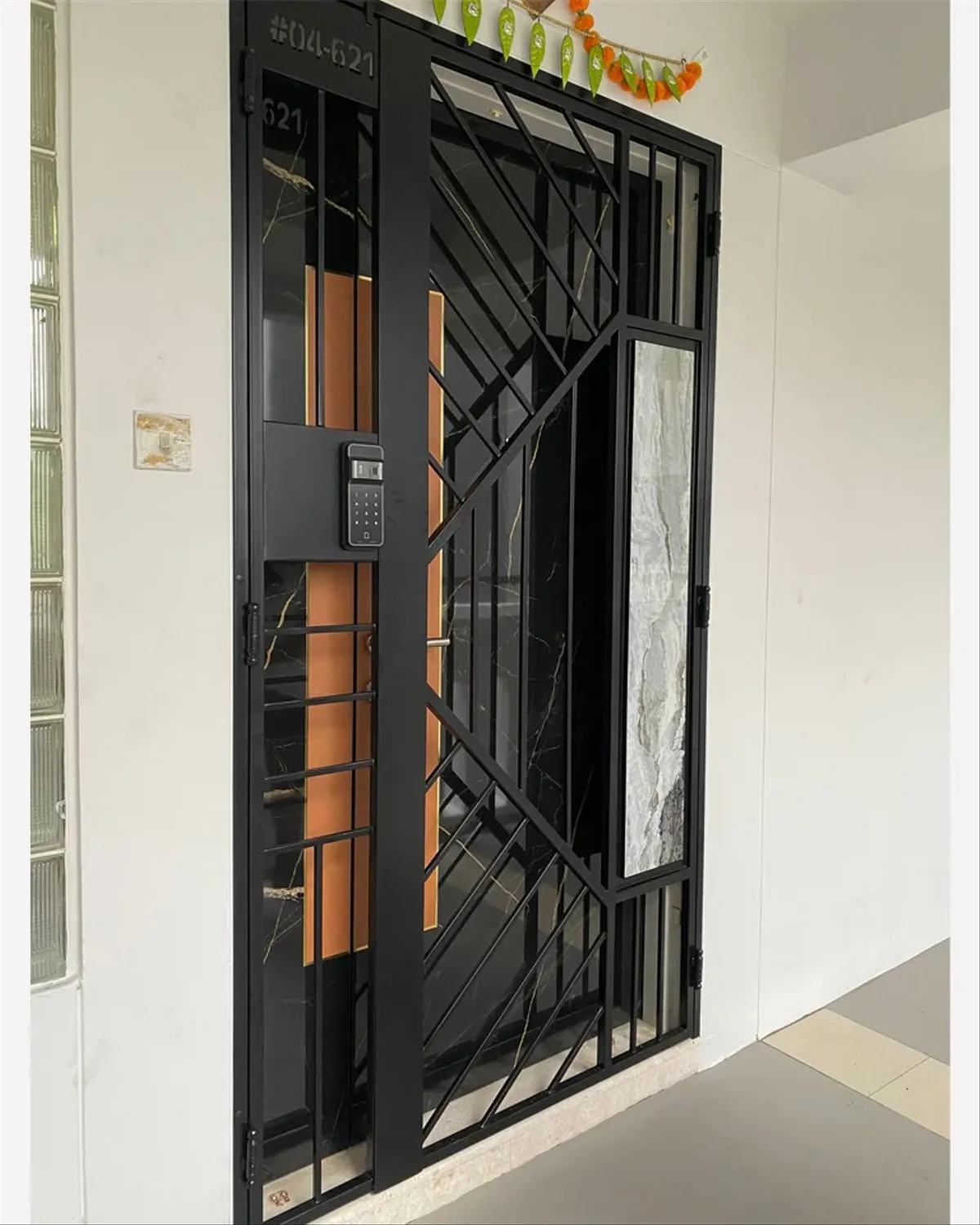
The rush hour is a universal experience of hurry, and for the HDB dweller, this moment of high-speed decompression culminates at their own front door. As hands are often full — with groceries, work bags, or a tired child — the modern convenience of a digital lock is no longer a luxury, but a necessity. The question shifts from if to which biometric technology offers the most seamless, rapid, and reliable entry experience right when you need it most.
This article delves into a product comparison, pitting the three leading hands-free and nearhands-free methods — Face Recognition, Palm Vein Recognition, and Fingerprint Scanning — against each other, contextualized for the unique demands of an HDB flat during peak commuting times. We will compare representative systems like the Lenovo Face Recognition locks and the Lusano Palm Recognition systems to derive a conclusive answer on which digital lock is fastest for a HDB rush hour.
The Challenge: Entering the HDB Door in Rush Hour
The primary goal of any digital lock during a rush hour is to reduce the “fumble factor.” When you arrive home, you are tired, possibly hot and sticky, and in a hurry to get inside. Any delay — a second try, a repositioning, or a simple misread — feels disproportionately frustrating.
The HDB corridor environment adds specific constraints:
1. Lighting Variability: Corridors can be dimly lit or, conversely, brightly washed with late afternoon sun, which affects camera-based sensors.
2. Moisture/Humidity: Singapore’s tropical climate means fingers can be sweaty or damp from a sudden shower.
3. Space Constraints: The clearance between the main door and the metal gate is limited, making push-pull motions more convenient than turning handles, and favouring fully contactless systems.
We evaluate the three technologies based on Speed, Reliability, and User Experience (UX) under these real-world conditions.
1. Fingerprint Scanning: The Established Contender
Fingerprint locks are the oldest and most widespread biometric choice in the HDB market, often providing recognition speeds of 0.5 to 1.0 second.
Speed and UX in Rush Hour
Action Required: A deliberate, momentary placement of a registered finger on the sensor.
The Rush Hour Test: Fingerprint scanning is fast, but it is not fully contactless. If you are juggling keys and a laptop bag, you must free one hand, orient the finger correctly, and apply it to the often-small sensor pad. This small friction can slow the entire process from a near-instant scan to a 3–5 second fumbling period.
Reliability Constraint: This is the technology’s biggest weakness in a rush. Sweat, rain, grease from fast food, or even a deep wrinkle or cut can cause the sensor to fail on the first, second, or third attempt. A failed attempt in rush hour is a massive convenience penalty, forcing the user to clean the finger or resort to the PIN pad, defeating the purpose of biometrics.
Product Comparison Context
While most major brands (including Lenovo and Lusano, which also offer fingerprint options) have excellent sensors, the inherent physical requirement makes it the least reliable choice when speed and a guarantee of first-try success are paramount. It is the cheapest and most common, but arguably the least “rush-hour-proof.”
2. Face Recognition: The Hands-Free Champion
Advanced 3D Face Recognition systems, such as those offered in high-end models like the Lenovo Face Recognition series, promise the ultimate hands-free experience.
📷
Speed and UX in Rush Hour
Action Required: Simply approach the HDB Door and look straight at the lock’s camera/sensor panel.
The Rush Hour Test: The key advantage here is zero physical interaction. With groceries in both arms, or holding a baby, the user does not need to pause or shift anything.4 Modern 3D systems are built to recognise faces within 1.0 to 1.5 seconds. For the user, the act of walking up to the door and standing still for a moment is the only required step.
Reliability Constraint: While 3D facial mapping has solved the problems of 2D photo spoofing, it still battles two common environmental issues:
Distance and Height: The lock must be mounted at a height that accommodates all family members, from the shortest child to the tallest adult. If the user is tired and hunches or stands too far away, the scan may fail.
Light and Accessories: While infrared (IR) sensors help in dim light, a sudden change in lighting, or the wearing of sunglasses, a cap pulled low, or a thick surgical mask (a common sight in Singapore) can cause a failure, forcing the user to remove the accessory or revert to a backup method.
Product Comparison Context (Lenovo Face)
Lenovo’s implementation, like others in this category, prioritizes pure convenience. When it works, it is arguably the fastest in terms of time spent actively engaging with the lock. However, its speed relies heavily on the user and environment being consistently optimal. In a high-stress rush hour, the minor variance of wearing a different hat or standing slightly off centre can add frustrating delay.
3. Palm Vein Recognition: The Reliable, Contactless Hybrid
Palm Vein Recognition, seen in systems like the Lusano Palm Recognition locks, scans the unique vein patterns beneath the skin using near-infrared light.5 This is a non-contact method that requires the user to simply hover their open palm a short distance from the sensor.
Speed and UX in Rush Hour
Action Required: Hover an open palm a few centimetres over a designated sensor area.
The Rush Hour Test: Palm recognition delivers an excellent compromise: it is contactless and highly inclusive. The speed is comparable to, or even faster than, fingerprint and face recognition — often authenticating in 0.5 to 0.7 seconds. Crucially, it only requires a brief, open-hand gesture, which is easy to execute even while juggling items. The open hand is a simple, natural movement, far less taxing than trying to align a face perfectly or find a clean, dry fingertip.
Reliability Constraint: This technology shines in reliability. Because the biometric data (veins) is internal, it is unaffected by surface conditions like sweat, dirt, water, dry skin, or age-related wear.6 Unlike face recognition, it is also unaffected by changes in hair, beards, hats, glasses, or masks. While it requires a deliberate motion (unlike passive face recognition), the success rate is extremely high, making a first-try unlock almost guaranteed.
Product Comparison Context (Lusano Palm)
The Lusano approach leverages the palm’s high stability and uniqueness. By eliminating the variables that plague fingerprint (surface condition) and face recognition (accessories, angle, lighting), the Palm system maximizes the most critical metric for rush hour: first-attempt success rate. A system that always works on the first try is subjectively faster and less stressful than one that is occasionally instantaneous but frequently requires a frustrating second or third attempt.
The Verdict: Which Digital Lock is Fastest for a HDB Rush Hour?
For the specific context of a Door during the peak rush hour, the winner is the technology that guarantees an immediate, stress-free unlock.
The Fastest and Most Reliable Solution is Palm Vein Recognition.
While Face Recognition offers the theoretical least effort — just walking up — its real-world vulnerability to masks, sun glare, and angle makes its reliability too variable. Fingerprint, while fast, forces the user to awkwardly free a hand and pray their finger is perfectly dry.
Palm Recognition, exemplified by systems like Lusano Palm Recognition, strikes the perfect balance for HDB Door in Singapore. It is nearly as fast as the fastest fingerprint scan (subsecond recognition) but is completely contactless and unaffected by the damp, weary, and accessory-laden state of the user coming home from a long day. The simple, non-contact gesture ensures a near-100% first-try success rate, which is the true definition of speed and convenience when time and patience are short.
Visits us : https://www.mydigitallock.com.sg