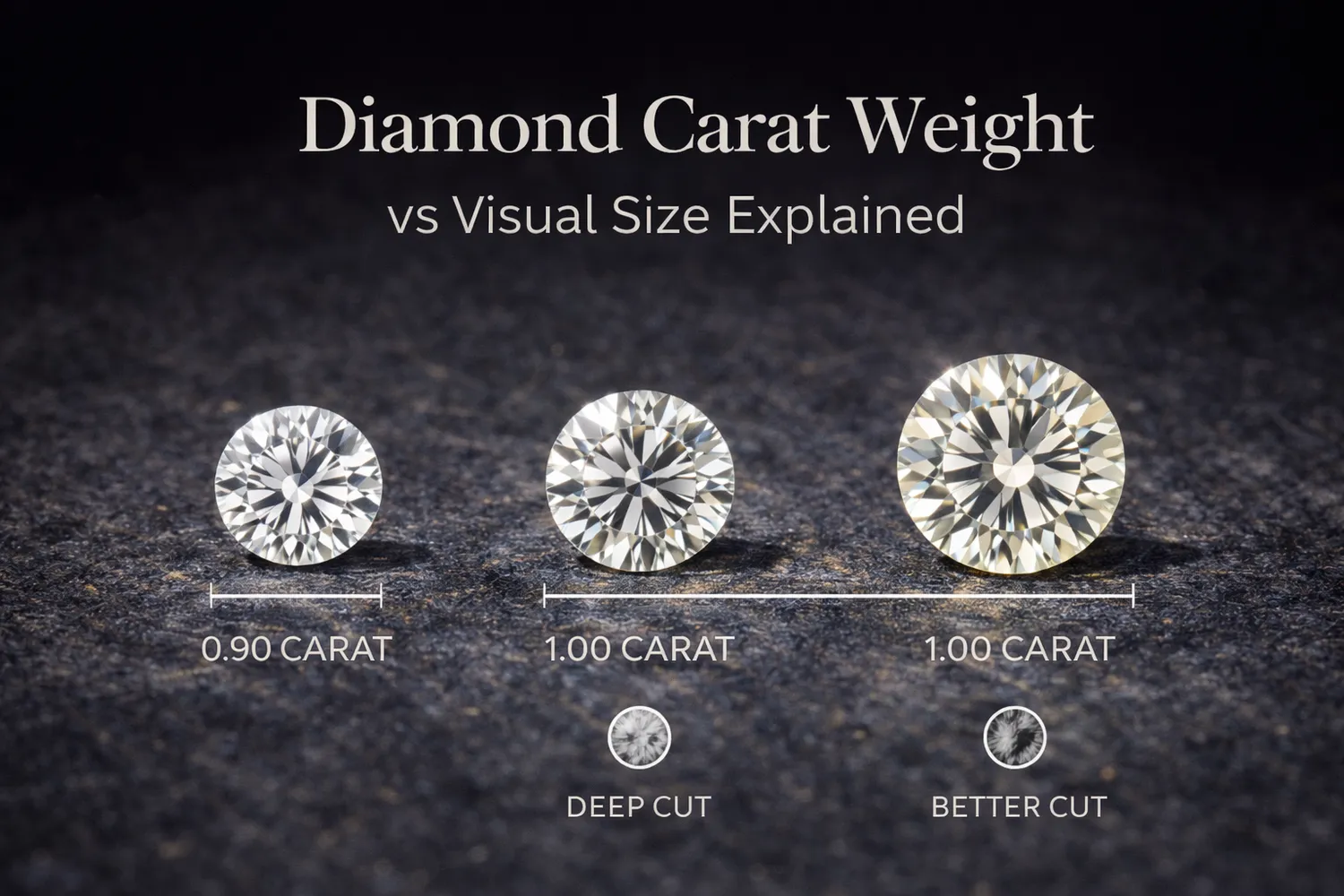
Most diamond buyers start with one assumption: higher carat weight means a bigger diamond. It’s an easy conclusion to reach because carat weight is the most visible number on a certificate and the first thing many sellers mention. But this assumption is also why so many buyers feel surprised—or disappointed—when they finally see diamonds in person.
Two diamonds with the same carat weight can look noticeably different in size on the hand. In some cases, a lower-carat diamond can even appear larger than a heavier one. This guide explains why that happens. It breaks down the difference between carat weight and visual size, what actually makes a diamond look big, and how smart buyers choose appearance over numbers.
What Is Diamond Carat Weight?
Carat weight is a measure of how much a diamond weighs, not how large it looks. One carat equals 200 milligrams. Diamonds are weighed with extreme precision, often to the hundredth or thousandth of a carat.
Because carat is a weight measurement, it includes the entire diamond—everything above and below the girdle. A diamond can carry a lot of its weight in depth, where it’s not visible once set in jewelry.
This is why carat weight alone doesn’t tell you how big a diamond will appear.
What Is Visual Size in Diamonds?
Visual size refers to how large a diamond looks when viewed from the top, also called its face-up appearance. This is what your eye actually sees when the diamond is worn.
Visual size is influenced by:
- Surface area (diameter for round diamonds)
- Proportions and depth
- Shape
- Cut quality
Two diamonds can weigh the same but have different face-up sizes depending on how they’re cut.
Why Carat Weight and Visual Size Are Not the Same
The main reason carat and size differ is proportion.
A diamond that is cut too deep carries extra weight in the bottom. That weight increases the carat number but does nothing for appearance. A diamond that is cut too shallow may look wide but perform poorly in sparkle.
Some diamonds hide weight where you can’t see it. Others spread weight more efficiently across the top. This difference is why relying on carat weight alone often leads to overpaying.
How Diamond Cut Affects Visual Size
Cut quality has a direct impact on how large a diamond appears.
A well-cut diamond reflects light efficiently, making its edges crisp and its outline clearly defined. This brightness creates the illusion of size. A poorly cut diamond leaks light, making it look darker and smaller—even if it weighs more.
Deep-cut diamonds are a common issue. They may hit a higher carat weight, but their face-up diameter is smaller than expected. In contrast, a well-cut diamond with slightly lower carat weight often looks bigger and brighter.
Diamond Shape and Visual Size
Diamond shape plays a major role in perceived size.
Shapes that tend to look larger for their weight include:
- Oval
- Marquise
- Pear
- Emerald
These shapes have elongated outlines or larger surface areas.
Shapes that carry more weight in depth include:
- Round
- Princess
This doesn’t mean round diamonds are a bad choice—they offer excellent brilliance—but they don’t maximize visual size as efficiently as some fancy shapes.
Choosing the right shape can significantly increase perceived size without increasing carat weight.
Carat Weight Thresholds and Price Jumps
Diamond pricing increases sharply at popular carat milestones like:
- 0.50
- 1.00
- 1.50
- 2.00
A 1.00-carat diamond can cost much more than a 0.90-carat diamond, even if they look nearly identical in size. These price jumps are driven by demand, not visible difference.
Smart buyers often choose diamonds just below these thresholds to get better value without sacrificing appearance.
Diamond Proportions That Maximize Size
To maximize visual size, proportions matter.
For many round diamonds:
- Depth around the low-to-mid 60% range
- Table balanced, not overly large or small
Exact “ideal” numbers vary by shape, but extremely deep stones usually appear smaller than they should. A grading report will show these measurements and is one of the best tools for evaluating size efficiency.
Visual Size Differences in Jewelry Types
Size perception changes depending on how the diamond is worn.
- Rings: Viewed up close, proportions and cut matter most
- Earrings: Seen from a distance, visual spread matters more than exact carat
- Pendants: Movement and light reflection affect perceived size
This is why lower-carat diamonds often work beautifully in earrings and necklaces while still looking impressive.
Carat Weight vs Cut vs Spread
Appearance comes from balance.
A diamond with slightly lower carat weight but excellent cut and good spread often looks better than a heavier diamond with poor proportions. Sparkle, brightness, and outline shape influence what people actually notice.
When forced to choose, prioritizing cut and spread usually produces the best visual result.
How to Choose a Diamond That Looks Bigger
To maximize appearance:
- Focus on excellent or strong cut quality
- Avoid overly deep diamonds
- Consider shapes that spread weight
- Look just below popular carat thresholds
- Compare diamonds by face-up size, not weight alone
Seeing diamonds side by side in normal lighting is one of the most effective ways to judge size honestly.
Common Myths About Diamond Size
- “Higher carat always looks bigger” – not if weight is hidden
- “Carat is the most important factor” – appearance matters more
- “Small diamonds can’t look impressive” – cut and shape say otherwise
Carat Weight Buying Checklist
Before buying:
- Check face-up measurements
- Review depth and proportions
- Compare similar carat weights side by side
- Avoid paying premiums for invisible weight
- Prioritize cut quality
Conclusion
Carat weight is a number. Visual size is an experience.
The smartest diamond buyers focus on how a diamond looks when worn, not how it reads on a certificate. When you understand the difference between weight and appearance, you stop chasing carats and start choosing diamonds that truly look big, bright, and beautiful.