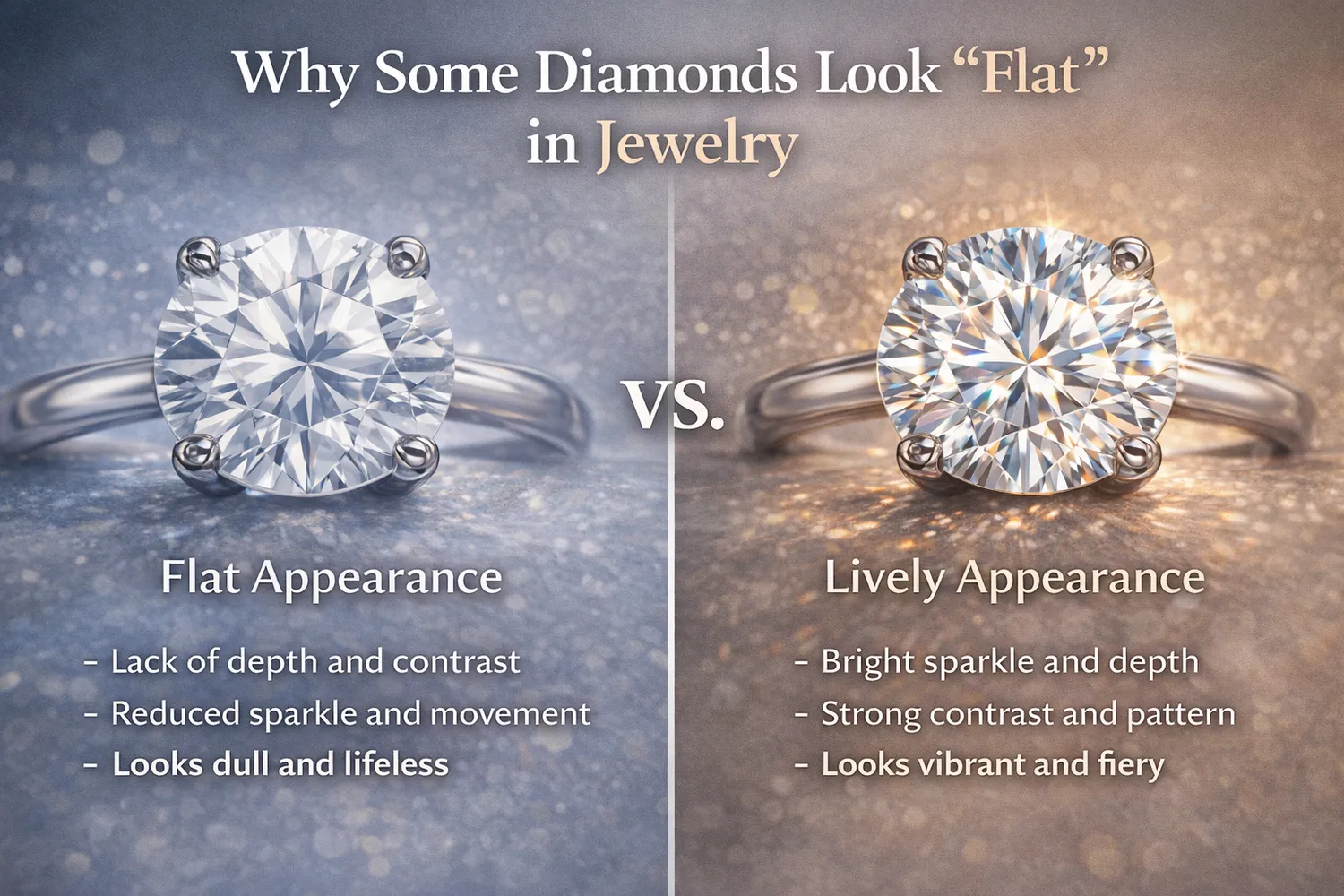
Many buyers experience this moment of doubt after purchasing diamond jewelry: the diamond is real, certified, and technically good quality, yet it looks flat. It lacks depth, doesn’t feel lively, and doesn’t “pop” the way they expected. This can be confusing and disappointing, especially when the diamond looked impressive in photos or under showroom lights. A flat-looking diamond doesn’t mean the stone is fake or defective. In most cases, it’s the result of how light, cut, design, and real-world conditions interact. This guide explains why some diamonds appear flat, what that actually means visually, and how buyers can avoid this issue when choosing diamond jewelry.
What Does “Flat” Mean in Diamond Appearance?
When people say a diamond looks flat, they are usually describing a lack of visual depth. The stone appears bright on the surface but doesn’t show strong contrast, movement, or internal dimension. Instead of flashes of light that change as the diamond moves, the appearance feels static. A flat diamond often looks smooth and reflective rather than lively. Importantly, flat does not mean fake. Many real diamonds look flat due to optical reasons rather than authenticity issues.
How Diamonds Create Depth and Dimension
Diamonds are beautiful because of how they handle light. Light enters the diamond, reflects internally off facets, and returns to the eye. When this process is well-balanced, the eye sees contrast, brightness, and movement. Dark and light areas work together to create visual depth. Without contrast, the diamond loses its sense of dimension and begins to look shallow, even if it is physically deep.
Poor Cut Quality and Flat Appearance
Cut quality is the most common reason diamonds look flat. Diamonds that are cut too shallow or too deep leak light instead of returning it properly. Shallow diamonds allow light to escape through the bottom, while overly deep diamonds trap light internally. In both cases, the result is reduced contrast and weak sparkle. Even a high-carat diamond with good color and clarity can look flat if the cut is poor.
Facet Pattern and Size Impact
Facet structure plays a major role in how depth is perceived. Large, flat facets tend to reflect light in broad areas, creating smooth, mirror-like surfaces. This reduces visual contrast. Well-balanced facet patterns break light into smaller flashes, increasing sparkle and depth. When facets are poorly proportioned or uneven, the diamond loses its visual rhythm and appears flat.
Diamond Shape and Flatness
Some diamond shapes are more prone to flat appearance than others. Step-cut diamonds like emerald and Asscher cuts emphasize transparency and reflection rather than sparkle. When well cut, they look elegant and refined. When poorly cut, they can look lifeless very quickly. Brilliant cuts usually show more depth, but even they can appear flat if proportions are wrong. Shape alone doesn’t cause flatness, but it influences how forgiving a diamond is.
Diamond Color and Flat Look
Color can affect depth perception. Warmer diamonds may reduce contrast, especially in soft or indoor lighting. Lower color grades can sometimes look dull when paired with certain metal colors or settings. This doesn’t mean lower color diamonds are bad, but it does mean that color must be balanced with cut and design to avoid a flat appearance.
Diamond Clarity and Transparency Issues
Clarity isn’t just about visible inclusions. Internal haze, graining, or cloudiness can reduce transparency and disrupt light flow. Diamonds with these issues may appear clean on paper but lack visual depth. This is especially noticeable in step-cut diamonds, where transparency is critical for beauty.
Jewelry Settings That Reduce Depth
The setting has a huge impact on how a diamond performs. Closed-back settings, heavy metal coverage, or very low-set designs restrict light entry and exit. When light can’t interact freely with the diamond, depth disappears. Open settings allow light to reach the stone from multiple angles, enhancing contrast and dimension.
Lighting Conditions That Make Diamonds Look Flat
Diamonds often look their best under strong, focused lighting. In normal indoor lighting, contrast is reduced and flaws in light performance become visible. Flat appearance is most noticeable in diffused light such as homes, offices, and shaded environments. This is why diamonds that look great in showrooms sometimes disappoint in daily wear.
Dirt, Oil, and Flat Appearance Over Time
Even a well-cut diamond can start looking flat when it’s dirty. Oils from skin, lotions, and everyday residue coat the surface and block light entry. As contrast decreases, sparkle fades and depth disappears. Regular cleaning is essential to maintain a diamond’s visual life.
Size vs Depth Illusion
Larger diamonds are not immune to flatness. In fact, size can make flatness more noticeable. Bigger stones with poor cut or low contrast often look glassy rather than impressive. Visual depth depends on proportions and light behavior, not size alone.
Mirror-Like Reflections vs Depth
Some diamonds rely heavily on mirror-like reflections. These stones appear shiny but lack internal movement. Reflection without brilliance creates a glassy look that can feel dull over time. True depth comes from balanced light return, not just surface shine.
Common Myths About Flat-Looking Diamonds
A flat diamond is not automatically low quality. Flat diamonds can sparkle under certain lights. Flat appearance is not always permanent and can sometimes be improved. Understanding these myths helps buyers avoid unnecessary regret.
How to Identify a Flat-Looking Diamond Before Buying
Always view diamonds under multiple lighting conditions. Tilt and move the stone to observe how light behaves. Compare it side by side with another diamond of similar size. Look for contrast, movement, and depth, not just brightness.
How to Avoid Buying Flat-Looking Diamond Jewelry
Prioritize cut quality above all else. Choose settings that allow light access. Avoid relying solely on photos or showroom lighting. Manage expectations and evaluate diamonds in real-world conditions whenever possible.
Can Flat-Looking Diamonds Be Improved?
Sometimes yes, sometimes no. Cleaning can restore depth if dirt is the issue. Changing the setting can improve light performance. However, if the flatness comes from poor cut or internal transparency issues, improvement may be limited.
Buyer Checklist: Avoiding Flat Diamond Jewelry
Check cut quality carefully
View under normal lighting
Assess contrast and movement
Avoid overly closed settings
Clean the diamond before judging
Conclusion
Diamonds look flat not because they are fake or flawed, but because light isn’t working in their favor. Cut quality, facet balance, setting design, lighting, and maintenance all play a role in creating depth and life. Understanding these factors helps buyers choose diamonds that remain beautiful beyond the showroom. When you focus on contrast, movement, and real-world performance instead of surface shine alone, you avoid disappointment and choose diamonds with lasting visual impact.