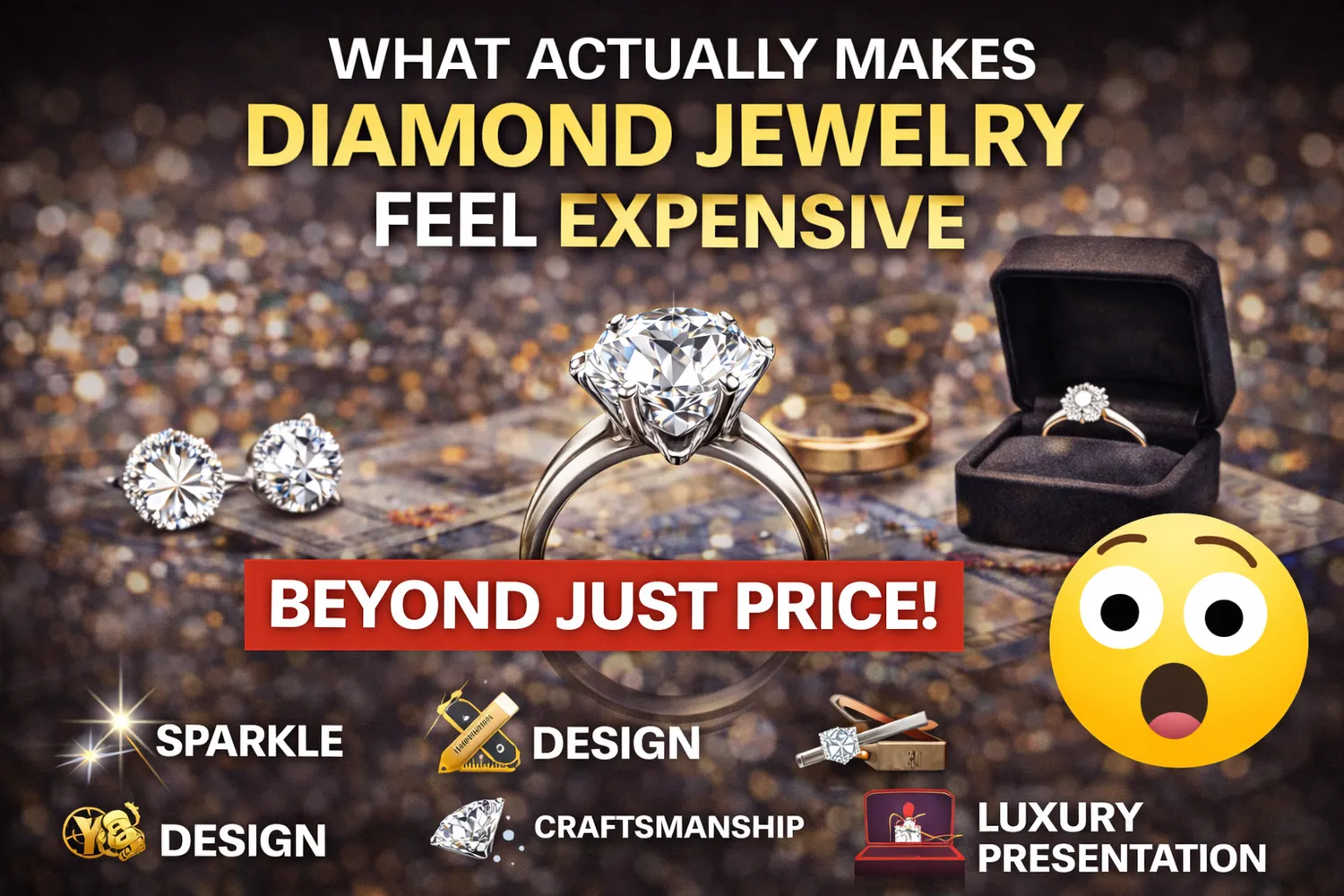
Many buyers assume that the price of a piece of diamond jewelry determines how luxurious it looks or feels. It’s a logical assumption — higher price should mean higher luxury. But in reality, the relationship between price and perceived value isn’t always straightforward.
You’ve probably seen it yourself. Some expensive pieces look ordinary or underwhelming, while others appear elegant, refined, and luxurious even at a lower price point. The difference isn’t just about the diamond’s cost — it’s about how the piece looks, feels, and presents itself.
Perceived luxury is created through a combination of visual impact, craftsmanship, design balance, proportions, and overall presence. Sparkle, finishing quality, metal weight, and even how the jewelry sits on the hand or neck all influence whether a piece feels premium.
Luxury is also psychological. Buyers instinctively judge value based on brightness, symmetry, weight, and refinement. When these elements come together, jewelry feels expensive — regardless of its actual price.
Understanding these factors is important because it allows buyers to maximize appearance and impact without overspending. Instead of paying for higher grades or larger sizes that may not improve the look, you can focus on the elements that truly create a high-end appearance.
This article explains what actually makes diamond jewelry feel luxurious, the visual and psychological cues that signal quality, the common mistakes that reduce perceived value, and practical ways to choose pieces that look premium within your budget.
Because when you understand what creates the feeling of luxury, you can choose jewelry that looks exceptional — not just expensive on paper.
The Psychology of Perceived Luxury
People judge jewelry quickly based on visual and emotional signals. First impressions are formed within seconds, often before any technical details are considered.
Brightness, shine, and overall presence are powerful indicators of perceived value. Jewelry that catches light, looks balanced, and feels substantial is naturally associated with luxury.
Weight also plays a role. Pieces that feel solid and well-made create a sense of quality, while thin or lightweight designs may feel less premium.
In many cases, perceived value matters more than actual price. A well-designed, well-crafted piece can look more luxurious than a more expensive item with poor proportions or weak sparkle.
Diamond Quality Factors That Influence Perceived Luxury
The most important factor in how expensive a diamond looks is cut quality. A well-cut diamond reflects light efficiently, creating brightness, fire, and scintillation.
Strong sparkle makes a diamond look lively and high-end. Even a smaller diamond can appear luxurious if it performs well in light.
Clarity also affects appearance, but only to the point where inclusions are not visible to the naked eye. Eye-clean diamonds provide the same visual benefit as higher clarity grades.
Color contributes to a clean, bright appearance. Near-colorless diamonds often look just as white in everyday wear as higher color grades, making them a smart choice for value.
Why Cut Matters More Than Size for a Premium Look
Many buyers assume larger diamonds look more luxurious, but sparkle has a greater visual impact than size alone.
A smaller diamond with excellent cut quality will appear brighter and more eye-catching than a larger diamond with poor proportions. Light return creates the visual presence people associate with high-end jewelry.
Face-up appearance also matters. Well-proportioned diamonds look balanced and lively, while deep or poorly cut stones may appear smaller and darker despite higher carat weight.
In real-world conditions, brilliance and fire make a diamond feel premium — not just the number on the certificate.
The Role of Jewelry Design in Creating a Luxury Feel
Design plays a major role in perceived value. Well-proportioned settings that complement the diamond create a refined, elegant look.
Minimal, balanced designs often appear more luxurious than bulky or overly complex styles. Clean lines and proper spacing allow the diamond to stand out.
Timeless designs also feel more premium than trend-based styles, which may quickly look dated.
When the setting enhances the diamond rather than overpowering it, the entire piece appears more sophisticated.
Craftsmanship and Finishing Details
High-quality craftsmanship is one of the strongest indicators of luxury.
Precise stone setting ensures the diamond sits securely and evenly. Symmetry and alignment create a clean, professional appearance.
Smooth edges, high polish, and refined finishing details make jewelry feel comfortable and well-made. Poor finishing, rough edges, or uneven surfaces immediately reduce perceived value.
Metal thickness also matters. Durable, well-constructed settings feel substantial and maintain their shape over time.
Metal Choice and Its Impact on Perceived Value
Metal quality contributes significantly to the overall look and feel of jewelry.
Higher gold purity or platinum provides durability and a richer appearance. Platinum, in particular, is associated with luxury due to its weight and strength.
Color tone also affects perception. White metals enhance diamond brightness, while yellow and rose gold create contrast and warmth.
A well-polished metal finish reflects light and adds to the overall premium appearance.
The Importance of Diamond Size Perception (Not Just Carat)
Carat weight alone does not determine how large a diamond looks. Spread and proportions influence face-up size.
Certain shapes, such as oval, pear, and marquise, appear larger than round diamonds of the same weight.
Setting styles like halos or thin bands can also enhance visual size without increasing carat weight.
Balancing size with sparkle is key to achieving a luxurious appearance.
Presentation and Context Effects
Environment plays a role in perceived luxury. Store lighting can enhance sparkle, but everyday conditions reveal true performance.
Packaging and presentation also influence perception. Clean, well-maintained jewelry always looks more premium than pieces with visible dirt or residue.
Regular cleaning is one of the simplest ways to maintain a high-end appearance.
Common Mistakes That Reduce the “Expensive” Look
Many buyers unintentionally reduce perceived value by:
Prioritizing carat weight over cut quality
Choosing poorly made or thin settings
Paying for high clarity or color without visible benefit
Ignoring design balance and proportions
Selecting trendy designs that may look outdated over time
These mistakes often increase cost without improving appearance.
Practical Guide – How to Choose Jewelry That Looks Expensive
Prioritize excellent cut and strong sparkle
Choose eye-clean clarity instead of flawless grades
Select balanced, well-proportioned designs
Choose durable, well-finished metal
Compare pieces side by side in different lighting conditions
This approach focuses spending where it actually improves visual impact.
How to Make the Right Decision with Confidence
Focus on overall appearance rather than technical perfection. The 80/20 value approach — strong cut with balanced color and clarity — delivers the best visual results.
Stay within a comfort-based budget and choose timeless designs that will remain appealing for years.
Work with sellers who emphasize craftsmanship and quality rather than pushing higher grades that don’t improve the look.
Long-Term Factors That Maintain a Luxury Feel
Durability helps jewelry maintain its appearance over time. Strong settings and quality metal prevent wear and distortion.
Regular cleaning and maintenance preserve sparkle and shine. Professional inspections ensure stones remain secure.
Upgrade and service options also add long-term value, while emotional connection and everyday comfort enhance the overall ownership experience.
Conclusion
Jewelry that looks expensive isn’t defined by price alone — it’s defined by perception.
Sparkle, craftsmanship, design balance, proportions, and finishing quality create the visual and emotional experience people associate with luxury. Larger diamonds or higher grades don’t automatically produce a premium look if these elements are missing.
Buyers who focus only on carat weight or technical specifications often spend more without improving appearance. In contrast, those who prioritize cut quality, thoughtful design, and strong craftsmanship achieve a more refined and impressive result within the same budget.
True luxury comes from how a piece looks and feels in everyday wear — bright, balanced, and beautifully made.
When you understand what actually creates perceived value, you can choose diamond jewelry that doesn’t just cost more — it looks exceptional and feels special for years to come.
FAQ
What makes diamond jewelry look expensive?
Strong sparkle, balanced design, high-quality craftsmanship, and a clean, well-finished appearance.
Does a bigger diamond always look more luxurious?
No. A well-cut smaller diamond often looks more premium than a larger stone with poor light performance.
What matters more for appearance: cut or carat?
Cut quality has the greatest impact on sparkle and overall visual impact.
How does the setting affect the overall look?
A well-proportioned, high-quality setting enhances the diamond and creates a refined appearance.
Is platinum better than gold for a luxury feel?
Platinum often feels more premium due to its weight and durability, but well-crafted gold can look equally luxurious.
How can I make my diamond jewelry look more premium without spending more?
Choose excellent cut, eye-clean clarity, balanced design, quality metal, and keep the piece clean and well maintained.