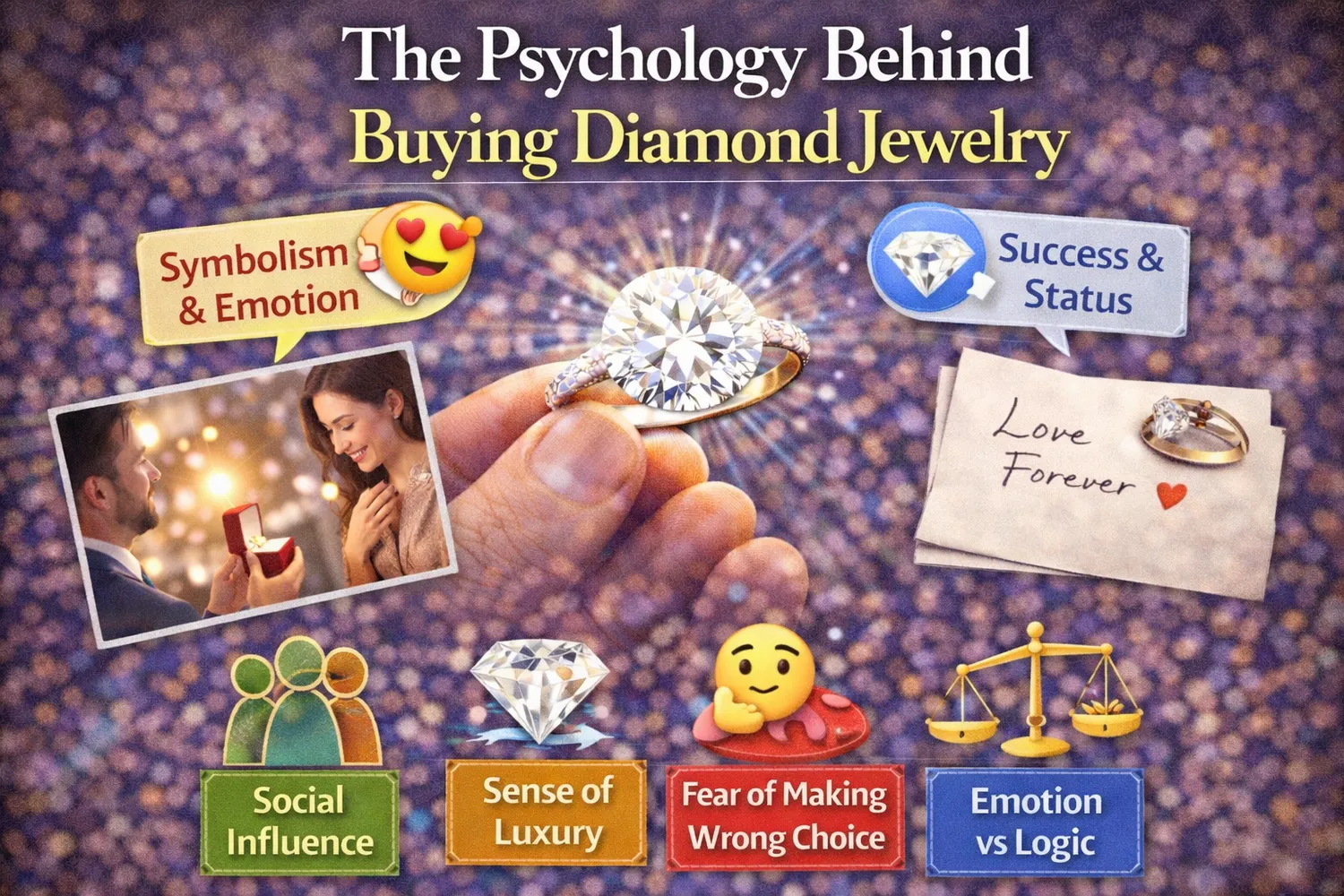
Buying diamond jewelry is rarely just a financial decision. Whether it’s an engagement ring, an anniversary gift, a celebration of success, or a personal purchase, the choice is deeply emotional. For most people, a diamond represents far more than its physical characteristics — it symbolizes love, commitment, achievement, identity, and important life moments.
This emotional connection is what makes diamond buying different from almost any other luxury purchase. Buyers aren’t just selecting a product. They’re choosing something that will represent a relationship, a memory, or a milestone for years — sometimes for a lifetime.
Because of this, psychological factors often influence the decision more than technical specifications. The feeling a diamond creates, the story behind it, and the meaning it carries can matter more than the difference between two clarity grades or a slight variation in color.
At the same time, this emotional weight can also create pressure. Buyers may worry about making the perfect choice, meeting expectations, or selecting something that reflects their intentions and status appropriately.
Understanding the psychology behind diamond buying helps explain why certain diamonds feel “right,” why some buyers prioritize size or brand, and why emotions often guide the final decision. The purpose of this guide is to explore the emotional, social, and mental factors that shape how people choose diamond jewelry — and how buyers can make decisions that feel both meaningful and smart.
Why Diamond Jewelry Is an Emotional Purchase
Diamond jewelry is closely tied to major life events. Engagements, weddings, anniversaries, promotions, and personal achievements all carry emotional significance, and diamonds often become the physical symbol of those moments.
Unlike practical purchases, diamonds are chosen to represent feelings:
- Love and commitment
- Celebration and success
- Appreciation and gratitude
- Personal milestones
Because of this, buyers are not simply comparing features or prices. They are choosing a symbol that will carry emotional meaning for years.
The emotional nature of the purchase also explains why many buyers remember the moment they received or gave a diamond more vividly than the technical details of the stone itself. The value becomes tied to memory, not just material.
The Power of Symbolism and Meaning
Diamonds hold strong cultural and social symbolism. Over time, they have become associated with permanence, strength, and enduring relationships.
An engagement ring, for example, represents:
- A promise
- A long-term commitment
- A shared future
Beyond relationships, diamonds are also used to mark personal achievements such as career milestones or financial success. In these cases, the purchase becomes a reward and a reminder of personal growth.
This symbolic meaning often drives the desire to choose something special, even if the technical differences between options are minimal.
The Role of Social Influence
Social expectations play a significant role in diamond buying decisions.
Buyers are often influenced by:
- Family expectations
- Friends’ opinions
- Cultural traditions
- Social media trends
Platforms like Instagram and Pinterest have amplified comparison culture. Seeing large or elaborate rings online can shift expectations and create pressure to match or exceed what others have.
Trends also influence preferences for shapes, sizes, and styles. While trends change over time, the psychological desire to meet social standards remains strong.
The Status Effect — Diamonds as a Signal
Luxury purchases often serve as signals of success, and diamond jewelry is no exception.
Visible elements such as:
- Carat size
- Brand name
- Design complexity
can influence how the piece is perceived by others.
For some buyers, the diamond becomes a reflection of personal achievement or financial stability. This doesn’t diminish the emotional value, but it does add a psychological layer related to social perception.
Emotional Decision vs Rational Decision
Most diamond purchases begin with emotion and are later justified with logic.
Buyers often:
- Fall in love with a diamond’s appearance
- Then review the specifications to confirm the choice
Technical details such as the 4Cs help buyers feel confident, but the initial attraction is usually visual or emotional.
The healthiest approach is balance — allowing emotional connection while ensuring the purchase fits within budget and offers good value.
The “Bigger Is Better” Mindset
Carat size carries strong psychological weight. Larger diamonds are often associated with:
- Greater generosity
- Higher status
- Stronger commitment
However, visual presence depends on cut quality and proportions, not just size. Many buyers later realize that sparkle and brightness attract more attention than carat weight alone.
Understanding this helps shift focus from size to overall appearance.
The Fear of Making the Wrong Choice
Because diamonds are high-value purchases, decision anxiety is common.
Buyers often experience:
- Information overload
- Confusion between options
- Fear of overpaying
- Concern about future regret
This anxiety increases when too many technical details are considered without clear priorities.
Expert guidance, clear value ranges, and focusing on visual performance can reduce this stress significantly.
The Role of Personal Identity and Style
Jewelry is a form of self-expression. Many buyers want a diamond that reflects personality, lifestyle, and aesthetic preferences.
Factors include:
- Classic vs modern design
- Minimal vs bold appearance
- Daily wear practicality
When a piece aligns with personal style, it creates a stronger emotional connection and long-term satisfaction.
The “Forever” Concept and Long-Term Thinking
Diamonds are often viewed as lifetime purchases. This mindset encourages buyers to think long-term about:
- Durability
- Timeless design
- Heirloom potential
The idea that the piece may be passed down to future generations adds emotional depth and influences decisions toward classic styles.
Brand Psychology in Diamond Buying
Brand names provide emotional reassurance.
Luxury brands offer:
- Perceived quality and craftsmanship
- Trust and authenticity
- Heritage and storytelling
For many buyers, brand recognition reduces uncertainty and adds emotional comfort, even if the diamond quality itself is similar to non-branded options.
The Influence of Store Experience and Presentation
Retail environments are designed to create emotional impact.
Factors such as:
- Lighting
- Display presentation
- Atmosphere
can make diamonds appear more beautiful and valuable. Positive in-store experiences also increase emotional attachment to the purchase.
The Scarcity and Urgency Effect
Limited-time offers and “last chance” messaging create psychological pressure.
This triggers:
- Fear of missing out (FOMO)
- Faster decision-making
- Reduced comparison shopping
For high-value purchases, taking time is almost always the smarter approach.
The Emotional Reward Factor
After purchase, diamonds often provide strong emotional satisfaction.
Owners associate the piece with:
- Special memories
- Personal milestones
- Emotional moments
This emotional reward is a major part of the true value of diamond jewelry.
How Smart Buyers Balance Emotion and Logic
To make confident decisions:
- Set a realistic budget first
- Prioritize visual performance over extreme grades
- Compare multiple options
- Avoid rushed decisions
- Choose the diamond that feels meaningful and looks beautiful
Balancing emotional connection with practical evaluation leads to the best long-term satisfaction.
The Most Common Psychological Mistakes Buyers Make
Common errors include:
- Overspending due to social pressure
- Prioritizing carat size over cut quality
- Buying for others’ approval
- Following trends instead of personal style
These choices often reduce long-term satisfaction.
The Right Mindset for Buying Diamond Jewelry
The best approach is to focus on personal meaning and daily enjoyment.
Buy for:
- Emotional significance
- Visual beauty
- Long-term comfort and confidence
Comparison with others rarely leads to lasting satisfaction.
Conclusion
Diamond buying is as much emotional as it is technical. Love, celebration, identity, and social influence all play powerful roles in the decision.
Understanding these psychological factors helps buyers recognize their priorities and avoid unnecessary pressure or overspending.
The best diamond isn’t the biggest or the most expensive — it’s the one that feels meaningful, looks beautiful, and fits comfortably within your budget.
When emotion and informed decision-making come together, the purchase becomes more than a luxury item. It becomes a lasting symbol of something truly important.
FAQ
Why are diamonds considered special emotionally?
Diamonds symbolize love, commitment, achievement, and important life milestones, making them deeply meaningful beyond their material value.
Do people buy diamonds for status?
Sometimes. Diamonds can signal success or financial stability, but emotional and symbolic reasons are usually the primary motivation.
Why do buyers focus so much on carat size?
Larger diamonds are often associated with status and generosity, which creates a strong psychological preference for size.
How can I avoid overspending on diamond jewelry?
Set a clear budget, focus on cut and visual performance, compare options, and avoid making decisions based on social pressure or urgency.
What matters more — emotion or specifications?
Both matter. The best purchase balances emotional connection with practical considerations like quality, value, and budget.