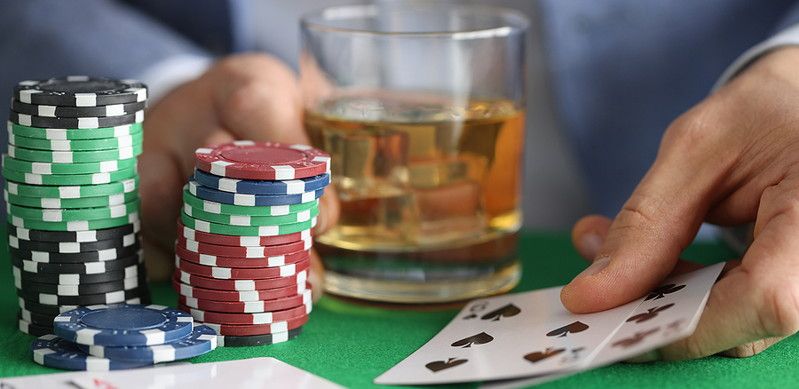
The act of gambling has the same effect on someone with a gambling addiction as using drugs or drinking alcohol. The person's mood and state of mind are changed by their gambling behavior.
The person keeps repeating the behavior in an effort to produce the same result as they grow accustomed to the feeling. With some addictions, such as alcohol, the person begins to acquire a tolerance. For the same buzz, more and more alcohol is required.
Gambling addicts sometimes chase their losses, believing that if they keep playing, they will eventually win back their losses, needing to bet more to experience the same high. As a result, a vicious cycle forms and the desire for the action increases. At the same time, resistance decreases. The capacity to resist the impulse to gamble is decreased as the craving increases in strength and frequency.
This might affect someone psychologically, personally, physically, socially, or professionally. If someone has a problem with gambling, it won't be based on how often they gamble or how much money they lose.
The emotional and monetary effects will be the same whether a person gambles often or only on occasion. When a person can no longer control their gambling and it starts to negatively affect other facets of their life, it becomes a problem.
According to the Diagnostic Statistical Manual of Mental Disorders-5, a person has to exhibit or experience four of the following behaviors over the course of the previous 12 months in order to be diagnosed with gambling addiction:
- To get the desired thrills, one must gamble more and more money.
- When attempting to limit or stop gambling, you may feel restless or agitated.
- Repeated, failed attempts to regulate, limit, or stop gaming.
- Frequently having gambling fantasies (such as reliving past gambling or planning future gambling).
- When anxious, people frequently turn to gambling.
- Gamblers frequently come back after losing money to make amends. One is said to be chasing one's losses when doing this.
- Lying to cover up one's gambling habits
- Putting at risk or losing an important connection, a career, a place to study or an employment opportunity due to gaming.
- Requesting assistance from others for financial issues brought on by gambling
Gambling addiction is treatable with the proper care. You don't require your addiction's target in order to survive, in contrast to someone who is dependent on food. You merely need to understand how to establish a sound and proportionate relationship with money.
You must entirely stop gambling because even occasional gambling can trigger a relapse. A recovery program can assist you in learning impulse control. Gambling addiction is typically treated using techniques used to treat other addictions.
Inpatient Rehabilitation Program
- Some people discover that they require the structure provided by an inpatient program at a treatment facility to recover from a gambling addiction, even if this is not frequently necessary.
- This kind of program might be especially useful if you can't avoid casinos or other gambling establishments on your own. You will be required to stay at the treatment center for a predetermined period of time, which could range from 30 days to a whole year.
Outpatient Rehabilitation Program
- People with gambling addictions tend to use outpatient treatment programs more frequently. You'll take classes at a location in this kind of program.
- Both individual and group treatment are available to you. You'll carry on doing your daily chores, going to work, and living at home.
Twelve-Step Program
- You might get support through Gamblers Anonymous or another 12-step group to get over your addiction to gambling. If you are unable to pay for more intense rehabilitation choices, this kind of program might be extremely beneficial.
- It works along the same lines as Alcoholics Anonymous by assisting you in creating a support system of other ex-gamblers. Members of the group may meet once a week or more frequently.
- Physical activity can benefit those with gambling disorders, according to some study. There are several locations with gambling hotlines and other support. A Addiction Hotline is provided at (888) 672-2120
Psychotherapy or Cognitive Behavior Therapy
- One-on-one treatment may be helpful in addition to group counseling or support meetings. A gambling addiction may result from more serious emotional problems or concerns with avoidance.
- To overcome self-destructive tendencies, including your gambling addiction, you will need to address these underlying concerns. A place to be vulnerable and discuss these issues is provided by counseling.
Medications
- You might occasionally need medicine to assist you control your cravings to gamble. Your addiction to gambling could be brought on by a mental illness, such bipolar disorder. To improve your impulse control in these situations, you must learn to address the underlying issue.
Lifestyle changes
- Managing the financial fallout from gambling can occasionally be the most challenging step in the healing process.
- You might have to delegate financial duties to your partner or a close friend at first. You might also want to stay away from settings like casinos and athletic events that might make you feel the temptation to wager.
A person's life, family, education, finances, legal challenges, and professional circumstances may require treatment and aid in numerous areas. Anyone who thinks they might have a gambling addiction should get assistance. An appropriate treatment provider can be suggested by a health professional.