What is Hyperopia?
Hyperopia, also known as farsightedness, is a refractive defect in which distant objects are usually seen more clearly, but closer objects appear to be blurred. When the eyeball is shorter than normal or has a cornea too flat, hyperopia occurs. As a consequence, light rays focus behind the retina, and vision blurs.
How Hyperopia affected population?
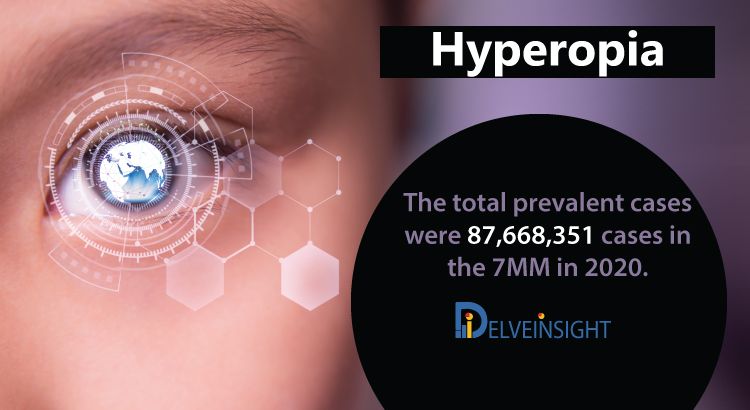
DelveInsight estimates that the total Hyperopia prevalent cases were 87,668,351cases in the 7MM in 2020. The United States accounted for nearly 18% of the total 7MM cases in the same year.
The Hyperopia Market Analysis Report provides historical as well as forecasted epidemiological analysis segmented into:
· Total Hyperopia Prevalent Cases
· Total Diagnosed Cases of Hyperopia
· Gender-specific Diagnosed Cases of Hyperopia
· Age-Specific Diagnosed Cases of Hyperopia
· Severity-Specific Diagnosed Cases of Hyperopia
· Treated cases of Hyperopia
To know more, request sample pages of Hyperopia Market Report @ https://www.delveinsight.com/report-store/hyperopia-market
Hyperopia Market Outlook
In the Hyperopia treatment scenario, eyeglasses or contact lenses are the most widely used options for correcting the disease. In other cases, people may go for refractive surgery. The most commonly used surgeries arelaser-assisted in situ keratomileuses (LASIK), laser-assisted subepithelial keratectomy (LASEK), photorefractive keratectomy (PRK), conductive Keratoplasty (CK), phakic Intraocular Lens (IoLs), and refractive lens exchange (RLE).
RLE and LASIK are safe and efficacious for Hyperopia when performed on the right patient population. Since each procedure has potential benefits and drawbacks, explicit informed consent is required regardless of the procedure chosen.
Nevakar is developing two drugs, namely NVK-029 and NVK-031, directed toward targeting refractive errors I and II, respectively. However, there is not much information available publicly giving an idea about their developmental activities. Looking at the progression of their phases, it is anticipated that they will be a potential treatment option for Hyperopic patients if and when approved.
It is assessed that the Hyperopia pipeline is not robust. This is due to the lack of interest of pharmaceutical companies, lack of awareness about Hyperopia concerning other refractive errors, or lack of pathophysiology research. There is hardly any drug in the pipeline, and the ones in the emerging pipeline are either lens or surgical options. It is an untapped market in terms of the unavailability of pharmaceutical products, which also means that the likelihood of success of a key business investing in this field would increase dramatically due to a less competitive environment.
What are the Hyperopia market drivers?
The Hyperopia market might expand due to rising Hyperopia prevalence, and the patients suffering from this disease currently do not have any pharmacological options, which opens up an additional window of opportunities for new drugs.
What are the Hyperopia market barriers?
The market growth might be hampered because of delayed or undiagnosed Hyperopia. Also, currently, there is no precedence of approval in Hyperopia. In the past, few companies have tried to evaluate the potential of their product in this space but were unsuccessful.
Which are the leading companies in Hyperopia market?
Companies such as Nevakar, and others, are trying to develop novel products to improve the Hyperopia treatment outlook.
Request sample pages for more information on Hyperopia market, click here @ https://www.delveinsight.com/sample-request/hyperopia-market