Introduction
In the age of advanced AI, aligning machine behavior with human values is more critical than ever. Reinforcement Learning from Human Feedback (RLHF) has emerged as a powerful method to fine-tune large language models (LLMs) and other AI systems to behave in ways that align better with human intentions. This guide breaks down RLHF across three key stages of understanding: Awareness, Consideration, and Decision.
What Is RLHF?
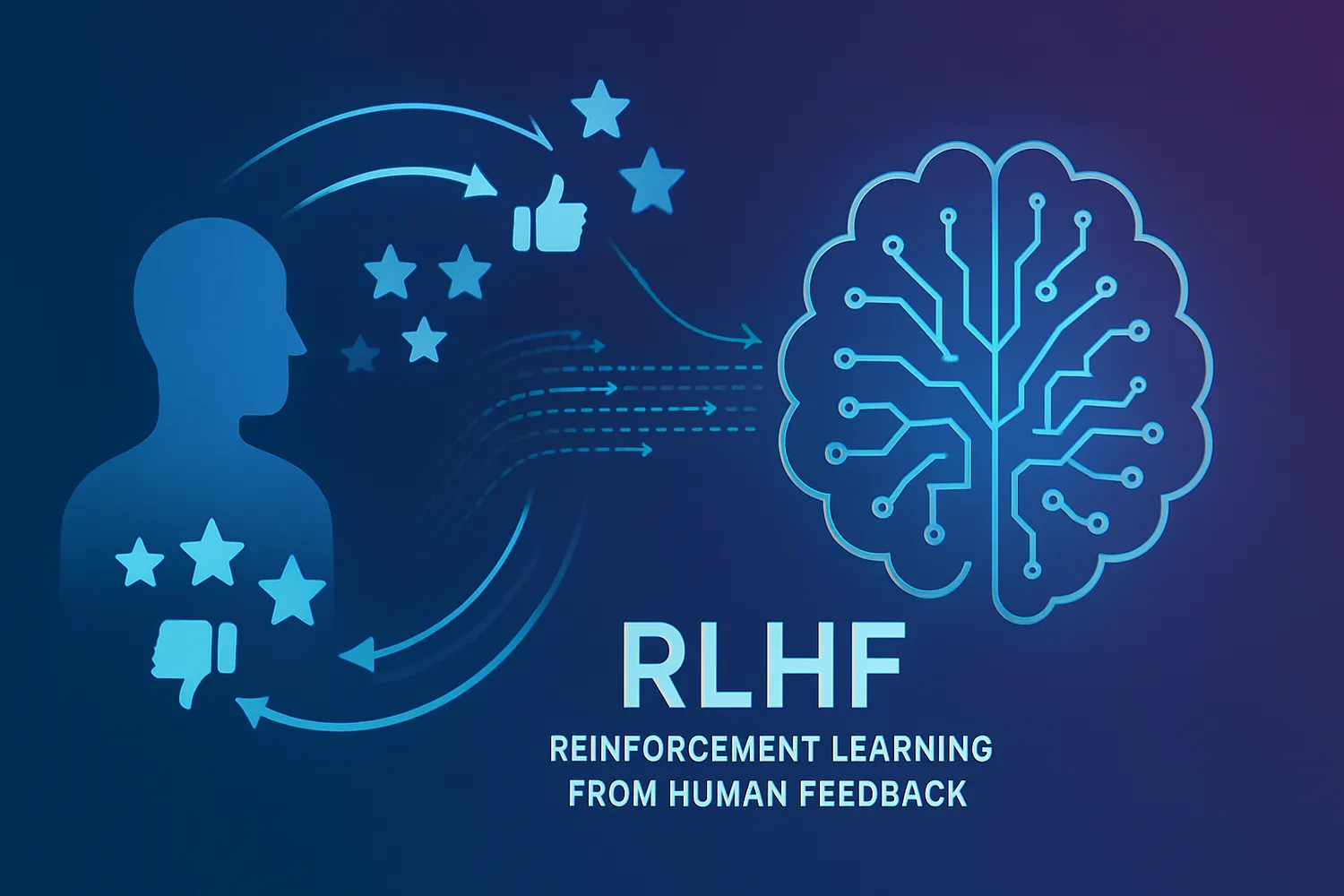
RLHF is a machine learning technique that leverages human preferences to guide the behavior of an AI model. Unlike traditional reinforcement learning, which uses predefined reward functions, RLHF involves training an AI model using feedback from human annotators to define its reward system.
Key Concepts
- RLHF Model: A model trained using human feedback to refine its outputs.
- RLHF AI: AI systems optimized using reinforcement learning methods with human supervision.
- LLM RLHF: Applying RLHF to large language models like GPT and Claude to ensure safer, more relevant responses.
Real-World Analogy
Think of RLHF like teaching a child. Instead of just programming rules, you observe their behavior and guide them using praise or correction, helping them learn what is acceptable based on context and intention.
How Does RLHF Work?
Core Components
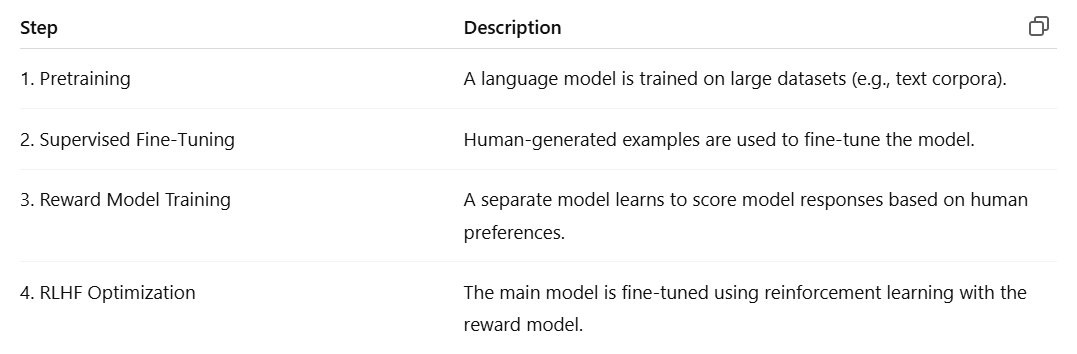
- Reward Models: Predict human preferences based on examples.
- Proximal Policy Optimization (PPO): A common algorithm used in the RLHF training loop.
- Human Labelers: Provide judgments on which model outputs are better.
Case Study: OpenAI's GPT-4
OpenAI’s GPT-4 uses LLM RLHF to improve its behavior. By comparing multiple outputs and ranking them, human trainers helped steer the model to generate more accurate, safe, and context-aware responses.
Key Statistics
- A 2022 RLHF paper from OpenAI demonstrated that RLHF significantly improved user satisfaction.
- Research shows that RLHF-trained models reduce harmful or misleading content by up to 65% compared to baseline models.
Why and When to Implement RLHF
- Human-Aligned Behavior: Models act in ways consistent with human values.
- Improved Safety: Helps avoid toxic or biased outputs in conversational AI.
- Better User Experience: Tailors responses to user expectations and societal norms.
Use Cases
- Customer Support Bots: Reduce escalation by improving empathy and relevance.
- Search Engines: Deliver more accurate and context-aware results.
- Content Moderation Tools: Better judgment in flagging harmful content.
Case Study: Anthropic’s Claude
Claude, developed by Anthropic, uses RLHF AI techniques to maintain a helpful, honest, and harmless stance. It received training via extensive human feedback to limit harmful generation, a key differentiator in its competitive performance.
When to Adopt RLHF
- You are building an AI system that interacts directly with end-users.
- Safety, ethical behavior, and user satisfaction are top priorities.
- Your model needs continuous alignment with changing social norms.
Final Thoughts
Reinforcement Learning from Human Feedback (RLHF) is not just a buzzword — it's a transformative technique reshaping how machines learn from humans. From LLM RLHF in powerful AI models to RLHF training for specialized applications, this approach ensures AI behaves more like an assistant and less like a black-box system.