In today’s data-driven world, transforming raw data into human-like, readable content is no longer a luxury—it’s a necessity. Natural Language Generation (NLG), a subfield of artificial intelligence, is revolutionizing how machines communicate with people. By automating the process of generating text from data, NLG is empowering industries to scale content creation, improve decision-making, and deliver personalized experiences like never before.
What is Natural Language Generation?
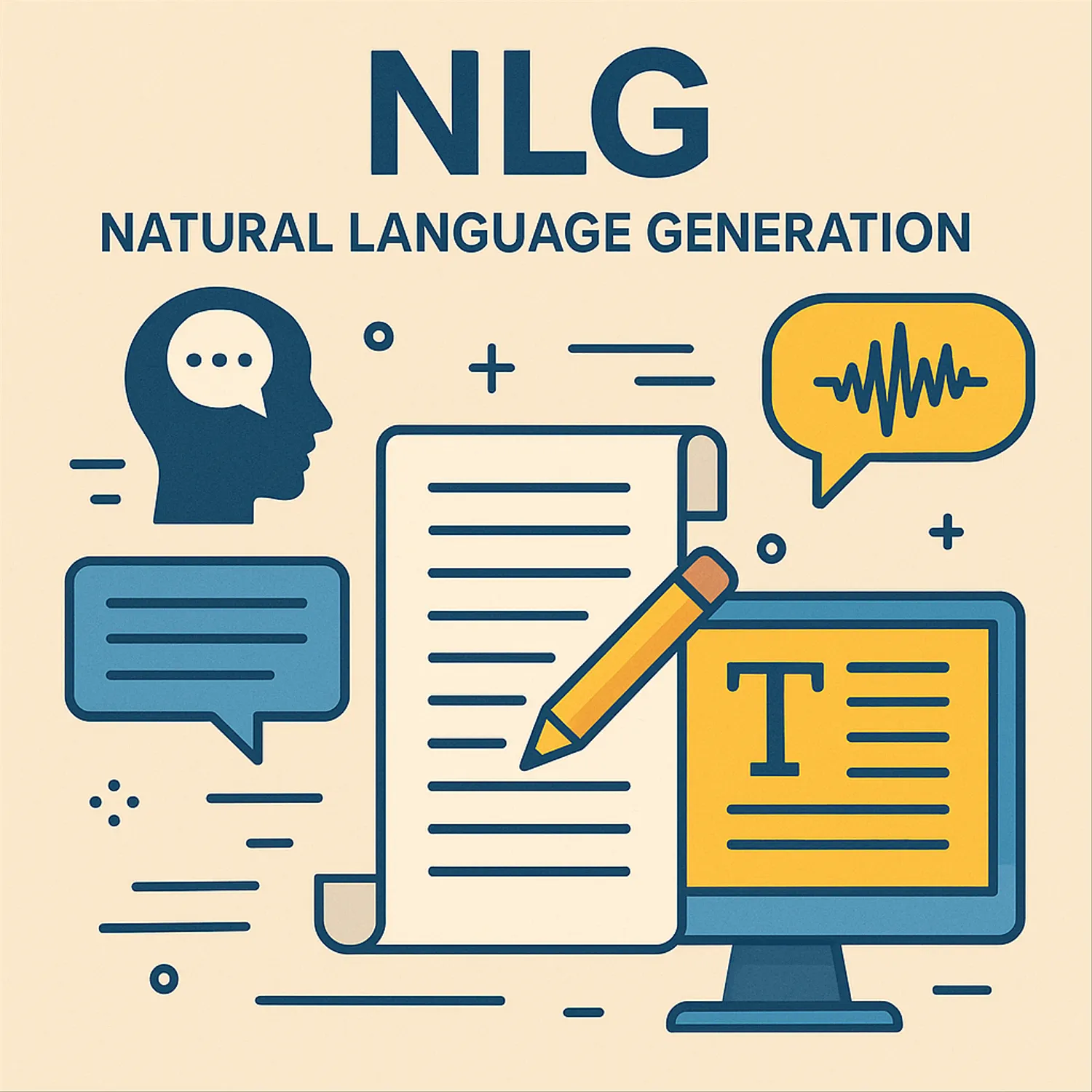
Natural Language Generation (NLG) is the process by which machines convert structured data into coherent, readable narratives. It’s a branch of Natural Language Processing (NLP) that focuses not on understanding language (as in Natural Language Understanding, or NLU) but on producing it.
From generating weather reports to summarizing financial data, NLG tools can automatically create sentences, paragraphs, or entire documents without human intervention, making communication faster, more scalable, and often more accurate.
How NLG Works
NLG systems generally operate in a multi-step process:
- Content Determination – Decide what information should be conveyed.
- Data Interpretation – Understand relationships and patterns in the input data.
- Sentence Planning – Organize information logically and apply linguistic rules.
- Linguistic Realization – Convert structured content into grammatically correct text.
- Post-Processing – Refine and tailor content to audience or platform.
Real-World Applications of NLG
The potential of NLG spans across diverse industries. Here's a closer look:
1. Financial Services
- Generate automated earnings reports, forecasts, and investment summaries.
- Convert real-time trading data into plain-language updates.
2. Healthcare
- Summarize patient histories and lab results.
- Assist in generating clinical reports or discharge summaries.
3. eCommerce & Retail
- Automate product descriptions based on attributes like size, color, material.
- Customize promotional content for individual shoppers.
4. Media & Journalism
- Convert sports statistics into game summaries.
- Create personalized news digests using user data.
Case Study 1: NLG in Finance – Bloomberg’s Automated Reports
Challenge: Bloomberg processes vast amounts of financial data daily and needed a way to deliver timely, accurate insights to its clients.
Solution: By integrating NLG technology, Bloomberg was able to:
- Automatically generate thousands of earnings summaries and market outlooks.
- Ensure consistency, reduce human errors, and speed up content delivery.
Result: Significant time savings and enhanced reader engagement with instant, readable reports.
Case Study 2: eCommerce Personalization – AX Semantics
Challenge: A leading online retailer faced the daunting task of updating over 100,000 product descriptions across multiple languages and regions.
Solution: The retailer implemented AX Semantics, an NLG solution that:
- Used structured product data to generate SEO-optimized descriptions.
- Localized content in over 10 languages in real-time.
Result: A 75% reduction in content creation time and a 20% increase in online conversions.
Benefits of Natural Language Generation
Here are some compelling benefits driving the adoption of NLG tools:
- Scalability: Generate thousands of content pieces in seconds.
- Consistency: Maintain brand tone and voice across every output.
- Speed: Turn complex datasets into readable content instantly.
- Cost-Efficiency: Reduce dependency on large content teams.
- Localization: Translate and adapt content for diverse audiences automatically.
Challenges in NLG Implementation
Despite its promise, implementing NLG solutions isn’t without hurdles:
- Data Quality: NLG tools are only as good as the data they ingest.
- Domain-Specific Training: Requires fine-tuning for specialized industries.
- Context Awareness: Machines still struggle with tone, nuance, and sarcasm.
- Ethical Risks: Risk of generating biased or misleading content if the data is flawed.
Future Trends in NLG
As AI continues to evolve, so will NLG technologies. Some exciting trends include:
Integration with GPT-based Models
Combining NLG with powerful transformers like GPT-4 enhances creativity and context understanding—leading to richer, more human-like content.
Real-Time Personalization
Advanced NLG engines are being trained to generate hyper-personalized content tailored to individual behaviors, preferences, and histories.
Voice and Multimodal NLG
NLG is expanding beyond text to include voice-based outputs, ideal for virtual assistants, chatbots, and audio-based services.
How Macgence Powers Next-Gen NLG Solutions
At Macgence, we specialize in data annotation and human-in-the-loop solutions that fuel accurate and effective NLG deployments. Our multilingual data sets and domain-specific training models help companies:
- Build highly accurate language models
- Ensure contextual relevance and cultural appropriateness
- Support localization for global markets
Key Takeaways
To summarize, Natural Language Generation is reshaping how organizations interact with data and users. It’s not just about automation—it’s about creating value, clarity, and engagement through language.
Why NLG Matters Now More Than Ever:
- Exploding volumes of structured data
- Advances in large language models
- Need for multilingual, real-time communication
- Desire for intelligent automation with human-like output
Final Thoughts
Natural Language Generation is no longer a futuristic concept; it’s a vital technology that’s transforming industries today. Whether you’re in finance, healthcare, or eCommerce, embracing NLG can supercharge your operations, enhance customer engagement, and unlock new levels of efficiency.
For businesses aiming to leverage this transformative tech, Macgence offers the expertise and data solutions you need to build smarter, more reliable NLG applications.