Data management through collection and storage, as well as the methods, procedures, and tools that support data analysis, are all topics covered by the field of data analytics. Data analytics seeks to identify patterns, worthwhile correlations, and previously unnoticed trends in order to then derive important insights that might help infer future events, make forecasts, and boost productivity.
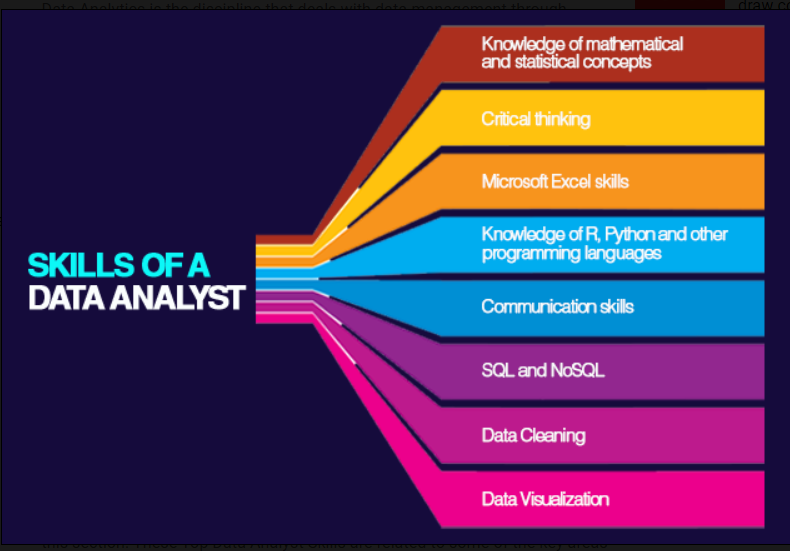
Technical Data Analyst Skills
In this section, we'll examine the essential hard/technical skills needed to be a data analyst. These Top Data Analyst Skills are associated with some of the major areas that Data Analysts pay attention to when doing their job duties.
For Statistical Programming, R and Python
As a data analyst, you may perform sophisticated analysis and predictive analytics with the aid of the statistical programming languages R and Python. These languages enable you to write programmes that clean, manage, analyse, and visualise data quickly.
One of the most popular programming languages in the data analytics industry is R. Its syntax and organisational structure were created particularly to make analytical work easier. It includes a number of straightforward built-in data commands and is capable of processing complex and massive volumes of data.
SQL
Understanding SQL, or Structured Query Language, is one of the most crucial abilities for data analysts. It is frequently referred to as Excel's "graduated" version and is a common database language. In relational databases, it is widely recognised as a standard technique for handling and querying data. With an understanding of SQL, you can become more proficient at managing and storing data, connecting numerous databases, and creating or modifying database structures. To make joins, access data, generate aggregations, and develop stored procedures are all examples of data analyst skills. With each of them, SQL can be useful.
Python
One of the top general-purpose programming languages is Python. It has a significant impact on the development of artificial intelligence (AI). It also comes with a variety of specialised libraries, many of which are connected to AI. Artificial intelligence is having a bigger impact on the computer world, so knowing Python is one of the key skills for data analysts that professionals can't ignore.
Conclusion
One of Syntax Technologies' top data analytics programmes is the Data Analytics and Business Intelligence course (DA/BI course). The programme is meant to teach those with little to no programming experience how to become data professionals that mix analytical and coding skills. Participants will learn how to make sense of real-world data sets and produce data dashboards and visualisations to communicate their results.