There's something genuinely special about a children's book that's made properly. The weight of the pages. The way colours pop when the print quality is right. The binding that survives being read forty-seven times in a row by a five-year-old who has decided this particular story is the only acceptable bedtime option for the foreseeable future. These qualities aren't accidental — they're the result of printing decisions made before a single copy reaches a child's hands, and they determine whether a book becomes genuinely beloved or simply adequate.
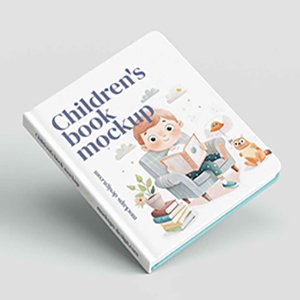
For authors, illustrators, educators, and businesses commissioning children's content, kids book printing presents a specific set of requirements that general printing services don't always address with the nuance the format demands.
What Makes Kids Book Printing Different
Children's books aren't simply shorter books with pictures. They're a distinct format with distinct production requirements that affect every aspect of how they're received by the audience they're made for.
Colour reproduction is foundational. Children's books live and die by their illustrations, and illustrations require print quality that renders colours accurately, vibrantly, and consistently across every copy in a print run. A palette that looks warm and inviting on screen but prints flat and muted on paper doesn't just disappoint aesthetically — it undermines the entire emotional experience the book was designed to create.
Paper specification matters more in Kids Book Printing than in almost any other format. Pages need to be substantial enough to handle the physical engagement that young readers bring — the page turning, the pointing, the occasional enthusiastic handling that no adult book experiences quite the same way. Board book formats for the youngest readers require entirely different production considerations from softcover picture books or early chapter books with illustrated interiors.
Binding choice affects both the book's durability and its ability to lie flat when open — something that matters enormously for books meant to be read aloud, where the adult reading needs both hands free and the child needs to see the illustrations clearly without the book curving closed.
Getting all of these right simultaneously requires a printing partner who understands children's publishing specifically rather than one who treats it as a variation on standard book printing. The specifications that produce excellent results for a business manual or a literary novel won't automatically produce excellent results for a picture book — and the difference between production choices that work and those that don't is immediately visible to anyone who picks up the finished product.
Why On Demand Book Printing Has Changed What's Possible
The traditional model of book printing required authors and publishers to commit to significant print runs before knowing how a title would be received. The economics of offset printing made short runs prohibitively expensive per unit, which meant taking on inventory risk before the market had weighed in.
On Demand Book Printing has fundamentally changed this equation. The ability to print single copies, small batches, or any quantity as demand requires — without the per-unit cost penalty that once made short runs impractical — has opened up possibilities that simply didn't exist a decade ago.
For children's book authors self-publishing a debut title, on demand book printing means being able to test market response without committing to a garage full of unsold inventory. For educational publishers creating content for specific curricula or age groups with defined audience sizes, it means matching production to actual need rather than speculating about demand. For businesses commissioning branded children's content for corporate social responsibility programmes, events, or gifting, it means producing exactly the quantity required without waste.
The quality of on demand printing has also improved dramatically. Early digital printing produced results noticeably inferior to offset for colour-heavy content — a significant limitation for children's books specifically. Current production technology has closed this gap substantially, making on demand a viable quality option for illustrated content rather than a compromise accepted for the sake of flexibility.
What on demand book printing genuinely enables is a different relationship between production and publishing — one where the commitment of printing follows rather than precedes the validation of demand, and where small-scale or specialised projects can be produced economically without requiring large-audience justification.
Frequently Asked Questions
Q1. What specific requirements does kids book printing have compared to standard book printing?
Vibrant colour accuracy, durable paper specifications, appropriate binding for repeated use, and format options suited to different age groups and reading stages.
Q2. What age groups and formats does kids book printing cover?
Board books for toddlers, picture books for early readers, and illustrated chapter books for older children — each requiring different production specifications.
Q3. How does on demand book printing work in practice?
Orders are produced digitally as they're placed, with no minimum quantity requirement and per-unit costs that make small runs economically viable.
Q4. Is on demand book printing quality suitable for illustrated children's content?
Yes — current digital printing technology produces colour accuracy and vibrancy appropriate for children's book illustration across a range of paper and format options.
Q5. Can on demand book printing accommodate custom specifications for different children's book formats?
Yes — paper weight, binding type, cover finish, and size can typically be configured to suit specific project requirements.
Q6. How do I start a children's book printing project?
Visit Creative Printarts to explore specifications, request a quote, and begin the production process.
Conclusion
Children's books deserve production quality that matches the care put into creating them — print that does justice to the illustrations, binding that survives genuine young reader enthusiasm, and colour reproduction that delivers the emotional experience the story was designed to create. Whether you need a single prototype copy or a full print run, on demand and specialised kids book printing through Creative Printarts gives authors, publishers, and businesses the production quality and flexibility to bring children's content to life properly. Visit our website and take the next step toward a finished book worth putting in a child's hands.