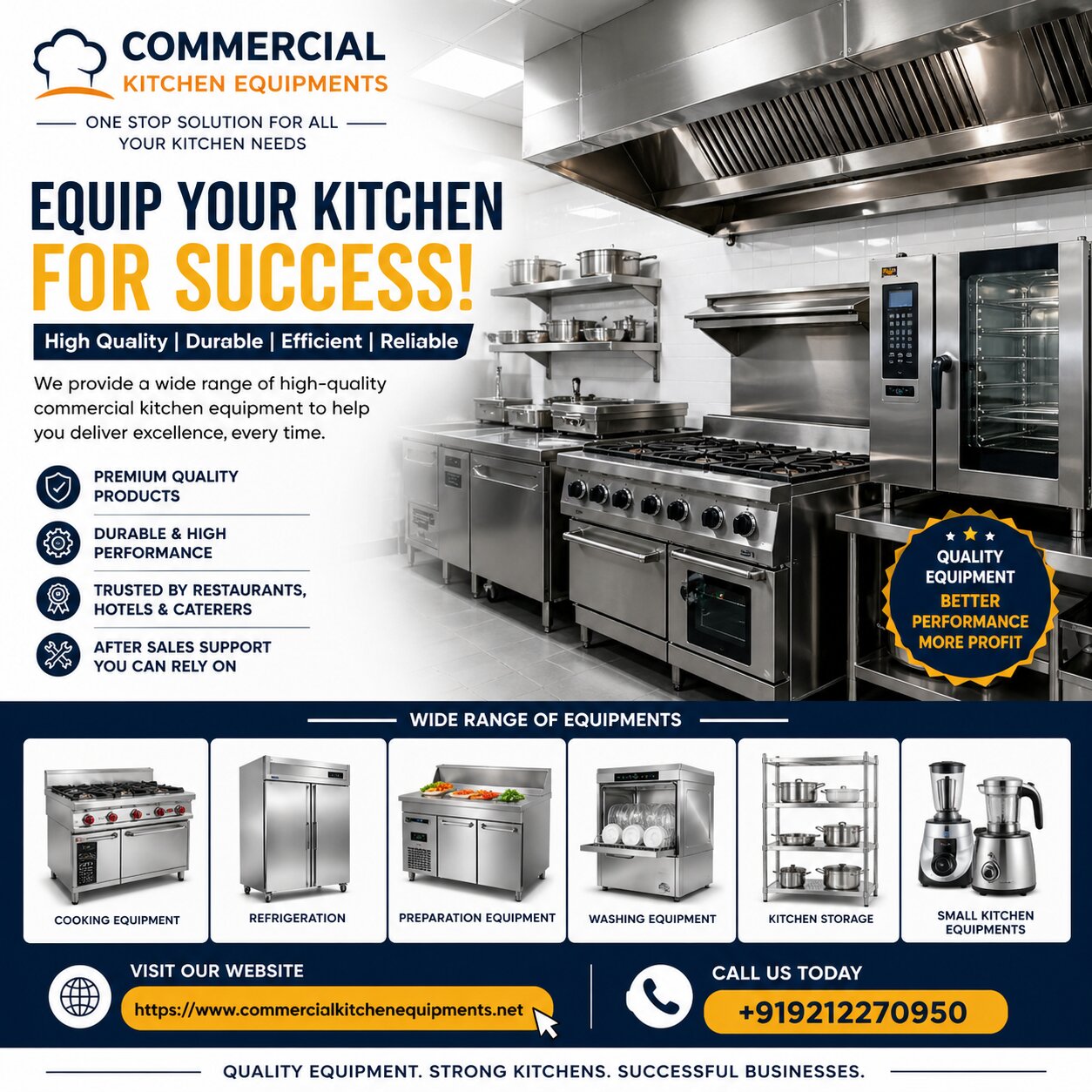
Setting up a commercial kitchen is one of the most important steps in starting or expanding a food business. Whether it is a restaurant, hotel, bakery, café, or catering service, the right kitchen setup plays a major role in ensuring smooth operations, hygiene, and efficiency.
A well-planned commercial kitchen is not just about installing machines—it is about creating a system where cooking, preparation, storage, and cleaning all work together seamlessly. In this article, we will understand how to properly plan and set up commercial kitchen equipment for long-term success.
Importance of a Proper Commercial Kitchen Setup
A commercial kitchen operates under high pressure, especially during peak hours. Without proper planning, it can lead to delays, confusion, and inefficiency.
A well-designed kitchen helps in:
- Faster food preparation
- Better staff coordination
- Improved hygiene and safety
- Reduced operational costs
- Smooth workflow between departments
Modern food businesses rely heavily on organized kitchen systems to maintain quality and consistency.
Key Areas of a Commercial Kitchen
A professional kitchen is divided into different functional zones. Each area has its own purpose and equipment requirements.
1. Food Preparation Area
This is where raw ingredients are cleaned, cut, mixed, and prepared before cooking. It requires clean surfaces and efficient tools.
Common equipment includes:
- Stainless steel work tables
- Vegetable cutters
- Mixers and grinders
- Storage containers
A well-organized preparation area saves time and reduces workload during busy hours.
2. Cooking Area
The cooking section is the heart of the kitchen. It is where all food items are prepared using heat-based equipment.
Typical equipment includes:
- Gas ranges and burners
- Commercial ovens
- Grills and tandoors
- Deep fryers
The selection of cooking equipment depends on the menu and type of food service.
3. Refrigeration and Storage Area
Proper storage is essential to maintain food freshness and prevent spoilage. Refrigeration equipment ensures ingredients remain safe for use.
Common systems include:
- Upright refrigerators
- Deep freezers
- Cold storage units
- Under-counter chillers
Efficient refrigeration helps reduce waste and maintain food quality.
4. Washing and Cleaning Area
Cleanliness is critical in any food business. A dedicated washing zone ensures hygiene standards are maintained.
Equipment includes:
- Dishwashing units
- Sinks with multi-compartments
- Drainage systems
- Waste disposal units
Regular cleaning helps avoid contamination and keeps the kitchen safe.
5. Serving and Display Area
For restaurants, bakeries, and cafés, presentation plays an important role in attracting customers.
Display equipment includes:
- Food display counters
- Cake display units
- Hot and cold serving counters
Good display systems improve customer experience and help maintain food temperature.
Choosing the Right Equipment
Selecting the right commercial kitchen equipment is essential for long-term performance. Some important factors to consider include:
- Durability and build quality
- Energy efficiency
- Ease of cleaning and maintenance
- Space availability in kitchen
- Business type and menu requirements
High-quality stainless steel equipment is often preferred due to its strength, hygiene, and long life.
Importance of Kitchen Layout Design
A proper kitchen layout ensures smooth workflow and reduces unnecessary movement. It helps staff work faster and more efficiently.
Popular layout styles include:
- Assembly Line Layout: Ideal for fast food and high-volume service
- Zone Layout: Divides kitchen into specific work areas
- Island Layout: Central cooking station surrounded by other areas
Good layout design improves productivity and reduces confusion during peak hours.
Benefits of a Well-Planned Kitchen Setup
Investing in a proper kitchen setup offers many long-term advantages:
- Faster service time
- Improved food quality
- Better hygiene control
- Lower maintenance costs
- Increased business efficiency
A well-structured kitchen supports smooth operations and customer satisfaction.
Final Thoughts
A commercial kitchen equipment setup is the backbone of any food business. From cooking and refrigeration to preparation and display, every part of the kitchen plays a crucial role.
Careful planning, the right equipment selection, and proper layout design can significantly improve productivity and service quality. A strong kitchen foundation helps businesses grow steadily and operate efficiently in a competitive market.
Resource Box
Commercial Kitchen Equipment offers a wide range of durable and efficient kitchen solutions including cooking equipment, refrigeration systems, storage units, water coolers, and display counters designed for restaurants, hotels, bakeries, and catering businesses.