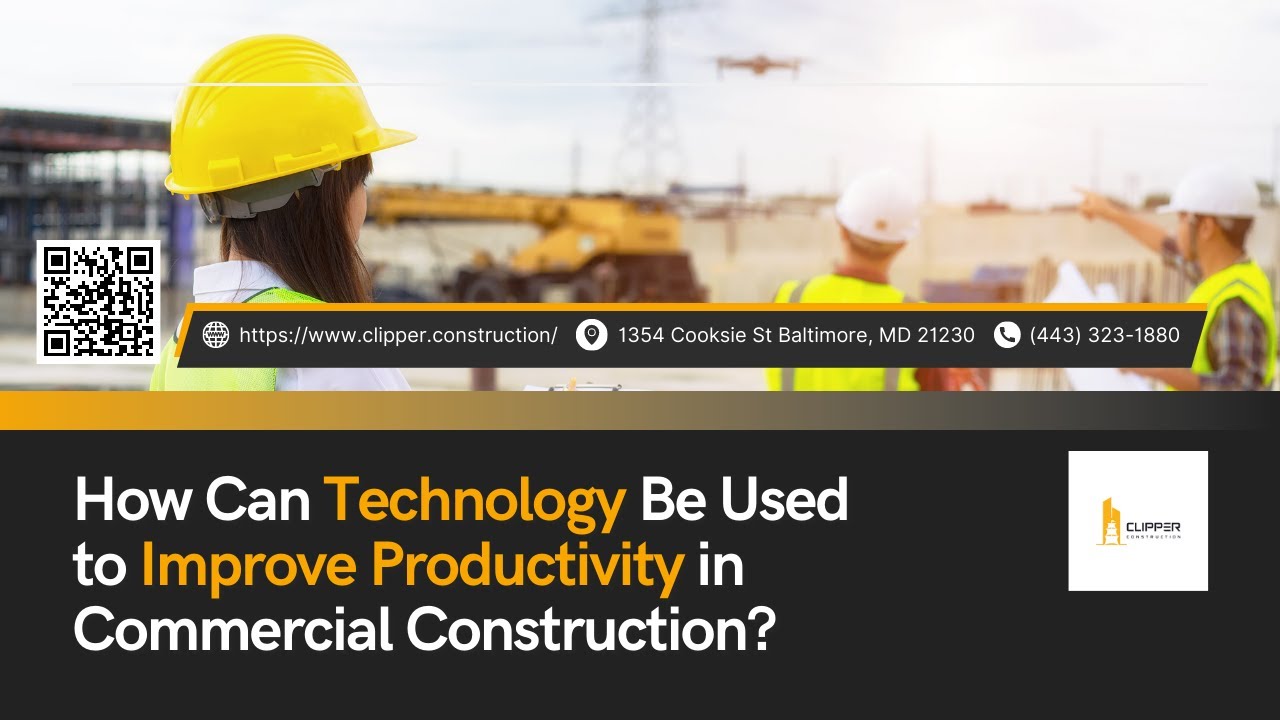
In the fast-paced world of commercial construction, productivity plays a pivotal role in determining project success. Completing projects on time and within budget is crucial for construction firms to stay competitive and meet client demands. With the rapid advancements in technology, the construction industry has undergone a transformational shift, embracing innovative tools to boost productivity like never before. In this blog post, we will explore the various ways technology is revolutionizing the construction sector and driving remarkable improvements in productivity.
Streamlining Project Planning and Management
The key to a successful construction project lies in meticulous planning and efficient management. Technology has introduced Building Information Modeling (BIM), a powerful tool that enables comprehensive project visualization and coordination. BIM enhances collaboration among stakeholders, streamlines communication, and helps identify potential clashes and conflicts before they become costly on-site issues.
Project management software is another game-changer, enabling real-time tracking of project progress, resource allocation, and task scheduling. Cloud-based platforms facilitate seamless communication among team members, architects, and clients, fostering greater efficiency and transparency throughout the construction process. Real-time data and analytics allow project managers to make informed decisions promptly, leading to optimized productivity and reduced delays.
Embracing Prefabrication and Modular Construction
Prefabrication and modular construction are transforming how commercial buildings are erected. By assembling building components off-site in controlled environments, construction time and costs are significantly reduced. Prefabricated elements, such as walls, floors, and even entire building sections, can be quickly transported to the construction site, minimizing on-site construction work.
Additionally, robotics and automation are revolutionizing the assembly process. Automated machinery can perform repetitive tasks with higher accuracy and speed, reducing the reliance on manual labor. This shift to modular and prefabricated construction methods has the potential to reshape the construction industry by providing efficient solutions to meet growing infrastructure demands.
Improving Construction Site Safety and Efficiency
Safety is a top priority in construction, and technology has contributed immensely to enhancing on-site safety and efficiency. Drones equipped with high-resolution cameras provide valuable aerial imaging, enabling site managers to conduct thorough surveys and inspections. This helps identify potential hazards, monitor progress, and assess site conditions from a safe distance.
Wearable technology, such as smart helmets and vests, is becoming commonplace on construction sites. These devices monitor workers' vitals, detect fatigue, and issue alerts in case of emergencies, thereby reducing the risk of accidents. Artificial Intelligence (AI)-driven risk management systems analyze data from various sources to identify potential safety risks and suggest preventive measures, mitigating accidents and project delays.
Enhancing Material Management and Supply Chain
Efficient material management is crucial for maintaining productivity in construction projects. Technology has introduced RFID (Radio Frequency Identification) technology, which allows construction companies to track inventory in real time. RFID tags on materials enable accurate monitoring of material flow, reducing the likelihood of stockouts and material wastage.
Furthermore, Internet of Things (IoT)-enabled sensors are transforming how construction materials are monitored and managed. These sensors provide data on material conditions, such as temperature and humidity, ensuring the quality and usability of materials on-site. Predictive analytics are then applied to optimize supply chain logistics, ensuring that materials arrive just in time, eliminating unnecessary delays and disruptions.
Implementing Smart Equipment and Machinery
Construction equipment and machinery play a vital role in project execution. Technology has introduced telematics, enabling construction managers to monitor equipment performance, fuel consumption, and maintenance needs remotely. This data-driven approach enhances equipment efficiency, reduces downtime, and optimizes maintenance schedules, ultimately increasing productivity.
AI-driven machinery is another game-changing development. These smart machines can perform complex tasks with precision, leading to faster project completion and reduced human error. Moreover, integrating IoT into construction equipment enables real-time data sharing, promoting synchronization, and optimal resource allocation on the construction site.
Augmented Reality (AR) and Virtual Reality (VR) in Construction
AR and VR technologies are increasingly finding applications in the construction industry. Augmented Reality allows architects and builders to visualize building designs in the real-world environment, facilitating better design validation and reducing errors. On-site workers can use AR to access critical information about the project, such as design plans, safety protocols, and material specifications.
Virtual Reality, on the other hand, is transforming training programs for construction workers and equipment operators. VR simulations offer a...Read more
Contact Details:
Full Address: 1354 Cooksie St, Baltimore, MD 21230
Phone Number: (443) 323-1880
Website: https://www.clipper.construction/
Business Hours: Monday to Friday, 6:00 AM to 7:00 PM
Google Maps: https://goo.gl/maps/bf9Lsd2GPQrMfZfW6
Google Site: https://sites.google.com/view/clipperconstruction
About Us:
Clipper Construction is a tech-enabled Commercial General Contracting firm providing construction services across several verticals including retail/office fit-out, adaptive reuse, historical restoration and mixed-use development.
Clipper Construction leverages technology to drive efficiencies in the construction process to ensure projects are on schedule, on budget and exceed our clients expectations. We are also leveraging our background in technology to create a better client experience with our custom client platform we designed to provide more transparency and better communication than our competition in this space.
Social Links:
YouTube: https://youtube.com/@clipperconstruction
Facebook: https://www.facebook.com/clipperconstruction/
Twitter: https://twitter.com/buildclipper
Instagram: https://www.instagram.com/clipperconstruction/
Blogger: https://clipperconstruction.blogspot.com/
WordPress: https://clipperconstruction.wordpress.com/
LinkedIn: https://www.linkedin.com/company/clipper-construction/
Pinterest: https://www.pinterest.ph/clipperconstructioncompany/
Business Site: https://business.google.com/website/clipperconstruction/
Frequently Asked Questions:
• What are the Typical Stages of a Commercial Building Construction Project?
• What are the Advantages of Design-Build Construction?
• What are Some Things to Consider Before Choosing a Commercial Construction Company?
• What are Some Advancements in the Commercial Construction Industry?
• How Do You Ensure That Commercial Construction Projects Are Completed Within Budget and on Schedule?
• Is Design-Build the Best Approach For Commercial Construction?
• What is the Pre-Construction Planning Phase?
• What are the Stages of the Design-Build Process?
• What Commercial Construction Stages Do Project Managers Oversee?
• How Can I Find A Reliable and Reputable Commercial General Contracting Service In My Area?
• What are the Benefits of the Design-Build Construction Process?
• What is the Difference Between Pre-Construction and Construction Project Management?
• How Does Prefabrication Impact Commercial Construction Costs?
• What Emerging Commercial Construction Technologies Are Improving Green Building Practices?
• What are the Primary Factors to Keep in Mind When Planning a Commercial Building Renovation?
• How Can Technology Be Used to Improve Productivity in Commercial Construction?
• What are Ways of Managing Risks During the Construction Process?
• What are the Advantages of Using CAD in the Building Design and the Construction Industry?