Industrial uniforms had a historical presence since the mid of the First Industrial Revolution. Since then it has gone through several changes related to its composition and usability. Different sectors require different types of workforce and their protective clothing also varies. For example, professionals and workers in the healthcare industry are in the need of disposable uniforms. These are categorized under the Personal Protective Clothing (PPC) which protects the technicians, workers, and employees against mild, heavy and multi-functional mechanical risks.
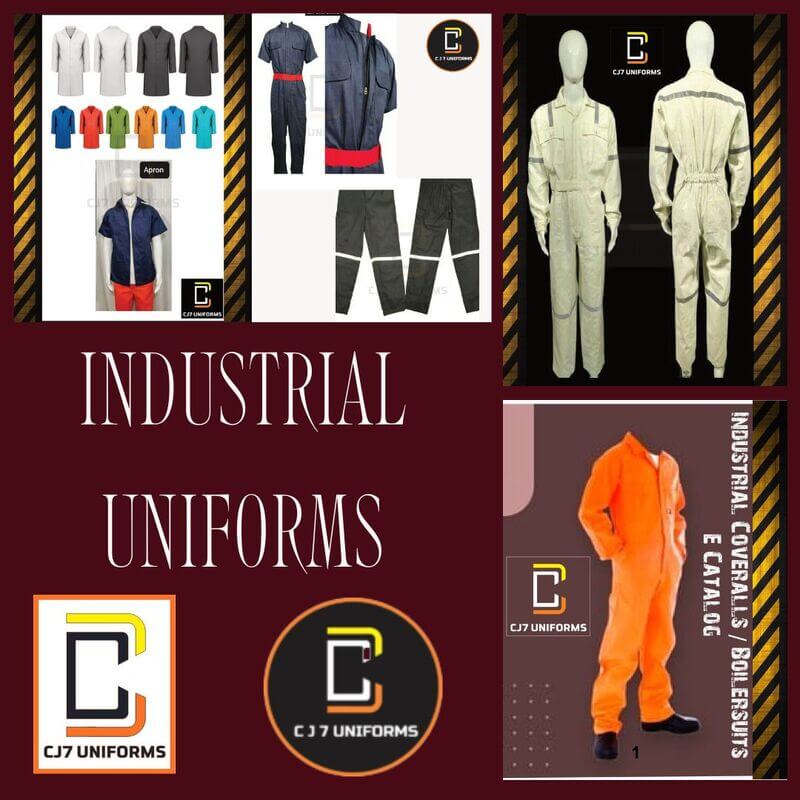
The composition of Industrial uniforms is necessary to strictly comply with the standard criteria that are outlined for the use of the textile in protective wear. It is necessary to conduct accurate testing and analysis in order to guarantee compliance that whether or not a textile material that has been customised for a certain function will be effective.
The protective textiles utilize soft fabrics obtained from natural sources and rigid plates extracted from synthetic sources for industrial workers/technicians/employees. These prevent civilians and employees from abrasion, flame, thermal, chemical spurs, infectious agents, nuclear hazards, and electrical burns. The industrial uniforms manufactured by utilizing microns and nano-technology is a robust wear against microorganisms, and viruses.
Conclusion:
At both the social and the economic levels, every industrial unit comes with its own unique set of risk variables, which can be managed or reduced. On the other hand, its creation and ultimate disposal pose a threat to the environment, particularly if it is derived from resources that do not replenish themselves.
Industrial uniforms offer superior physical protection and thereby boost productivity.