Known by many names as vegetable masala or sabji masala, this adaptable spice combination is used in Indian cooking to enhance the taste and depth of a broad range of vegetable meals. Usually, a variety of spices are combined in this fragrant combination to produce a pleasing flavor profile that accentuates the inherent flavor of veggies.
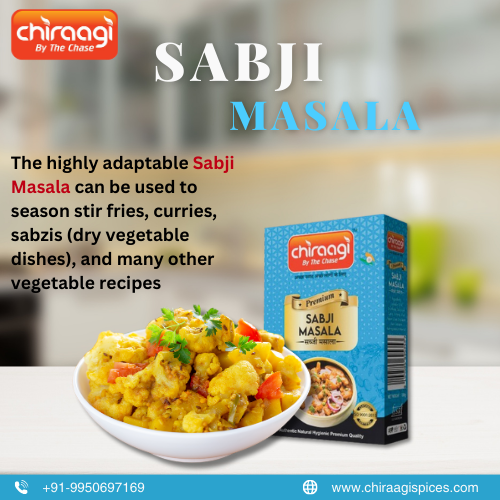
Here’s a typical composition of Sabji Masala:
- Cumin Seeds: To add depth and richness to vegetable recipes, cumin seeds give Sabji Masala a warm, earthy taste.
- Coriander Seeds: A zesty, slightly sweet taste from the coriander seeds balances the other spices in the mixture and gives the meal a crisp bite.
- Turmeric: Turmeric powder enhances the visual appeal and overall taste of Sabji Masala by adding a vivid yellow color and a warm, slightly bitter flavor.
- Red Chili Powder: To make the masala spicier and hotter to your liking, red chili powder adds heat and spiciness.
- Garam Masala: Garam masala, a mixture of warm spices including cardamom, cinnamon, cloves, and black pepper, gives Sabji Masala more nuance and richness.
- Amchur (Dried Mango Powder): To balance the other spices and improve the overall taste of the dish, amchur adds a tangy and somewhat sour flavor to the masala.
- Salt: To intensify the taste of the veggies and balance the flavors of all the spices, salt is added to Sabji Masala.
The highly adaptable Sabji Masala can be used to season stir fries, curries, sabzis (dry vegetable dishes), and many other vegetable recipes. When cooking potatoes, cauliflower, peas, or mixed veggies, Sabji Masala adds a taste explosion that takes your food to new culinary heights. Try out several combos and modify the spices to your personal taste, then savor the flavor of Sabji Masala in your veggie preparations.