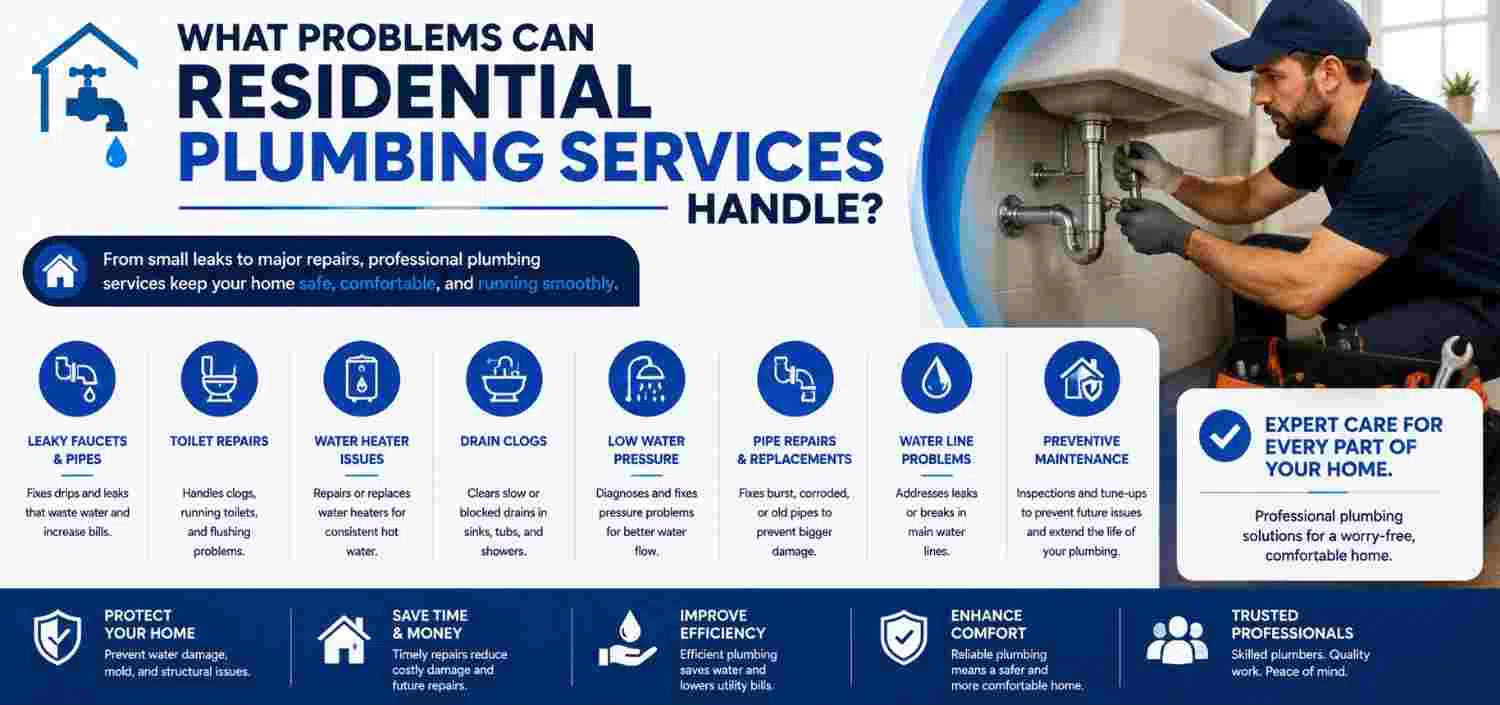
Residential plumbers commonly handle leaking faucets, malfunctioning toilets, clogged drains, damaged pipes, low water pressure, water-heater concerns, sewer and drainage problems, sump pump issues, fixture replacements, and urgent leaks or backups. However, the same symptom can have several possible causes. Therefore, professional inspection may be necessary before deciding on the appropriate repair, maintenance, or replacement work. Some problems are minor inconveniences, while uncontrolled leaks, sewage backups, major water loss, or loss of essential water service can require prompt attention.
Which Everyday Plumbing Problems Can a Plumber Address?
Many household plumbing calls involve fixtures and drains used every day. Although some symptoms appear straightforward, the source of a problem is not always visible.
Homeowners seeking residential plumbing services in Toronto may require anything from routine faucet repairs to investigation of larger water supply or drainage problems.
Leaking Faucets and Fixtures
A dripping faucet, leaking shower fitting, or moisture around a fixture may result from worn internal parts, deteriorated seals, loose connections, or other plumbing conditions.
However, visible water does not always reveal the exact source. A plumber can inspect the fixture and nearby connections before determining whether repair or replacement is appropriate.
Running or Malfunctioning Toilets
A toilet that runs continuously, fills incorrectly, leaks, flushes poorly, or blocks repeatedly may have problems involving internal components, water supply, drainage, or the fixture itself.
Moreover, recurring toilet blockages can sometimes indicate a problem farther along the drain rather than a fault within the toilet.
What Drainage Problems Require Plumbing Attention?
Slow or blocked drains are common household concerns. The appropriate response depends on where the restriction occurs and why it developed.
Clogged and Slow-Draining Fixtures
Kitchen sinks, bathroom basins, tubs, and showers can drain slowly because of material accumulating within the drainage system. In addition, a more substantial obstruction may affect several fixtures.
Repeated drain cleaning without identifying the cause may not solve a recurring problem. Consequently, professional assessment may be useful when the same drain blocks frequently.
Drain and Sewer Line Problems
Signs such as multiple slow drains, unusual gurgling, wastewater appearing where it should not, or a significant backup can suggest a broader drainage issue.
However, symptoms alone cannot confirm the location or nature of the problem. Sewer and building-drain work may also require specialized equipment, and not every plumbing provider performs every type of sewer service.
How Do Pipe and Water Supply Problems Appear?
Water supply piping carries pressurized water throughout a home. Damage or deterioration can therefore cause symptoms ranging from small leaks to substantial water loss.
Leaking or Damaged Pipes
Water stains, damp areas, unexplained moisture, or visible dripping can potentially indicate leaking pipes or fittings. Meanwhile, hidden plumbing can make the source difficult to identify.
Uncontrolled water discharge deserves prompt attention because water can continue flowing until the affected supply is isolated or the problem is corrected.
Low or Inconsistent Water Pressure
Reduced pressure at one fixture may relate to that fixture or its connection. In contrast, low pressure throughout the home could involve supply piping, valves, pressure conditions, or another system issue.
Therefore, pressure symptoms should be diagnosed before assuming that a particular component requires replacement.
Frozen or Cold-Weather Pipe Concerns
During cold conditions, vulnerable water lines can freeze or become damaged. Reduced or absent flow may be one possible sign.
However, homeowners should avoid applying unsafe heat or performing hazardous work on suspected frozen plumbing. A damaged pipe may begin leaking once water flow returns, so professional assessment may be appropriate.
What Kitchen and Bathroom Problems Can Plumbers Handle?
Kitchens and bathrooms contain many of a home's plumbing fixtures, supply connections, and drains. Consequently, these rooms generate a large share of residential plumbing service calls.
Kitchen Plumbing
Kitchen plumbing problems can involve sinks, faucets, drains, shut-off valves, supply lines, and compatible appliance connections. For example, leakage beneath a sink may originate from a drain connection, water line, valve, or fixture.
Plumbers may also install or replace fixtures during renovations where the planned work suits the existing plumbing system.
Bathroom Plumbing
Bathroom plumbing can include toilets, sinks, faucets, tubs, showers, drains, valves, and associated supply piping.
Moreover, renovations may require new fixture connections or changes to existing water and drainage lines. Larger alterations can involve additional planning and applicable requirements.
What Equipment-Related Plumbing Problems May Occur?
Some residential plumbing problems involve equipment rather than individual faucets or drains. These situations can require more specialized assessment.
Water Heater Problems
Possible signs of water-heating trouble include insufficient hot water, temperature changes, unusual noises, visible leakage, or changes in system performance.
However, these symptoms can have several causes. Water heaters also differ by type and energy source, so certain work may involve additional qualifications or requirements.
Sump Pump Issues
A sump pump helps remove collected water from a sump pit where such a system is installed. Problems can include failure to operate, unusual cycling, discharge concerns, or visible component damage.
In addition, drainage conditions around the system may affect its performance. A plumber can assess whether the issue involves the pump, discharge piping, or another component.
Backwater Valve Concerns
A backwater valve is intended to help restrict reverse sewage flow under certain conditions. Where one is installed, concerns can include accessibility, physical damage, maintenance condition, or suspected malfunction.
However, drainage backups can have other causes. Therefore, a backup should not automatically be blamed on the valve.
What Do Unusual Noises and Odours Mean?
Banging, whistling, gurgling, or vibration can sometimes relate to water pressure, valves, fixtures, pipes, or drainage conditions.
Similarly, unusual plumbing odours may come from drainage, traps, venting, fixture conditions, or other sources. Consequently, neither noises nor odours should be diagnosed solely from one visible symptom.
Professional troubleshooting can help determine whether the concern involves routine maintenance, a repairable component, or a wider plumbing issue.
Which Plumbing Problems Need Prompt Attention?
Some situations are more urgent because water or wastewater continues to escape or essential plumbing functions are lost.
Prompt professional attention may be appropriate for:
Uncontrolled or substantial plumbing leaks
Burst or visibly damaged water pipes
Sewage or wastewater backups
Significant water loss
Major fixture overflows
Loss of essential water service
Water leaking near electrical equipment or other hazards
Where electrical hazards, contaminated water, severe flooding, or structural concerns are present, additional professional assistance and appropriate safety precautions may also be necessary.
Emergency service availability varies by plumbing provider.
When Is Plumbing Maintenance Useful?
Not every plumbing visit involves an active failure. Preventive maintenance can help identify visible leaks, worn fixtures, drainage concerns, deteriorated valves, or other developing problems before they become more disruptive.
Moreover, older homes, renovated properties, rental homes, and residences with recurring plumbing concerns may benefit from periodic professional assessment based on the property's condition and plumbing system.
Choosing the Right Response to a Plumbing Problem
Residential plumbers may address everyday fixture issues, leaking pipes, blocked drains, water supply concerns, water heaters, sump pumps, sewer problems, renovation plumbing, and urgent water leaks. However, similar symptoms can result from different causes, so accurate diagnosis matters. Minor fixture problems may need routine repair, while uncontrolled leaks, sewage backups, or substantial water loss can justify faster professional attention. The appropriate service depends on the symptoms, underlying cause, plumbing system, property condition, and provider capabilities.