India’s mutual fund industry is witnessing a historic surge. As of early 2026, the Assets Under Management (AUM) have crossed a staggering ₹82 lakh crore, driven by a massive shift in household savings toward capital markets. Despite this growth, the penetration of mutual funds remains low in Tier 2 and Tier 3 cities, creating a massive opportunity for new professionals.
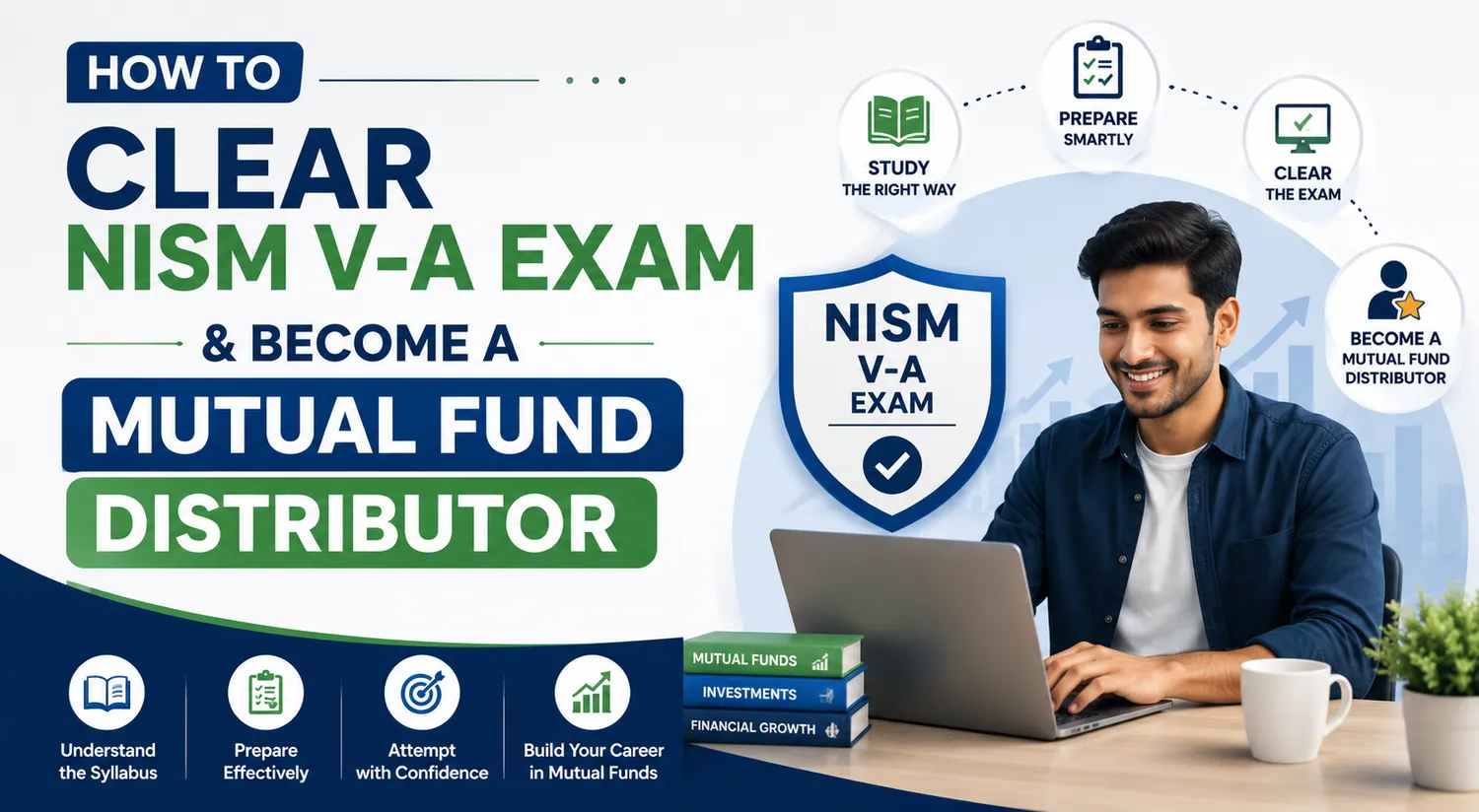
To tap into this potential, you must obtain an MFD License. This journey begins with a single, critical step: clearing the NISM Series V-A: Mutual Fund Distributors Certification Examination. This guide provides a comprehensive roadmap to passing the exam and launching your career as a Mutual Fund Distributor (MFD).
Understanding the NISM V-A Exam
The National Institute of Securities Markets (NISM), established by SEBI, conducts the Series V-A exam to ensure that anyone selling mutual funds possesses a "common minimum knowledge benchmark." This isn't just a formality; it is a legal requirement under SEBI regulations.
Exam Structure at a Glance (2026 Update)
The exam is designed to be accessible but requires a strategic approach. Here is the current format:
- Total Questions: 100 Multiple Choice Questions (MCQs).
- Duration: 120 minutes (2 hours).
- Passing Score: 50% (50 marks out of 100).
- Negative Marking: None. This is a significant advantage, allowing you to attempt every question.
- Validity: The certificate is valid for 3 years, after which you must attend a Continuing Professional Education (CPE) session or re-take the exam.
Step-by-Step Guide to Clearing the NISM V-A Exam
Success in the NISM V-A exam is less about rote memorization and more about understanding the "why" behind mutual fund structures and regulations.
1. Mastering the High-Weightage Units
The syllabus is divided into 12 units. To clear the 50-mark hurdle efficiently, focus your energy on the units with the highest weightage:
- Investor Service (12%): Focuses on the "how-to" of transactions, account statements, and nomination.
- Legal & Regulatory Environment (10%): Covers the roles of SEBI, AMFI, and the structure of a Mutual Fund (Trustee, AMC, Custodian).
- Accounting, Valuation & Taxation (10%): This is often the trickiest part. Understand the tax implications of Equity vs. Debt and how NAV is calculated.
- Mutual Fund Scheme Selection (10%): Learning which category of fund fits which investor profile.
2. Leverage the Official Workbook
Upon registration at the NISM portal, you receive a free soft copy of the official workbook. This is the "Bible" for the exam. Ensure you read the "Test Objectives" at the start of each chapter, as they pinpoint exactly what the examiners are looking for.
3. Practice with Mock Tests
The interface of the actual exam is computer-based. Taking online mock tests helps you manage the 120-minute timer and familiarizes you with the phrasing of questions, which can sometimes be intentionally "wordy."
Moving from Certification to Career: The MFD License
Passing the exam is the academic milestone; getting your MFD License involves a regulatory process managed by the Association of Mutual Funds in India (AMFI).
Step 1: Obtain your PAN and Aadhaar
Ensure your Aadhaar is linked to your mobile number, as the registration process is now entirely digital and Aadhaar-based.
Step 2: Complete the KYD (Know Your Distributor)
Before applying for your license, you must undergo the KYD process. This involves biometric verification (fingerprints and photo) at a designated CAMS (Computer Age Management Services) center. This step is mandatory to prevent identity fraud in the distribution chain.
Step 3: Apply for the ARN (AMFI Registration Number)
The ARN is your actual license.
- Log in to the AMFI website.
- Upload your NISM certificate, PAN, and KYD acknowledgement.
- Pay the registration fee (approximately ₹3,000 + GST for individuals in 2026).
- Once processed, you will receive your ARN card and a unique EUIN (Employee Unique Identification Number). The EUIN is crucial as it identifies you personally during every sale, ensuring accountability.
Empanelment: Starting Your Business
Once you have your ARN, you cannot start selling immediately. You must "empanel" with Asset Management Companies (AMCs). You have two primary routes:
Route A: Direct Empanelment
You sign up with individual AMCs (e.g., SBI Mutual Fund, HDFC Mutual Fund). This gives you the highest possible commission but involves significant paperwork for each company.
Route B: Joining a Distribution Platform
Many modern MFDs choose to join platforms like Wealthy, NJ Wealth, or Prudent. These platforms offer:
- Single-point Empanelment: One signup gives you access to almost all AMCs.
- Digital Onboarding: Tools to help your clients complete KYC and invest via mobile apps.
- Research & Support: Access to model portfolios and marketing materials.
Why Become an MFD in 2026? (The Value Proposition)
Being a Mutual Fund Distributor is one of the few professions with a recurring income model. You earn a "trail commission," which is a percentage of the total assets you manage. As your clients' investments grow over the years, your income grows automatically, even if you don't add new clients.
Furthermore, the barrier to entry is remarkably low—only a Class 10 pass and the NISM V-A certification are required. This makes it an ideal career for students, retired professionals, or homemakers looking to build a professional practice from home.