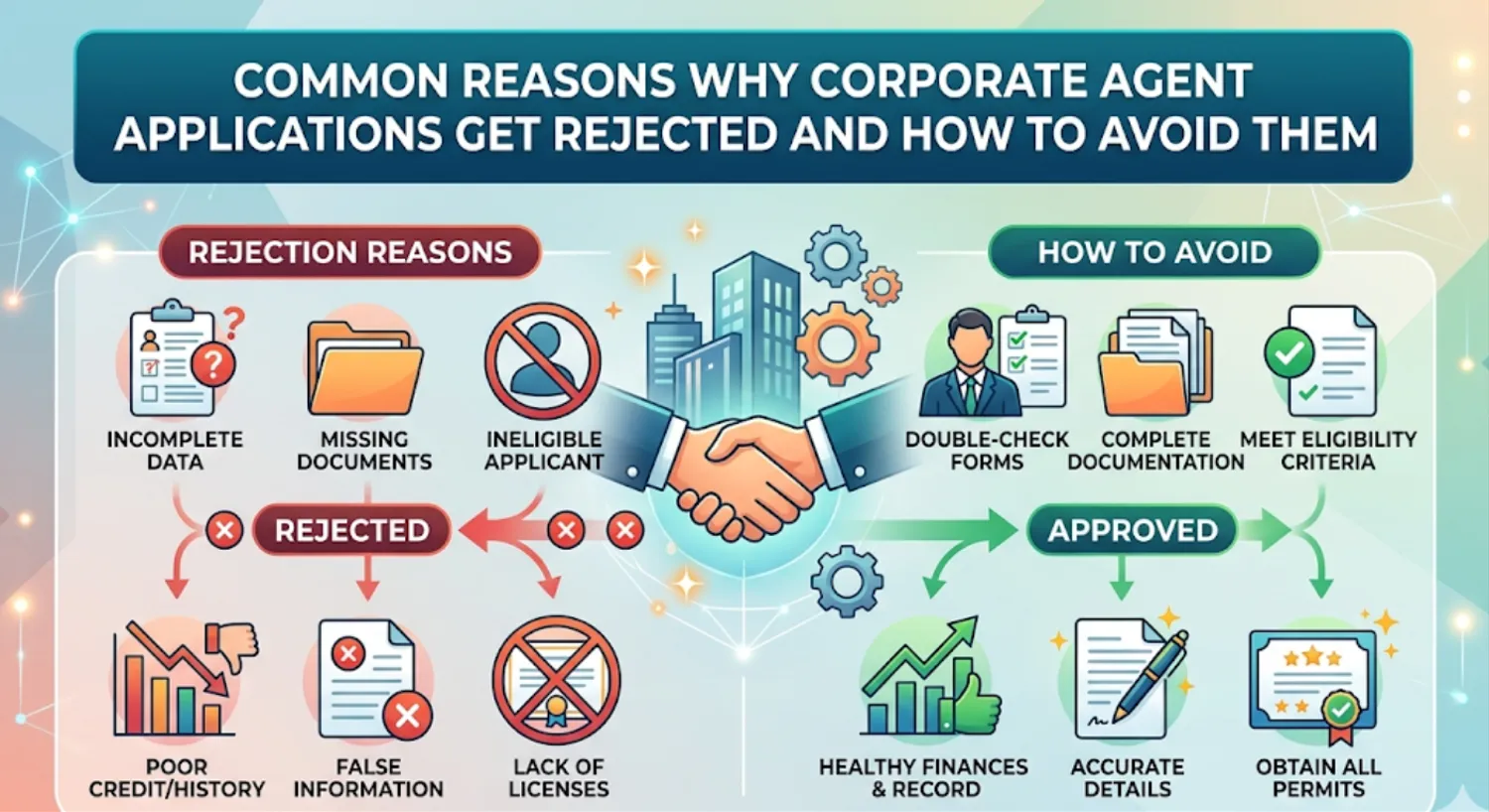
Obtaining a Corporate Agent License is a significant milestone for any entity looking to enter the insurance distribution space. It allows a company to leverage its existing client base and infrastructure to offer insurance products, effectively acting as a bridge between insurance companies and consumers. However, the path to securing this license from the Insurance Regulatory and Development Authority of India (IRDAI) is rigorous. Many applications face rejection not because the business model is flawed, but due to technical oversights, documentation errors, or a failure to meet the strict fit and proper criteria.
Understanding the common pitfalls is the first step toward a successful application. By identifying why these requests are typically turned down, you can proactively structure your business and documentation to meet regulatory expectations.
The Foundation of Corporate Agency
A Corporate Agent is essentially an entity other than an individual that holds a license to solicit and procure insurance business. This could be a bank, a Non-Banking Financial Company (NBFC), or a private limited company. The regulatory framework is designed to ensure that these entities possess the necessary integrity, professional competence, and financial stability to protect the interests of policyholders. When an application is submitted, the regulator looks far beyond the surface-level paperwork to ensure the entity will add value to the insurance ecosystem without compromising ethical standards.
Common Reasons for Application Rejection
1. Ineligible Business Structure or Objectives
One of the most frequent reasons for rejection is a misalignment in the company’s Constitutional Documents, the Memorandum of Association (MOA) and Articles of Association (AOA). For a company to act as a Corporate Agent, its MOA must explicitly state insurance solicitation and distribution as one of its main objects. If the language is vague or if the company is engaged in a primary business that the regulator deems a conflict of interest, the application will likely be denied.
Furthermore, the entity must fall under the permitted categories. If a firm is structured in a way that does not meet the legal definition of a "corporate" entity as per the IRDAI (Registration of Corporate Agents) Regulations, it cannot proceed.
2. Failure to Meet the "Fit and Proper" Criteria
The regulator places immense weight on the integrity of the directors and key management personnel. The "Fit and Proper" criteria are a set of standards used to evaluate the character, reputation, and financial integrity of those at the helm. Rejections often occur if:
- A director has a history of financial defaults or involvement in economic offenses.
- The management lacks the necessary professional qualifications or experience in the financial services sector.
- There is a record of previous license cancellations or disciplinary actions by other financial regulators like SEBI or RBI.
3. Inadequate Capital and Financial Health
Financial stability is non-negotiable. An applicant must demonstrate that it has the required net worth as prescribed by the regulations. If the financial statements show a pattern of heavy losses, significant debt, or if the paid-up capital does not meet the minimum threshold, the regulator may conclude that the entity is not equipped to sustain a long-term agency business. Accuracy in audited financial reports is vital; any discrepancy between the reported figures and the supporting bank certificates can lead to immediate scrutiny.
4. Lack of Qualified Principal Officer and Specified Persons
Every Corporate Agent must appoint a Principal Officer (PO) who is responsible for the overall activities of the agency. Additionally, the entity must have "Specified Persons" who are authorized to solicit insurance business. Rejections often stem from:
- The Principal Officer not meeting the educational requirements or failing to complete the mandatory training and examination.
- Inadequate number of Specified Persons relative to the proposed scale of operations.
- The PO holds similar positions in other firms, which creates a conflict of interest and violates the "exclusive" nature of the role.
5. Weak Infrastructure and Compliance Framework
The regulator expects a Corporate Agent to have a robust internal infrastructure. This includes IT systems for policy management, a dedicated grievance redressal mechanism, and a clear "Policy on Manner of Solicitation." If the application fails to demonstrate how the company will handle customer data, manage renewals, or address complaints, it indicates a lack of preparedness. An application that lacks a well-defined compliance manual is often viewed as a high-risk entity.
Strategies to Avoid Rejection
Meticulous Documentation and Pre-Audit
Before submission, conduct a thorough internal audit of all documents. Ensure that the MOA is updated with the correct object clauses and that all board resolutions are properly drafted and signed. Every piece of information, from the office address to the details of the shareholders, must match the records available with the Ministry of Corporate Affairs (MCA). Any inconsistency, no matter how small, can be perceived as an attempt to misrepresent facts.
Professional Training and Certification
Invest time in ensuring that your designated Principal Officer and Specified Persons are not just qualified on paper but are well-versed in the current IRDAI regulations. They should complete their training from recognized institutes and clear the exams well in advance of the application. Having a team that understands the ethical boundaries of insurance solicitation reduces the risk of the regulator questioning your operational competence.
Transparency in Disclosure
It is always better to over-disclose than to hide information. If there has been a change in the shareholding pattern or a past legal hurdle, provide a clear explanation and supporting evidence of how the issue was resolved. Transparency builds trust with the regulator.
Robust Technology Integration
Demonstrate that your company is tech-ready. In the modern insurance landscape, the ability to integrate with the systems of multiple insurers is crucial. Highlight your data security measures and the digital tools you will use to ensure that the solicitation process is transparent and that the customers are provided with all necessary disclosures at the point of sale.
Conclusion
The journey to becoming a Corporate Agent requires a blend of strategic planning and administrative precision. Most rejections are avoidable through a deep understanding of the IRDAI (Registration of Corporate Agents) Regulations and a commitment to maintaining high standards of corporate governance. By treating the application not just as a filing process, but as a commitment to professional excellence, businesses can successfully navigate the licensing phase and build a sustainable insurance distribution model. Focus on clarity, fulfill the financial mandates, and ensure your leadership embodies the "fit and proper" ideals, and your path to obtaining the Corporate Agent License will be significantly smoother.