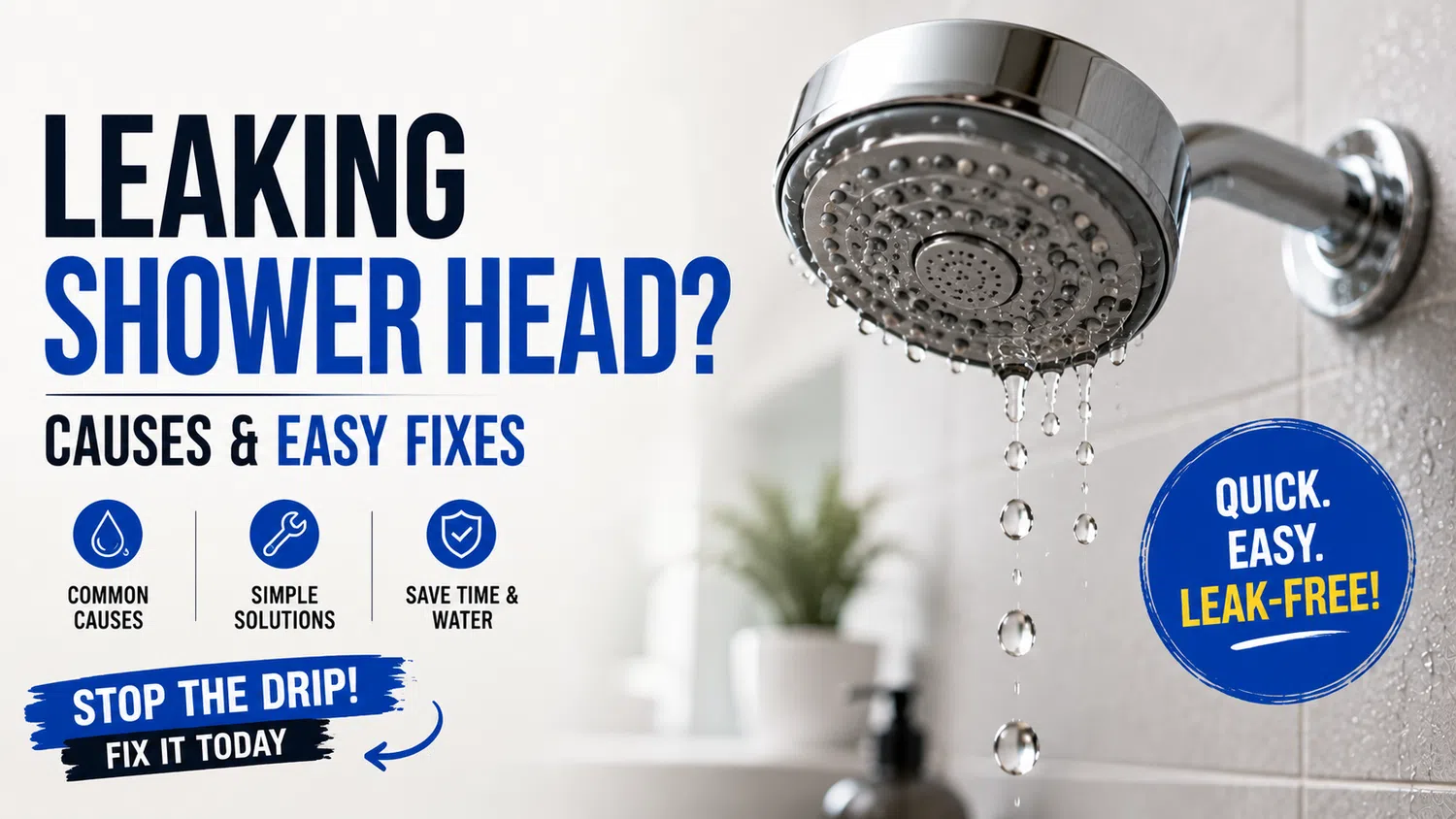
A leaking shower head can seem like a minor bathroom issue, but a constant drip can waste water and may indicate a problem with the connection, washer, thread sealing, or internal plumbing component. Knowing how to fix a leaking shower head starts with identifying exactly where the water is escaping and understanding whether the issue can be resolved with a simple adjustment or requires professional attention.
Before replacing the entire fixture, homeowners can check several common causes and try straightforward solutions. Choosing reliable shower heads and maintaining them properly can also help support better everyday bathroom performance.
So, how do you fix a leaking shower head, and what usually causes the leak?
Why Is Your Shower Head Leaking?
A shower head can leak for several reasons. The most common possibilities include:
A loose connection
A worn-out rubber washer
Damaged thread sealing
Mineral buildup
A damaged shower head
A problem with the shower valve or diverter
The location and timing of the leak can provide useful clues. A shower head that drips only after use may have a different cause from one that continues leaking while the water supply is turned on.
How Can You Find the Source of a Shower Head Leak?
Start by drying the shower head and surrounding connection completely.
Then observe where water appears.
Check:
The connection between the shower arm and shower head?
The threaded joint?
The shower head body?
The spray holes?
The area around the shower valve?
Identifying the exact location helps determine whether the problem is with the shower head itself or another part of the plumbing system.
Can a Loose Shower Head Cause Leaking?
Yes. A loose connection can allow water to escape around the threaded joint.
To check it, carefully tighten the shower head by hand.
Avoid excessive force because overtightening can damage threads or components.
If the connection continues to leak, the sealing washer or thread seal may need inspection.
How Do You Replace a Worn Shower Head Washer?
A worn or damaged washer is a common reason for leakage around a threaded connection.
The basic process is:
Turn off the water supply if necessary?
Unscrew the shower head carefully?
Remove the old washer?
Clean the connection?
Insert the correct replacement washer?
Reconnect the shower head?
Turn the water on and check for leaks?
The replacement washer should be compatible with the fixture.
Can Thread Seal Tape Stop a Shower Head Leak?
Thread seal tape, often called PTFE tape, can help seal suitable threaded plumbing connections.
If the leak is coming from the threaded joint, remove the shower head and inspect the threads.
If thread sealing is appropriate for the connection, apply the tape correctly to the external threads before reconnecting the fixture.
However, thread tape is not a substitute for a damaged washer or cracked component.
How Can Mineral Buildup Cause Shower Head Problems?
Hard-water minerals can accumulate around shower head openings and internal components.
This buildup can:
Restrict water flow
Affect spray patterns
Interfere with moving components
Contribute to poor fixture performance
If mineral deposits are visible, cleaning the shower head may improve its operation.
How Do You Clean a Shower Head With Mineral Buildup?
For compatible shower heads, soaking the removable fixture in white vinegar can help loosen mineral deposits.
A simple method is:
Remove the shower head if possible?
Place it in a container with white vinegar?
Allow the deposits to soften?
Rinse the shower head thoroughly?
Clean the spray openings gently?
Reinstall the fixture?
Always check the manufacturer's care instructions first, especially for specialty finishes or materials that may react poorly to acidic cleaners.
What If the Shower Head Still Drips After Cleaning?
Cleaning will not solve every leak.
If the shower head continues dripping after cleaning and the connection is secure, the problem may be elsewhere in the plumbing system.
Possible causes include:
A worn valve
A faulty cartridge
A diverter problem
Internal fixture damage
In such cases, repairing or replacing the relevant plumbing component may be necessary.
When Should You Replace a Leaking Shower Head?
Replacement may make more sense when the fixture has:
Cracks
Damaged threads
Severe corrosion
Persistent internal leakage
Significant mineral buildup
Repeated performance problems
If the shower head is old and repairs do not resolve the problem, installing a new fixture can be more practical.
Can a Leaking Shower Head Waste Water?
Yes. Even a small continuous drip can waste water over time.
Addressing leaks promptly can help:
Reduce unnecessary water use
Improve fixture performance
Prevent ongoing dripping
Maintain a cleaner bathroom environment
A leak should therefore not be ignored simply because it appears minor.
How Can You Prevent Shower Head Leaks?
Regular maintenance can reduce the likelihood of some common problems.
Homeowners can:
Clean mineral deposits periodically
Avoid overtightening connections
Check washers when servicing fixtures
Inspect threaded connections
Follow manufacturer cleaning instructions
Address small leaks before they become persistent
Good maintenance is generally easier than dealing with a neglected plumbing problem later.
What Common Mistakes Should You Avoid When Fixing a Shower Head?
Overtightening the Shower Head?
Excessive force can damage threads or fixture components.
Using Too Much Thread Tape?
Applying excessive tape can interfere with proper connection or create installation problems.
Ignoring the Washer?
A worn washer can continue causing leaks even when the connection appears tight.
Cleaning Without Checking the Finish?
Some shower head finishes may require specific cleaning methods.
Assuming Every Leak Comes From the Shower Head?
Water may actually be coming from the valve, diverter, or another plumbing connection.
When Should You Call a Plumber?
A simple connection leak may be manageable as a basic maintenance task. However, professional assistance is sensible when:
The leak appears to come from inside the wall
The valve is faulty
The shower head cannot be safely removed
Threads are damaged
Water continues leaking after basic repairs
There is visible water damage
Trying to repair concealed plumbing without the right tools or knowledge can make the problem worse.
How Can You Choose a Better Shower Head Replacement?
If replacement is necessary, homeowners should consider:
Shower head type
Spray pattern
Water-flow requirements
Material and finish
Compatibility with the existing connection
Ease of maintenance
Bathroom design
A replacement should be selected for both practical performance and compatibility with the existing plumbing.
Conclusion
Fixing a leaking shower head starts with identifying where the water is escaping. Loose connections, worn washers, damaged thread sealing, mineral buildup, and faulty plumbing components are some of the most common causes. Simple problems can often be addressed by tightening the connection, replacing a worn washer, cleaning mineral deposits, or resealing a suitable threaded joint.
However, persistent leaks should not be ignored, especially when the problem involves concealed plumbing, damaged valves, or connections. Choosing reliable bathroom fixtures and maintaining them properly can help support better long-term performance.
For homeowners looking to upgrade their bathroom with stylish and practical shower heads, exploring the range available from the Best Home Interior Company in Aizawl, Mizoram can help bring together functionality, durability, and contemporary bathroom design.
Frequently Asked Questions
Why is my shower head leaking?
A leaking shower head can result from a loose connection, worn washer, damaged thread sealing, mineral buildup, fixture damage, or a problem with the valve or diverter.
How do I stop a shower head from leaking at the connection?
Check the connection, inspect the washer, and examine the threads. A compatible replacement washer or suitable thread seal may resolve the problem.
Can vinegar fix a leaking shower head?
Vinegar can help remove mineral buildup from compatible shower heads, but it will not repair damaged threads, worn washers, cracked components, or faulty valves.
Should I replace a shower head that keeps leaking?
Replacement may be appropriate if the shower head is cracked, severely damaged, corroded, or continues leaking after basic maintenance and repair.
When should I call a plumber for a leaking shower head?
Call a professional when the leak appears to involve concealed plumbing, a faulty valve, damaged connections, or continues after straightforward maintenance and repairs.