Launching and growing a startup involves many financial challenges. Founders must manage limited cash, control operating expenses, plan future investments, and prepare for potential fundraising. Without a clear financial strategy, a company may spend its available capital too quickly or struggle to provide investors with reliable financial information.
startup CFO services provide growing businesses with access to experienced financial leadership without the expense of hiring a full-time chief financial officer. This arrangement allows founders to receive professional guidance on cash flow, financial forecasting, accounting, and fundraising preparation. K-38 Consulting, founded by Dallas Alford IV, CPA, supports both venture-backed and bootstrapped companies with financial services suited to their development stages.
The Importance of Financial Management in Early-Stage Businesses
In the beginning, many founders handle financial decisions themselves or depend on basic bookkeeping services. These arrangements may work when business activity is limited, but they often become insufficient as the company grows.
A startup CFO helps founders understand their current financial position and plan for future requirements. Rather than focusing only on historical transactions, the CFO examines spending patterns, revenue expectations, and cash availability to identify potential financial problems.
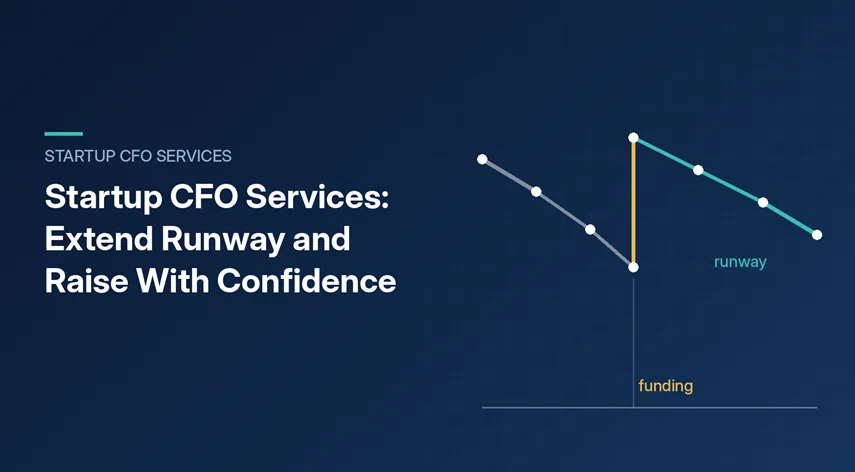
Cash runway management is a major responsibility. By monitoring cash balances and monthly burn rates, a CFO can estimate how long the business can operate with its existing resources. They can also model the financial impact of hiring new employees, increasing marketing expenses, or making other investments.
Financial modeling provides another important advantage. A three-statement model connects revenue drivers with headcount, operating costs, and cash flow. It also allows founders to evaluate different scenarios and understand how changes in business performance may influence future financial results.
What Services Should a Startup CFO Provide?
Fundraising preparation is one of the most valuable areas of CFO support. Before meeting investors, a startup needs a reliable financial model, an organized data room, capitalization table analysis, and prepared answers to due diligence questions. A CFO helps founders organize these materials and manage financial discussions with investors.
Board and investor reporting is another responsibility. Monthly or quarterly updates should explain progress against business plans and provide honest explanations for differences between actual results and forecasts.
A CFO may also help establish accounting foundations by selecting an appropriate accounting system, setting up revenue recognition correctly, and ensuring financial records are ready for investor review.
Tax and compliance support can involve coordinating 409A valuations, sales tax registrations, Delaware franchise tax, and research and development tax credits.
Financial Requirements at Different Startup Stages
Financial needs change as a company moves from its early development stage toward larger funding rounds.
Pre-seed and bootstrapped startups may need only a few hours of CFO assistance per month. Their priorities include maintaining clean books, preparing a simple cash forecast, establishing the correct business entity and tax structure, and creating a practical budget.
Seed-stage companies may require one to three days of support each month. At this stage, financial modeling, burn rate and runway monitoring, initial board reporting, and R&D credit and payroll offset planning become important.
Series A businesses generally need three to six days of monthly CFO support. Their requirements may include unit economics, departmental budgets, investor-grade KPIs, audit readiness, and preparation for Series B.
After Series B, a company may need six or more days of monthly support or a full-time CFO. Multi-year planning, finance team development, debt facilities, and audit controls become more important as operations expand.
One mistake founders should avoid is bringing in financial support only after fundraising has started. Investors examine the quality of financial records, and fixing two years of disorganized books during due diligence can be expensive and slow.
Financial Performance Indicators Investors Monitor
Investors evaluate several financial metrics to understand how efficiently a startup uses its capital.
Burn rate and runway indicate how much cash a company spends each month and how many months it can continue operating at its current spending level. Many investors expect approximately 18 to 24 months of runway after a funding round.
Burn multiple is calculated by dividing net burn by net new annual recurring revenue. It helps measure how efficiently a company converts cash spending into revenue growth. Generally, a lower figure indicates better capital efficiency.
Customer acquisition cost payback measures how many months of gross profit are required to recover the expense of acquiring a customer. Gross margin is also important. Software companies are generally expected to achieve 70% or higher, while hardware, marketplace, and biotech businesses have different benchmarks.
Net revenue retention measures the revenue retained and expanded from existing customers over twelve months. A specialized SaaS CFO can help software founders include these metrics in their financial models. K-38 also offers a SaaS financial model template showing how annual recurring revenue, churn, and CAC payback are connected.
Practical Ways to Protect and Extend Cash Runway
Extending runway requires a combination of careful spending decisions and effective financial planning.
Eligible startups may benefit from federal research and development tax credits against payroll taxes. Qualified small businesses, generally those with less than $5 million in gross receipts and no gross receipts more than five years ago, can apply up to $500,000 annually in federal research credits against payroll taxes. This can provide meaningful cash support to eligible pre-revenue companies that do not have an income tax liability.
Hiring should be linked to measurable business milestones. Founders can evaluate the expected value of each new position before increasing headcount.
Reviewing vendor and cloud service contracts may also reduce costs. Annual prepayment discounts, startup credits, and negotiated usage commitments can lower software and infrastructure expenses.
Non-dilutive capital is another option. Venture debt, revenue-based financing, and grants can help a startup reach its next milestone with less ownership dilution. Businesses can further improve working capital by billing customers annually upfront and collecting outstanding payments more efficiently.
Financial Planning for Different Business Industries
Some startups need specialized financial support because of their industry requirements. Life sciences businesses, for example, may spend several years developing products before generating revenue. Their financial plans must consider grant funding, clinical milestones, partnership economics, and extended cash requirements.
Biotech CFO services focus on milestone-based budgeting, grant compliance, and managing the long cash runways associated with these businesses.
Consumer and marketplace companies face different challenges. Inventory management and contribution margin analysis are important for understanding how product costs and operational expenses affect profitability.
Founders should select a financial partner who understands the financial characteristics of their particular industry.
Common Financial Mistakes That Can Affect Growth
Poor accounting practices can create difficulties when a startup begins preparing for investment. One example is maintaining cash-basis records instead of accrual-basis financial statements. Converting years of cash-basis records during due diligence can be time-consuming and may raise concerns.
Mixing personal and company spending also creates unreliable financial records. Founders should keep business expenses separate and document transactions correctly.
Ignoring sales tax and state registration requirements can create unexpected obligations, especially for companies selling products or software across state lines.
Equity documentation must also remain accurate. Unfiled 83(b) elections, outdated 409A valuations, and incorrect capitalization tables can delay or complicate a funding round.
Financial forecasts should be supported by realistic assumptions about sales pipelines, customer conversion rates, hiring plans, and operating expenses.
Selecting the Right CFO Service Provider
Founders should consider a provider's experience with venture-backed startups and previous seed or Series A fundraising processes. Understanding investor expectations can make financial preparation more effective.
Bundled accounting services are useful because the CFO's financial model depends on accurate monthly records. Providers should also understand the best accounting software for startups and related tools for payroll, expenses, and bill payments.
Tax coverage should include R&D credits, 409A coordination, and multi-state filings where applicable. Transparent fixed monthly pricing that scales with the company can also help founders manage costs.
Conclusion
Building a financially stable startup requires accurate records, effective cash management, and realistic growth planning. Startup CFO services help founders gain professional financial guidance without immediately employing a full-time CFO. From runway monitoring and financial modeling to investor reporting and fundraising preparation, this support can strengthen a company's financial position.
Founders should consider arranging financial support before beginning a fundraising campaign so that financial records and projections are ready when investors request them. Those preparing for their next investment round can also read this guide on how to raise startup funding.
Frequently Asked Questions
When should a startup hire a CFO?
Many startups benefit from part-time CFO support during the seed stage or earlier when preparing to raise capital. A full-time CFO usually becomes necessary after Series B, when reporting and finance team requirements increase.
How much do startup CFO services cost?
Light pre-seed support may cost around $2,000 per month. Series A companies requiring a complete finance function, including accounting and controller work, may pay $10,000 or more monthly.
What is a suitable cash runway for a startup?
Many investors and advisors recommend 18 to 24 months of runway after completing a funding round. This gives founders time to reach important milestones and prepare for the next fundraising process.
Can a startup CFO help with fundraising?
Yes. A CFO can build financial models, prepare the data room, review term sheets, model dilution, and coordinate due diligence. This helps founders manage the financial side of fundraising more efficiently.
Are early-stage startups eligible for R&D tax credits?
Companies involved in software development, product engineering, and scientific research may qualify. Eligible small businesses can potentially apply up to $500,000 annually in federal research credits against payroll taxes, subject to applicable requirements.
What is the difference between a CFO and a bookkeeper?
A bookkeeper records past financial transactions and maintains accounting records. A CFO uses financial information to forecast future performance, manage cash, support fundraising, and advise founders on strategic decisions.