If you are searching for blepharoplasty in London, you are not alone. Eyelid surgery is one of the most requested cosmetic procedures in the UK — and for good reason. No other single procedure does more to restore a rested, youthful appearance to the face while also delivering genuine functional benefits for patients whose drooping lids affect their vision.
This guide covers everything you need to know before booking a consultation: what blepharoplasty involves, the difference between upper and lower procedures, non-surgical alternatives, how to choose the right blepharoplasty surgeon in London, and why The SEE Clinic at Harley Street is a trusted choice for patients across the capital.
What Is Blepharoplasty?
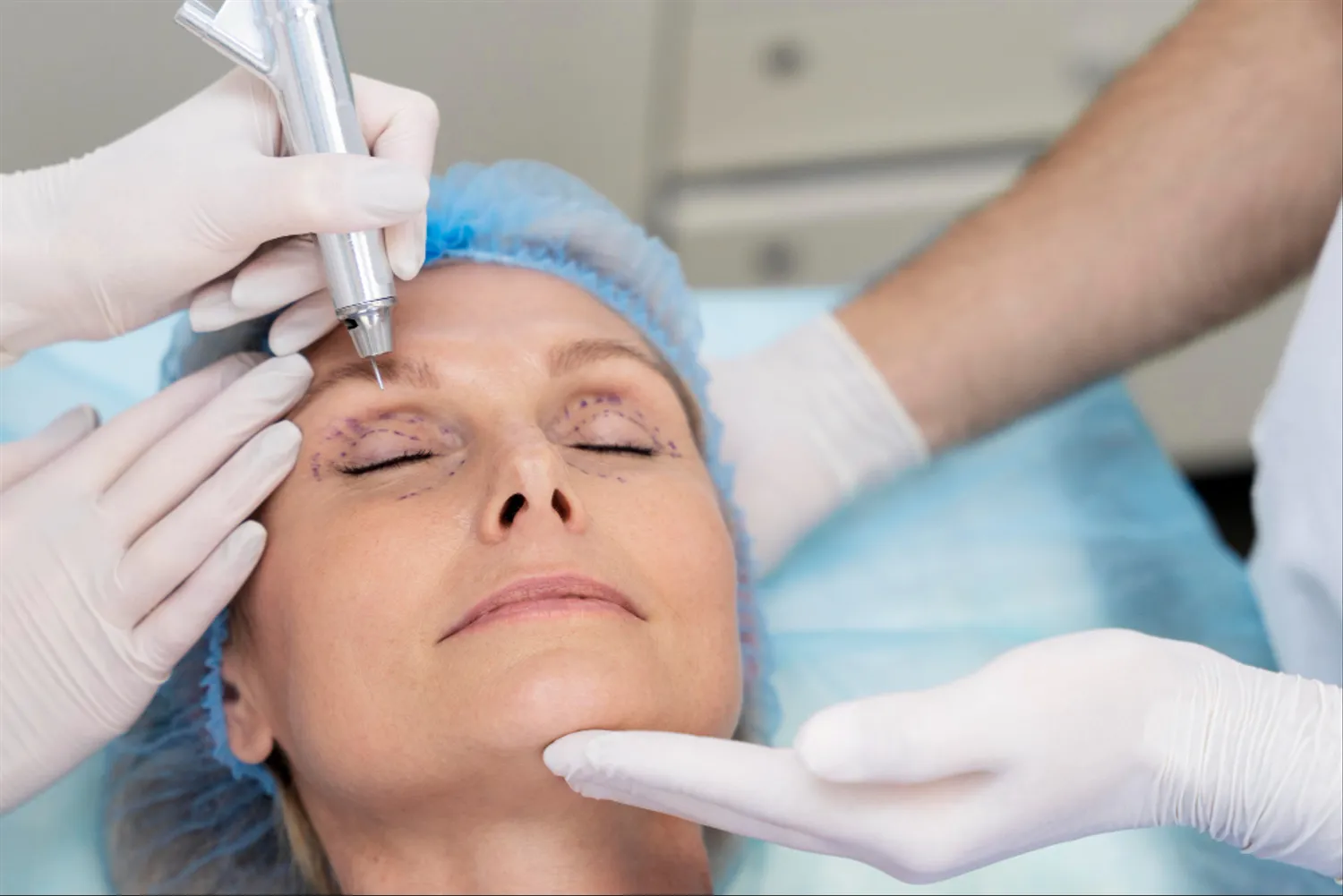
Blepharoplasty — commonly called eyelid surgery or an eyelid lift — is a surgical procedure that removes or repositions excess skin, muscle, and fat around the eyelids. It can be performed on the upper eyelids, lower eyelids, or both, depending on what each patient needs.
The procedure is unique in that it sits at the intersection of cosmetic and medical care. For some patients, the motivation is purely aesthetic: they want to look less tired, fresher, and more alert. For others, severely drooping upper eyelids have begun to obstruct peripheral vision, making blepharoplasty a medically necessary intervention rather than a cosmetic choice.
When performed by a specialist ophthalmic surgeon — rather than a general plastic surgeon — the results are consistently more natural, more precise, and safer. The eyes are a highly specialised anatomical area, and experience in ophthalmic medicine makes a significant difference to outcomes.
Why Do People Seek Blepharoplasty in London?
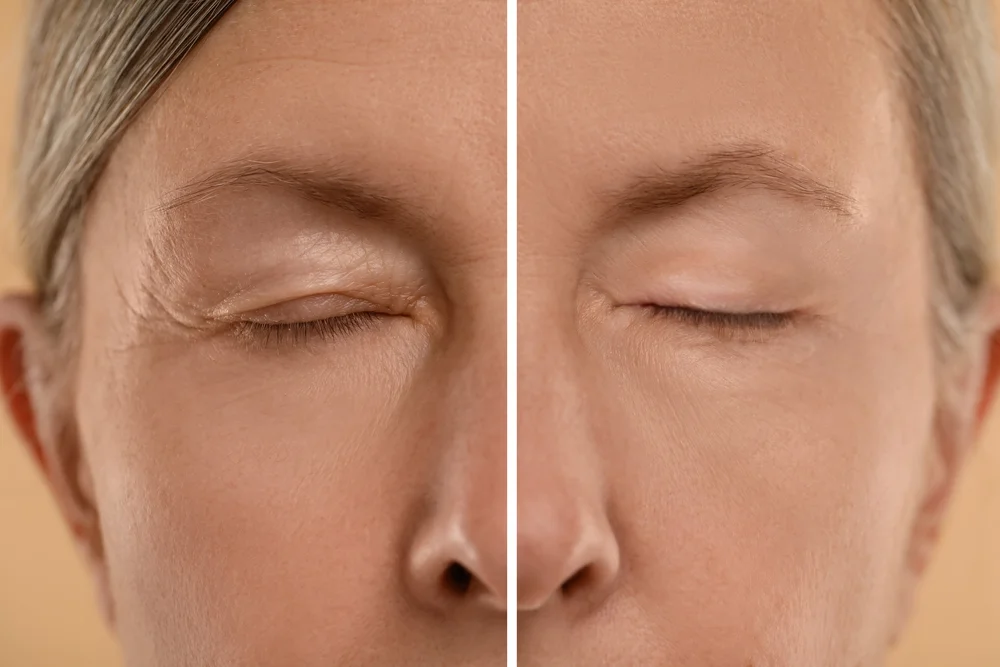
Ageing is the most common driver. Over time, the skin of the eyelids loses elasticity, the supporting muscles weaken, and excess skin and fat begins to accumulate. This can produce sagging or hooded upper eyelids that create a heavy, tired look, drooping skin that encroaches on the upper visual field, puffy bags beneath the lower eyes that no amount of sleep or skincare can address, and fine lines along the lower eyelid.
These changes often create a significant disconnect between how people feel internally and how they appear to others. Patients frequently describe being told they look tired or sad when they feel neither. Blepharoplasty at The SEE Clinic resolves that disconnect — patients describe their post-operative appearance as refreshed and wide awake, without looking as though they have had anything done.
Upper Blepharoplasty in London
Upper blepharoplasty targets the area between the eyebrow and the lash line. The surgeon removes or repositions excess skin and, where necessary, underlying fat or muscle to lift the lid contour and restore the natural crease.
The effects often extend beyond the eyelid itself. Lifting the upper lid can create a subtle elevation of the upper cheek, giving the entire mid-face a more youthful, open quality — without the need for additional procedures.
Upper blepharoplasty in London is typically suited to patients who have hooded or drooping upper lids that partially close over the eye, excess skin creating folds or asymmetry in the upper eyelid, upper lid skin that impairs the field of vision, or a tired and heavy appearance around the eyes despite being well rested.
The SEE Clinic's approach is to assess each patient individually — taking into account their anatomy, the degree of excess tissue, and whether vision is being affected. The goal is always a result that looks completely natural to the patient's own face.
Book a consultation for upper blepharoplasty at The SEE Clinic →
Lower Blepharoplasty in London
Lower blepharoplasty addresses the area between the lash line and the upper cheekbone — one of the most visible and delicate zones of the face. The primary concerns treated here are under-eye bags and lower eyelid puffiness, which are caused by fat prolapsing forward through the weakened orbital septum, not (as many patients believe) by fluid retention or poor sleep.
Because this area is so prominent and delicate, surgical conservatism is essential. The best lower blepharoplasty surgeons in London take a cautious, measured approach — often favouring fat repositioning over outright removal, which preserves volume and avoids the hollow, operated look that can result from overly aggressive surgery.
Lower blepharoplasty is typically suited to patients who have persistent bags beneath the eyes that are unresponsive to lifestyle or skincare changes, a shadowed or hollow appearance in the tear trough region, loose or crepey lower eyelid skin, or asymmetry in the lower eyelid contour.
The SEE Clinic's surgeons bring a dual perspective to lower blepharoplasty in London — combining ophthalmic expertise with a finely trained aesthetic eye to deliver outcomes that are proportionate, balanced, and long-lasting.
Non-Surgical Blepharoplasty in London
Not every patient requires surgery. For those with milder concerns — slight skin laxity, fine lines, or early-stage hooding — non-surgical alternatives can deliver a meaningful improvement without the commitment of an operation.
Botox can lift the brow slightly and reduce crow's feet, creating a more open eye appearance. This works best for patients with light brow descent and early upper eyelid heaviness. The SEE Clinic offers non-surgical Botox treatments delivered by medically trained specialists.
Dermal fillers, carefully placed in the tear trough area, can reduce the shadowed appearance beneath the lower eye and soften the transition between the lower eyelid and the cheek. This is an excellent option for patients whose under-eye appearance is driven more by volume loss than fat prolapse. The SEE Clinic also provides specialist dermal filler treatments for this purpose.
One important caveat: non-surgical treatments have real limitations. For patients with significant excess skin, pronounced bags, or vision-affecting hooding, surgery remains the only effective long-term solution. If you are considering non-surgical blepharoplasty in London, The SEE Clinic offers honest, expert-led assessments that will tell you clearly whether a surgical or non-surgical approach is right for your anatomy.
Choosing a Blepharoplasty Surgeon in London
The quality of your result depends almost entirely on the surgeon you choose. When searching for a blepharoplasty surgeon in London, there are a few things that matter above all else.
Ophthalmic or oculoplastic specialisation is the most important factor. A surgeon who operates exclusively on the eyes and eyelids has a depth of anatomical knowledge that a general plastic surgeon cannot match. Oculoplastic surgeons complete additional fellowship training specifically in eyelid, lacrimal, and orbital surgery — this is the gold standard for cosmetic eye surgery in London.
NHS consultant status is a reliable indicator of competence and professional accountability. Surgeons who hold NHS consultant positions have been through the most rigorous credentialing processes in British medicine.
A conservative aesthetic philosophy matters too. Look for surgeons who speak about preserving natural anatomy and achieving subtle, balanced results. The best blepharoplasty outcomes are the ones where it looks as though nothing was done.
Finally, look for transparent, unhurried consultations — a trustworthy surgeon will examine you properly, explain the procedure honestly, manage expectations clearly, and answer questions without any pressure to commit.
The SEE Clinic: Specialist Blepharoplasty at Harley Street, London
The SEE Clinic is an ophthalmic and eyelid surgery practice based at 119 Harley Street in central London, led by two senior NHS consultant ophthalmologists — Miss Rajni Jain and Mr Graham Duguid.
Miss Jain holds a consultant position at The Western Eye Hospital (Imperial College Healthcare NHS Trust) as well as Hillingdon and Mount Vernon NHS Trusts. Her subspecialty focus on oculoplastic surgery means that blepharoplasty — in all its forms — is the kind of work she performs every week, across both NHS and private settings.
The clinic's approach is built around three principles. First, individualised assessment — there is no standard blepharoplasty, and every consultation is designed to evaluate each patient's anatomy, skin quality, fat distribution, and functional needs before any plan is formed. Second, natural results — the surgeons are explicit that a successful blepharoplasty should leave you looking like yourself, not operated upon. The "wide-eyed" look that patients rightly fear is a consequence of poor technique; with properly trained oculoplastic surgeons, it does not happen. Third, continuity of care — patients are seen by their named surgeon throughout, from consultation through to post-operative follow-up.
Here is what one patient had to say following her upper blepharoplasty with Miss Rajni Jain:
"The final result more than exceeded my expectations and without doubt made me look much younger than my then 63 years. I no longer see a tired face looking back at me in the mirror but actually the woman I used to be. I could not be happier." — Sarah Jones
What to Expect at Your Consultation
Your first appointment at The SEE Clinic is a comprehensive consultation, not a sales meeting. You can expect a detailed examination of your upper and lower eyelids, skin laxity, and fat distribution; an honest discussion of what surgery can and cannot achieve in your specific case; a clear explanation of the procedure, recovery timeline, and any risks relevant to your anatomy; and the time and space to ask questions before making any decision.
The Harley Street location is easily accessible from all major areas of London.
Frequently Asked Questions
How much does blepharoplasty cost in London?
The cost varies depending on whether upper, lower, or combined surgery is required, as well as the complexity of the case. Contact The SEE Clinic directly following your consultation for a personalised quote.
Is blepharoplasty available on the NHS?
In certain cases, upper blepharoplasty may be available on the NHS if drooping eyelids are significantly impairing vision and can be evidenced through a visual field test. Cosmetic blepharoplasty is not NHS-funded. The SEE Clinic's consultants work across both settings and can advise on eligibility. You can also find answers to common questions on the SEE Clinic FAQs page.
What is the recovery time?
Most patients are socially presentable within ten to fourteen days. Swelling and bruising typically resolve within three weeks, and the final result continues to refine for several months.
Are the results permanent?
Blepharoplasty addresses excess tissue that will not return. The ageing process continues over time, but results typically last ten to fifteen years before any further treatment might be considered.
Will there be visible scarring?
Upper eyelid incisions are placed within the natural lid crease and become essentially invisible once healed. Lower eyelid scars, placed just beneath the lash line, fade to a very fine line that is barely detectable at normal conversational distance.
Book Your Blepharoplasty Consultation in London
The best way to know whether blepharoplasty in London is right for you is to speak with a specialist who has examined you properly. The SEE Clinic at 119 Harley Street offers consultations with senior NHS consultant ophthalmologists who specialise in exactly this area — whether you are considering upper blepharoplasty, lower blepharoplasty, a combined procedure, or want to understand your non-surgical options first.
Call The SEE Clinic: 0796 153 9859 Address: 119 Harley Street, London