In industrial facilities, few systems are as critical and yet as understated as piping. It quietly connects equipment, transfers fluids and gases, and supports processes that must operate safely and continuously. This is why Piping fabrication plays such a central role in sectors like oil and gas, power generation, chemicals, water treatment, and manufacturing across the UAE.
Piping fabrication is not simply about assembling pipes. It involves careful engineering, precise workmanship, and strict quality control to ensure systems perform reliably under pressure, temperature changes, and constant operation. When done correctly, piping systems blend seamlessly into operations. When done poorly, they quickly become a source of downtime and risk.
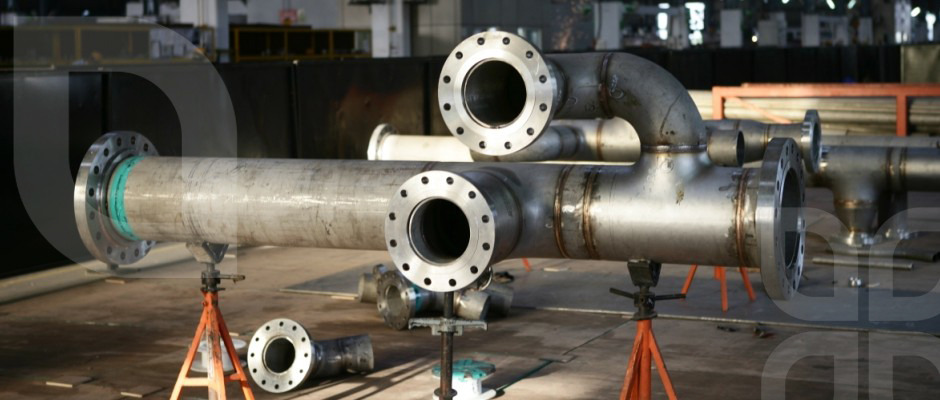
What Piping Fabrication Really Involves
At a practical level, piping fabrication covers the manufacturing of pipe spools, fittings, supports, and assemblies based on detailed engineering drawings. Materials are selected according to service conditions, whether that means handling corrosive chemicals, high pressure steam, or temperature sensitive fluids.
Fabrication is typically carried out in controlled workshop environments where welding, alignment, and inspection can be managed more effectively than on site. Once completed, pipe spools are transported for installation, reducing the amount of work required in operational or congested areas.
For project owners, this approach brings predictability. Systems arrive ready for installation, supported by documentation that confirms compliance with applicable standards and specifications.
Why Fabrication Quality Matters in Daily Operations
In operation, piping systems face continuous stress. Pressure fluctuations, vibration, thermal expansion, and chemical exposure are part of normal service conditions. Poor fabrication quality can magnify these stresses, leading to leaks, premature wear, or unexpected failures.
High quality fabrication addresses these challenges through proper welding procedures, dimensional accuracy, and thorough inspection. Techniques such as non destructive testing and pressure testing help confirm system integrity before commissioning.
For industries where shutdowns are costly or safety critical, the reliability of piping systems directly affects overall plant performance.
Modular Thinking and Modern Piping Systems
As industrial projects grow in complexity, many developers are moving away from traditional site built methods toward modular construction. Piping systems are often integrated into skids or modules that combine mechanical equipment, piping, structural supports, and instrumentation into a single assembly.
This is where Technical & Modular Solutions become particularly valuable. By fabricating piping as part of a modular unit, teams can complete assembly and testing offsite, where coordination is easier and quality control is stronger.
In real projects, this reduces installation time, limits site congestion, and improves safety. Modules arrive ready to connect, simplifying commissioning and reducing the likelihood of on site modifications.
Integration with Process Equipment
Piping systems rarely operate alone. They are closely connected to pumps, vessels, compressors, and heat transfer equipment. Accurate fabrication is essential to ensure proper alignment and avoid unnecessary stress on equipment nozzles and connections.
When piping fabrication is carried out with an understanding of equipment behavior, issues such as misalignment, excessive vibration, or thermal stress can be avoided. This systems level thinking supports smoother operation and extends the service life of both piping and connected equipment.
Benefits for Maintenance and Operations Teams
Well fabricated piping systems make everyday work easier for maintenance teams. Clear routing, proper supports, and accessible valves reduce the time required for inspections and repairs. Accurate fabrication also simplifies future modifications, as systems behave as expected when changes are required.
Documentation produced during fabrication, including weld records and inspection reports, becomes a valuable reference throughout the life of the facility. For operators, this means fewer surprises and better planning for long term maintenance.
Experience as a Practical Advantage
While codes and standards guide piping fabrication, experience shapes how those rules are applied in real conditions. Fabricators who understand how piping behaves under load, heat, and vibration are better equipped to deliver systems that perform reliably beyond initial startup.
This experience helps bridge the gap between design drawings and operational reality, which is often where challenges emerge.
A Thoughtful Closing Perspective
Piping systems form the backbone of industrial operations, quietly supporting processes that must run safely and efficiently every day. Their reliability depends not only on design, but on how accurately and thoughtfully they are fabricated.
When piping fabrication is combined with modular construction strategies and informed by practical process knowledge, including collaboration with a heat exchangers manufacturer in UAE, it becomes a long term asset rather than a maintenance concern. In demanding industrial environments, that level of reliability is what truly sustains performance over time.