Industrial facilities today are expected to be efficient, adaptable, and reliable from the moment they are commissioned. Whether the project involves oil and gas processing, power generation, water treatment, or manufacturing, equipment must be installed quickly and perform consistently under demanding conditions. This is where a Packaged system and Skid approach becomes highly relevant, offering a practical way to simplify complex installations without sacrificing engineering quality.
At its core, a packaged system or skid is a pre engineered, self contained unit that integrates mechanical equipment, piping, structural elements, and often electrical components onto a single frame. Instead of assembling dozens of parts separately at site, the system arrives largely complete and ready for connection, reducing site work and minimizing uncertainty.
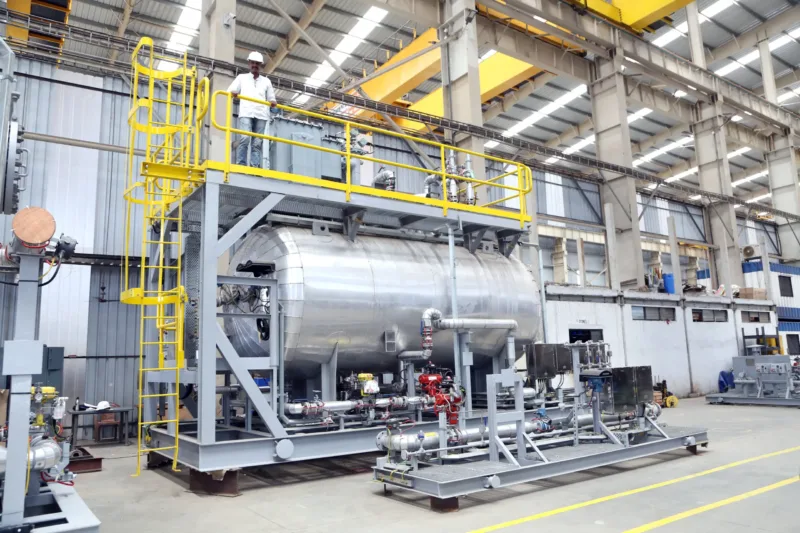
What a Packaged System and Skid Really Is
A packaged system and skid is designed to carry out a defined function within a larger industrial process. Typical applications include pumping systems, filtration units, metering skids, chemical dosing packages, and utility modules. All necessary components are engineered together, fabricated under controlled workshop conditions, and tested before delivery.
This approach reduces on site construction complexity and limits the risks associated with assembling systems in harsh or remote environments. For industries where downtime is expensive or site access is restricted, packaged skids provide a reliable and repeatable solution. You can explore how these systems are engineered and delivered through this detailed overview of Packaged system and Skid solutions.
By consolidating equipment onto a single structure, packaged skids also maintain design integrity. The original engineering intent is preserved from design through fabrication, which helps prevent misalignment or compatibility issues during installation.
Who Uses Packaged Systems and Why
Packaged systems and skids are widely used across oil and gas facilities, power plants, water and wastewater treatment sites, and industrial manufacturing units. In oil and gas operations, they support fluid handling, injection systems, and process control. In power facilities, skids are commonly used for auxiliary systems such as fuel handling, cooling, and lubrication.
These systems are especially valuable for operators who need predictable performance and shorter commissioning timelines. Because fabrication and testing happen before delivery, installation is faster and startup is more controlled. This makes packaged skids suitable not only for new projects but also for retrofits and expansions where ongoing operations must remain uninterrupted.
Practical Benefits in Real World Applications
One of the most important advantages of packaged systems is quality control. Fabrication and assembly take place in a controlled environment where inspections, testing, and adjustments can be performed thoroughly. This often results in better workmanship compared to site built installations.
Packaged skids also simplify logistics. Frames are designed with transportation, lifting, and placement in mind, reducing handling risks. Layouts consider access for operation and maintenance, helping operators manage the system throughout its lifecycle.
From a long term perspective, packaged systems support easier maintenance. Documentation is consolidated, equipment is logically arranged, and troubleshooting becomes more straightforward.
Electrical Integration and Modular Support Systems
Many packaged skids depend on electrical and control systems to operate safely and efficiently. Motors, instrumentation, control panels, and safety systems must integrate seamlessly with mechanical components. In such cases, collaboration with an experienced electrical houses manufacturer becomes essential.
Electrical houses, often referred to as e houses, provide enclosed environments for electrical and automation equipment. When paired with packaged skids, they form complete modular solutions that improve reliability, safety, and commissioning efficiency. This integration reduces interface risks and supports smoother project execution.
The Role of berg industries in Packaged Solutions
Within this space, berg industries operates as an engineering and fabrication partner that understands how packaged systems fit into broader industrial operations. The focus is not simply on fabrication, but on delivering systems that are practical, well integrated, and ready for real world use.
By combining engineering design, structural fabrication, piping, and system integration, berg industries supports projects that require clarity, consistency, and accountability. This approach helps reduce coordination challenges and ensures that packaged systems perform as intended once installed.
A Practical Perspective to Close
A packaged system and skid approach reflects a shift toward smarter, more manageable industrial development. It prioritizes reliability, efficiency, and ease of installation over unnecessary complexity.
When supported by thoughtful electrical integration and delivered by experienced teams like berg industries, packaged systems help facilities start faster, operate more smoothly, and adapt more easily over time. For many industrial projects, this balance of practicality and performance is what ultimately defines long term success.